Bruno BalestriniPhotographer
Bruno Balestrini/ Applied Arts/ Textiles/ The codification of types of decoration, clothing fabrics (16th century)
Back to Textiles
The codification of types of decoration, clothing fabrics (16th century)
Italy

The codification of types of decoration, clothing fabrics (16th century)

The sixteenth century is a period of full flowering for Italian textile art: its production dominates foreign markets triumphantly.

The Codification of types of decoration

Period
First half of the 16th century.
Description
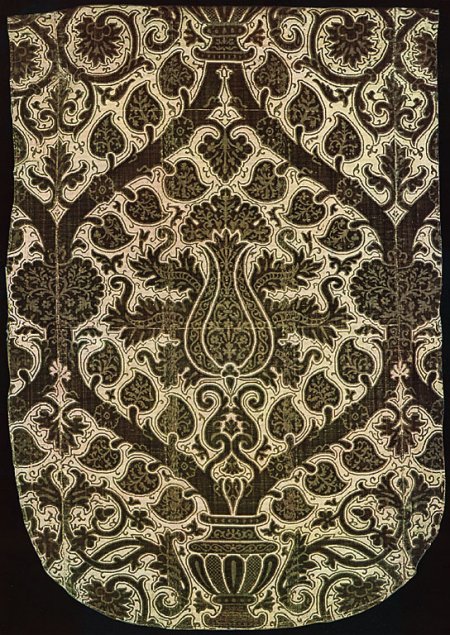
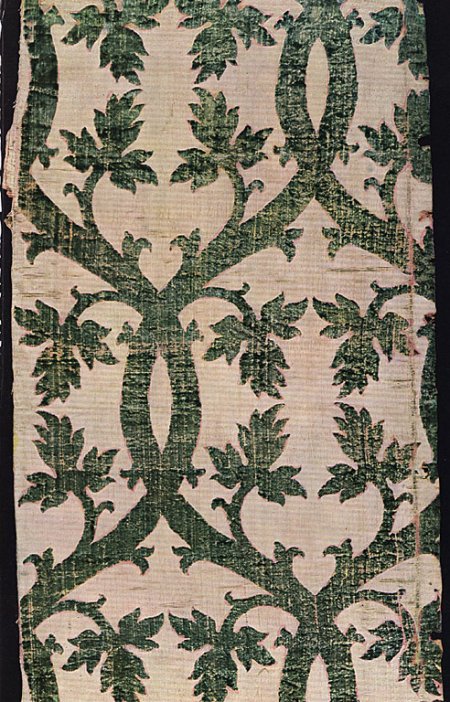
Design laid out symmetrically and in mirror image, taking the form of large ovals, double-pointed, of ivy tendrils, of knotty trunks, of leaves enclosing pine cones, amphorae and floral compositions. Further characteristic elements of the period are the frames, almost always in gold, and heraldic motifs. The repeat is large and can span the full height of the fabric.
Technique
Cut velvets, ciselé, alto-bassi, brocatelles, damasks, lampas with brocaded wefts, bouclé in gold and silver.
Origin
Evolution of fifteenth-century decorative motifs combined with the assimilation of the dominant architectural motifs.
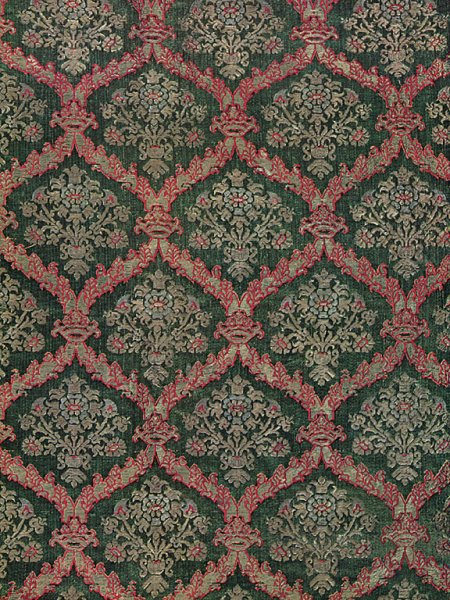
CLOTHING FABRICS

Period
From 1580 to 1630
Description
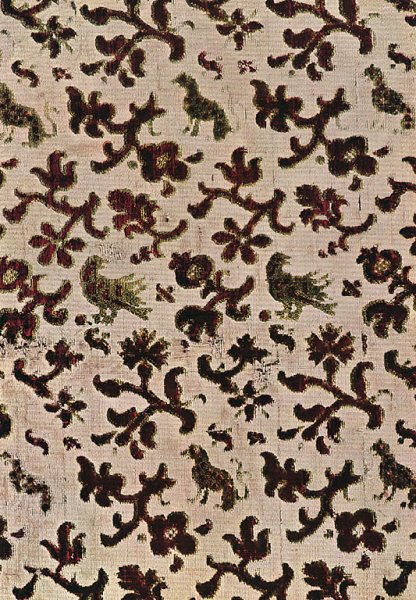
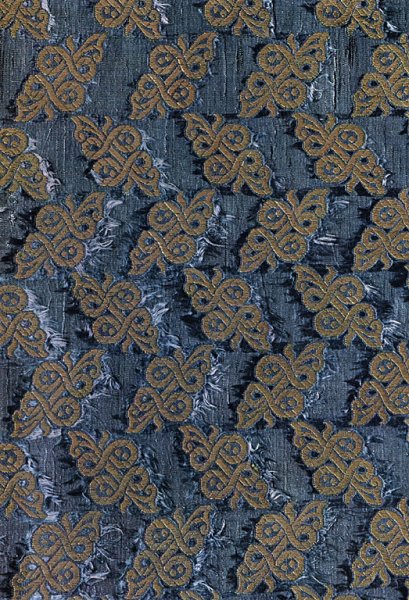
Small flowering branches within dotted frames, linked rings like an iron grille, truncated clubs in alternating positions, small animals mingled with small flowers.
Technique
Cut velvets, ciselé velvets, embroidered velvets, stamped velvets, satins and brocatelles.
Origin
Alongside a line of study devoted to creating large designs, well suited to the decoration of interiors, another takes shape that prepares fabrics suited to clothing, with a first attempt at specialising designs with smaller repeats.
Source
Bruno Balestrini Photographic Archive
This English text was translated with the help of artificial intelligence (Claude) from the Italian original, except where an English version already existed in the original archive. Read the Italian version.