Period
From the 1st to the 8th century AD
Description
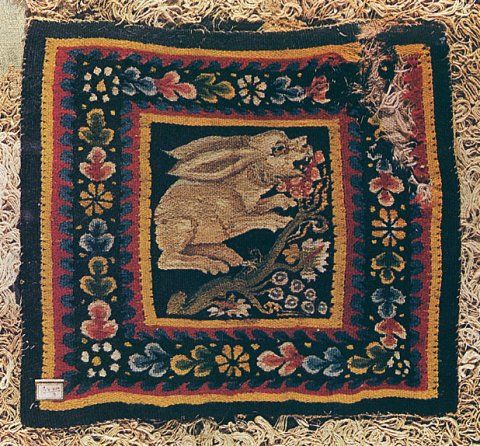
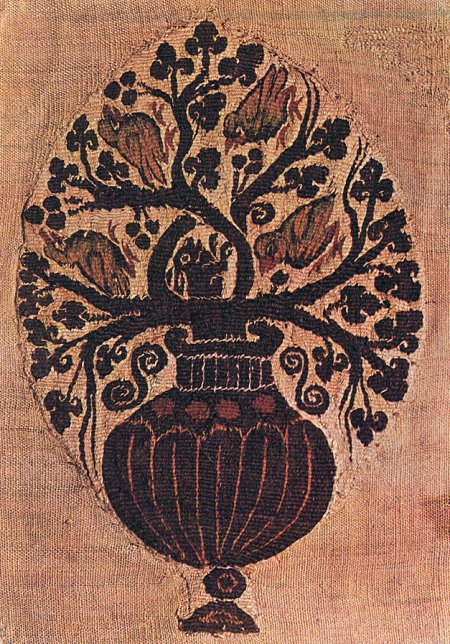
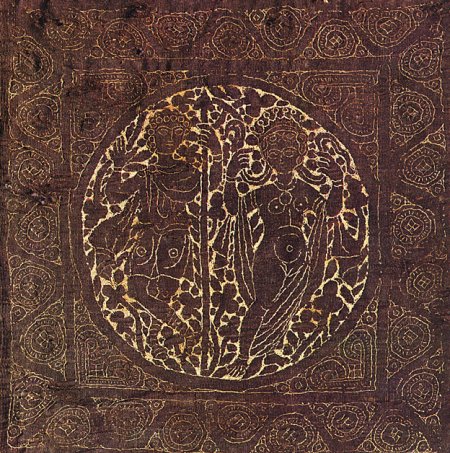
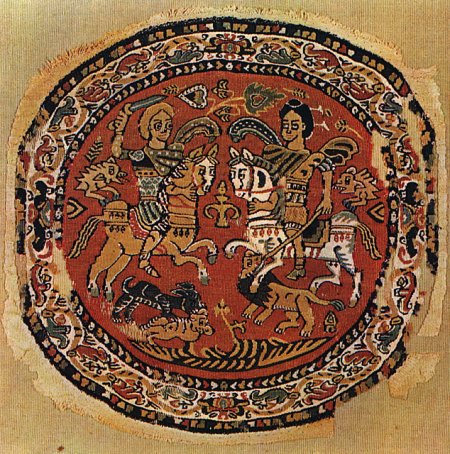
In general the decoration is enclosed within a geometric form - circle, square, lozenge, arranged on rigid horizontal or vertical lines, and consists of hares, cheetahs, lions, mythological figures and athletes, represented realistically and in movement. Another type is a geometric motif of stripes, zigzags or plaits, worked in an ecru thread on a black or purple ground. The decoration can be divided into five categories: - indigenous; - inspired by ancient Rome; - of Byzantine inspiration; - of Sassanian inspiration; - of Islamic influence
Technique
Decoration produced by a warp effect, in which the weft works only to bind the threads. Fibres used: wool. linen and hemp.
Origin
Usage has given the name of Coptic Fabrics to the textiles from the Egyptian excavations, after the Monophysite Christians who still exist today in Abyssinia. At the time of the first discoveries, the experts decided that the excavated necropolis was Coptic: hence the name given to the fabrics. It should be remembered, however, that this name also covers fabrics of types earlier than Christianity as well as others that are clearly Muslim.