Bruno BalestriniPhotographer
Bruno Balestrini/ Applied Arts/ Textiles/ French textiles of the 18th century
Back to Textiles
French textiles of the 18th century
France

French textiles of the 18th century

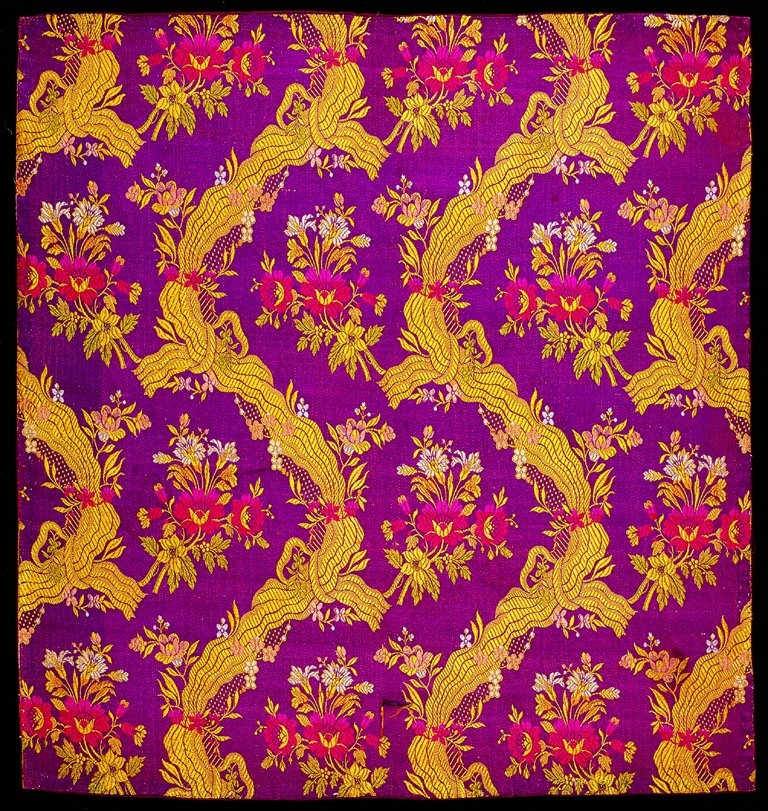
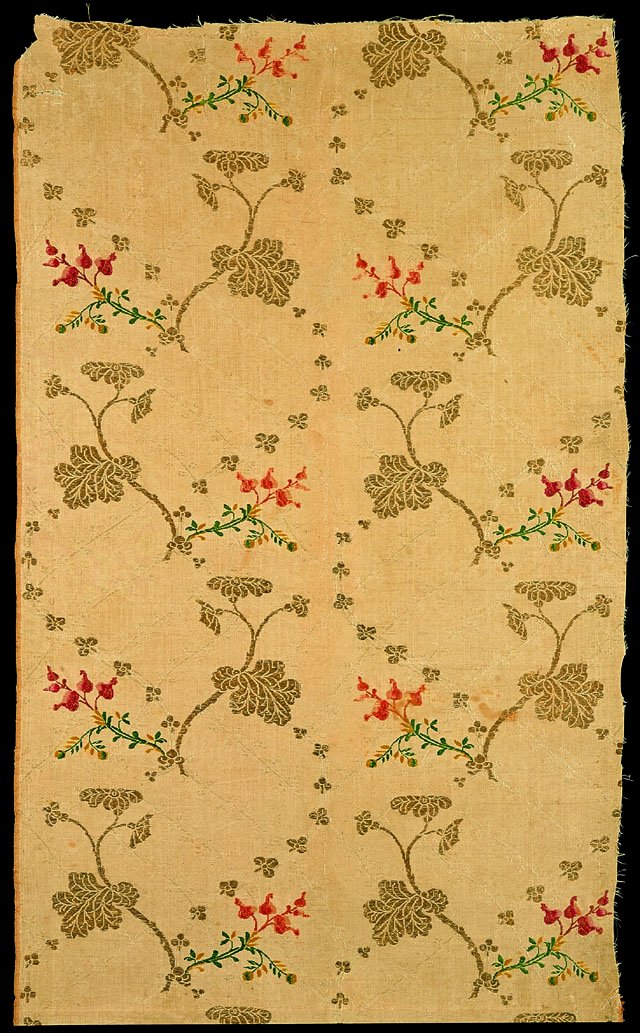
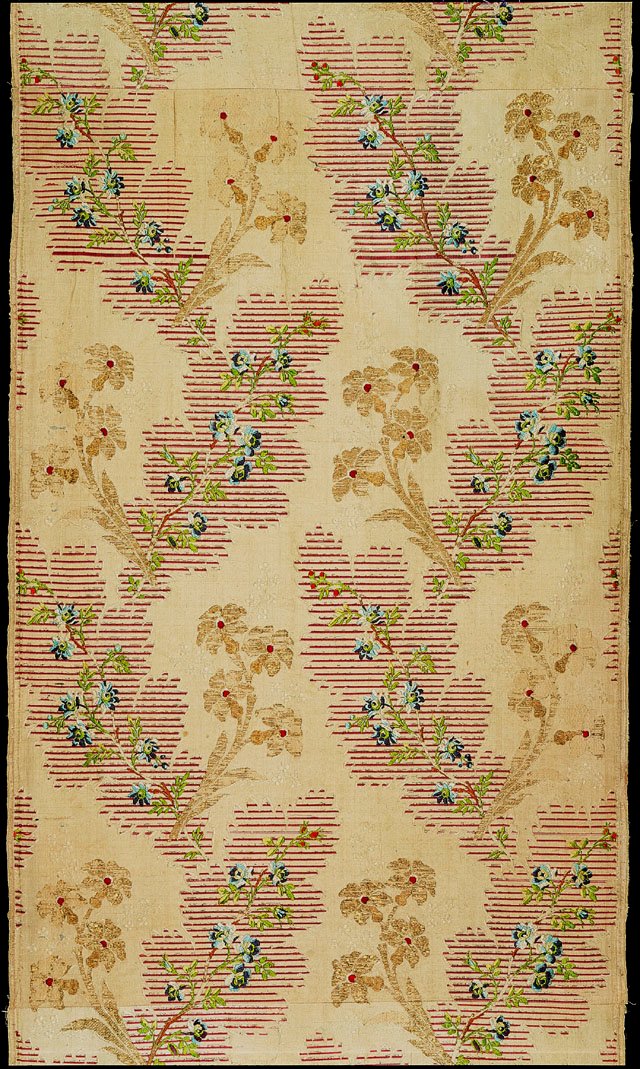
MEANDER
Period
1745-1775
Description
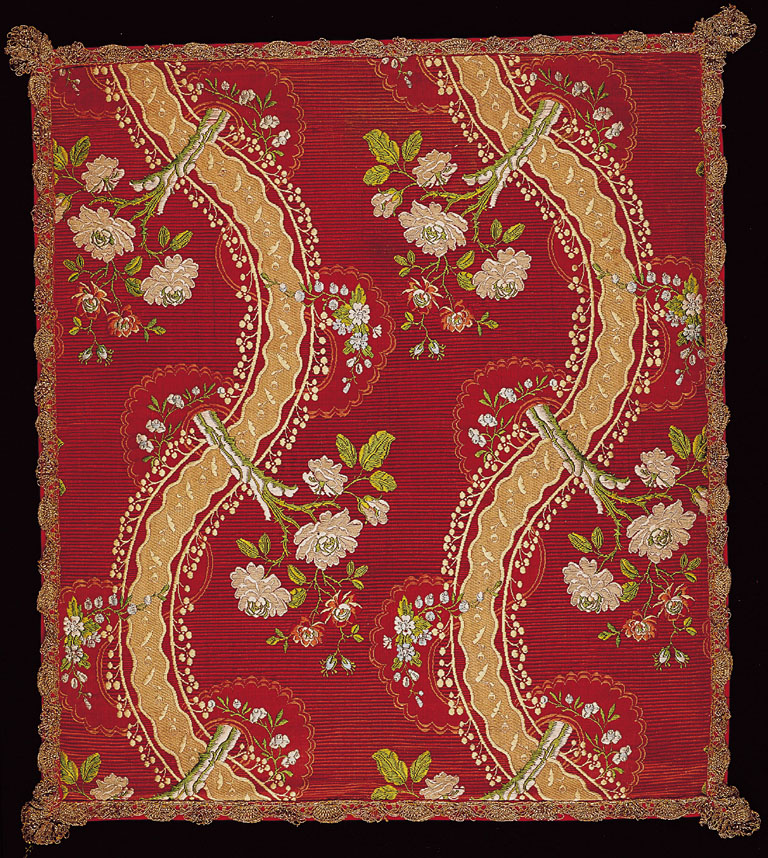
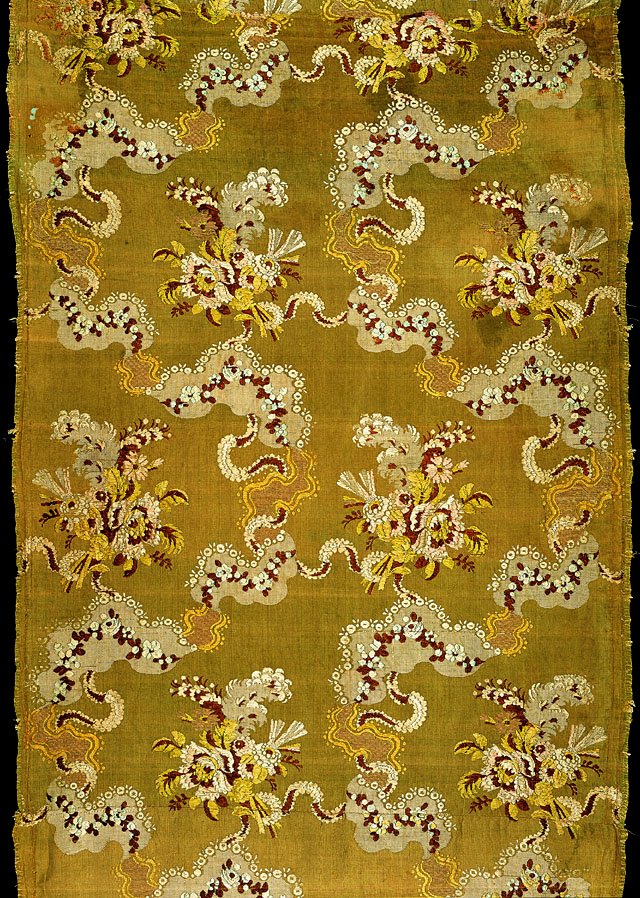
Parallel series of undulating vertical trunks or branches overlaid with small bunches of flowers represented naturalistically. Textile production is extremely rich and varied: the meander layout has a series of variants ranging from the trunk to the lace ribbon, to the interlacing of small garlands of flowers, ending up, around the sixties, in the double meander.
Technique
Satin grounds, cannelé, gros, moire, taffeta with designs in brocaded wefts, polychrome floats, of gold and silver.
Origin
It arises from the idea of differentiating the layout of the ground of the design from that of the plant-naturalistic figurative element. Over the years, the layout of the ground becomes ever more important in the composition of the design, taking on a predominant role with an ever greater emphasis on its geometric rigidity.

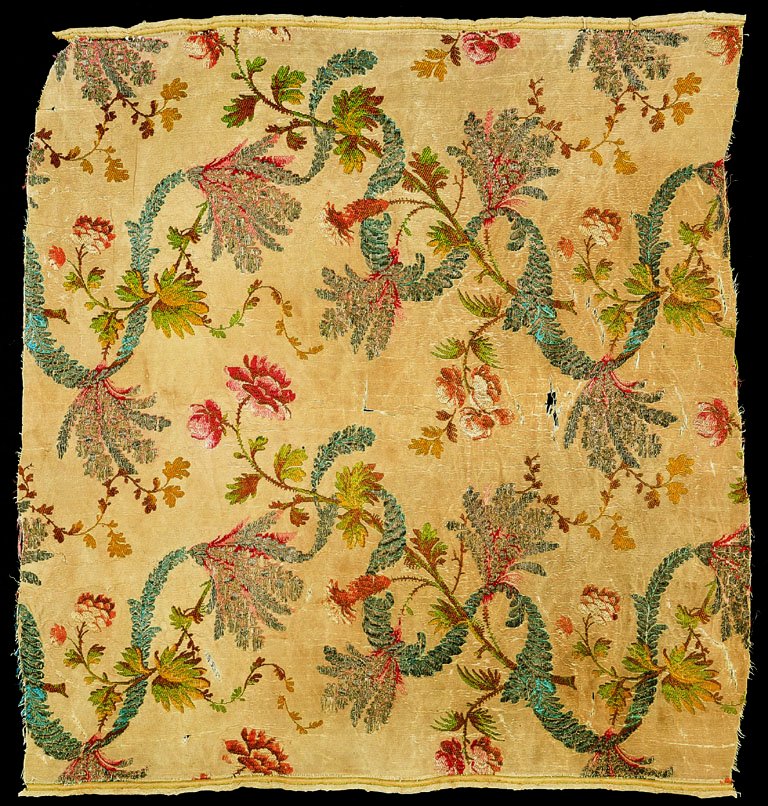
SPITALFIELDS

Period
1730-1770
Description
From undulating vertical trunks there branch off, from time to time, slender stems, large shoots or flowers inclined alternately to the right and to the left; the design, although executed in a naturalistic style, displays marked graphic characteristics. Production, generally speaking, follows the French one, differing from it in its simpler motifs, its lesser richness of detail and its use of contrasting, brilliant colours with fewer shadings.
Technique
Taffeta grounds, lampas, gros, cannelé with designs worked in several lancé wefts, brocaded. polychrome and metallic in their different forms: lamellar, metallic and frisé.
Origin
Spitalfields is a suburb of London where the most important English manufactories of the eighteenth century were located, greatly expanded by the settlement of a large number of French master weavers, Huguenot exiles following the revocation of the Edict of Nantes.

FURNISHING FABRICS

Period
1760-1800
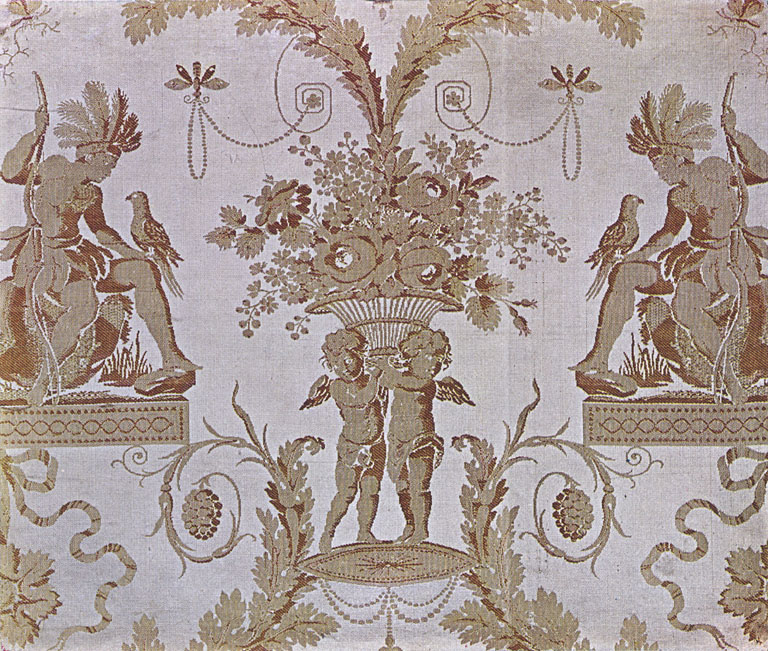
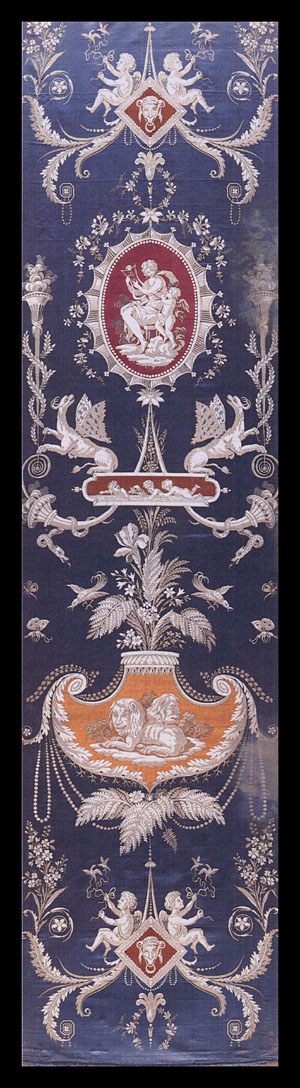
Description
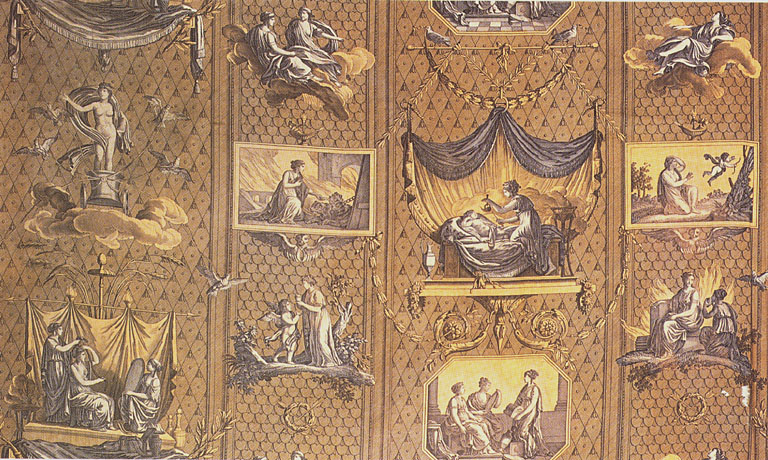
Grotesque decorations drawing on classicising motifs, celebratory and symbolic themes; with a schematised layout using frames, medallions and linking garlands; a clear prelude to the Empire style.
Technique
Lampas and satin grounds with designs worked in several brocaded wefts, liseré, lancé, bound in taffeta or in twill.
Origin
The cultural climate produced by the great interest aroused by the contemporary excavations of Pompeii and Herculaneum, the decisive cause, in all the applied arts, of a constant reference to antiquity.

TOILES DE JOUY

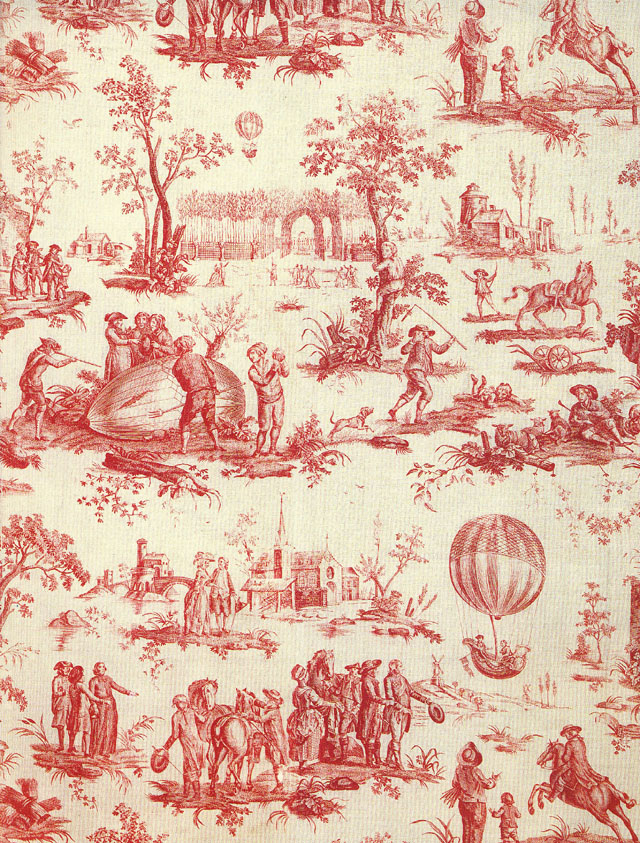
They take their name from the village of Jouy-en-Josas, near Versailles, where the Oberkampf brothers, natives of the Rhineland, built a textile printing works that was active from 1760 to 1844. They are cottons printed by block (planche) or by cylinder, predominantly in a particular shade of red or blue. In the treatment of the decorative themes a similarity with those of ceramics can be noted. Their common purpose, the decoration of walls, makes this stylistic kinship inevitable, since it was necessary to harmonise with the furniture; rustic themes, monumental ruins and mythological subjects predominate.
PHILIPPE de LASALLE

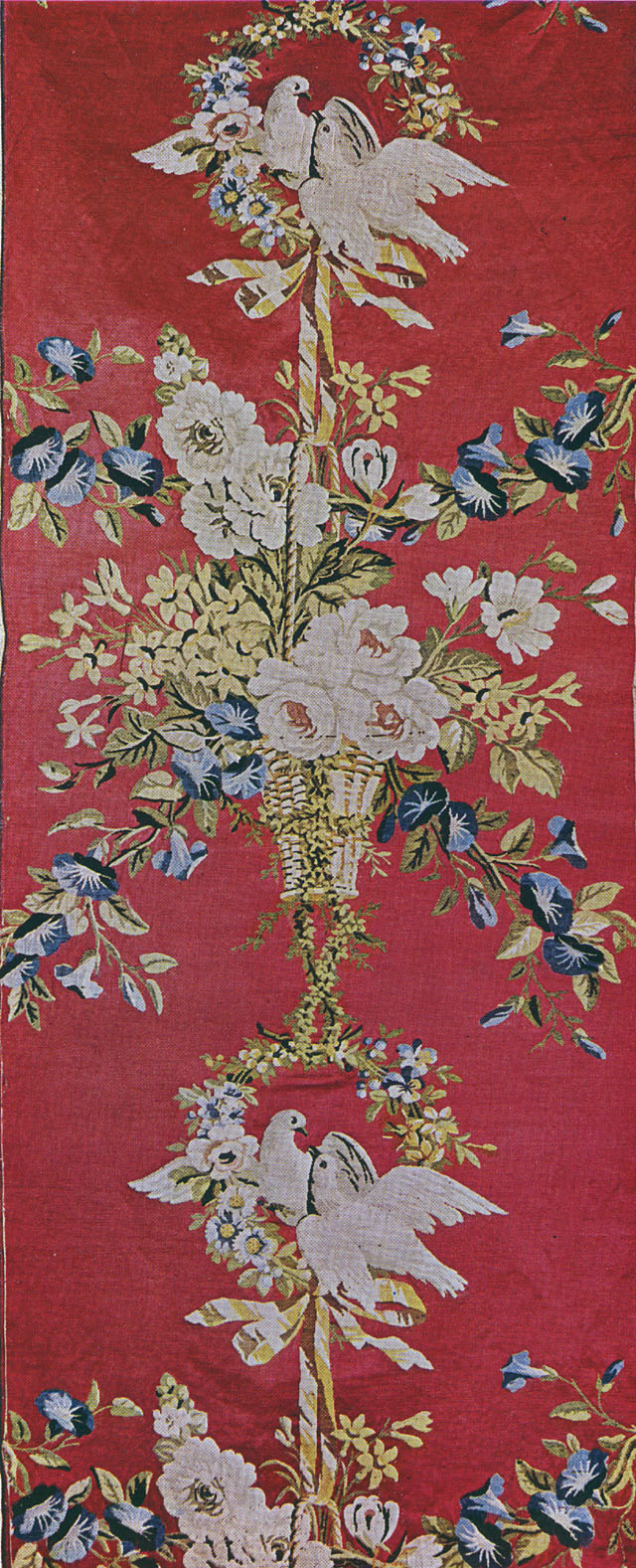
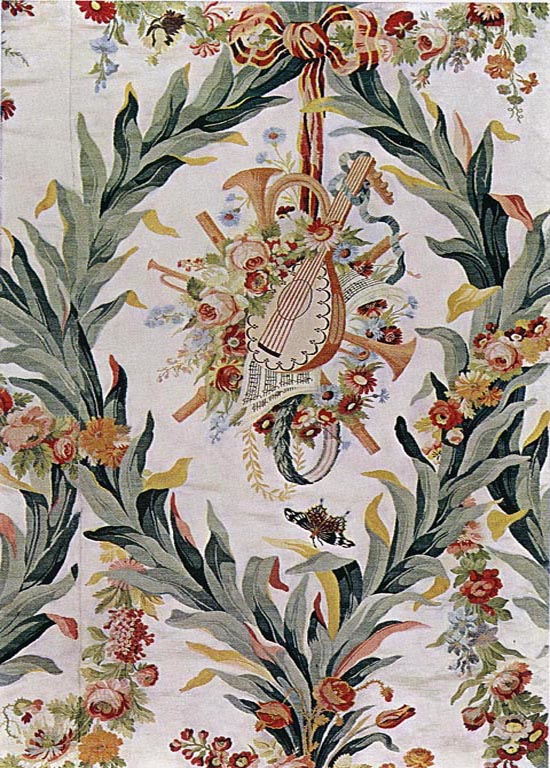
A painter particularly devoted to textile production for furnishing, he took an interest in perfecting technical details of the loom so as to better realise his designs. The structure of his works is essentially a sequence of large vertical ovals enclosing various depictions such as cupids, musical instruments, animals and floral compositions. The work is executed with extreme naturalism, accentuated also by the use of a large number of coloured wefts and by the different qualities of yarn employed.
Source
Bruno Balestrini Photographic Archive
This English text was translated with the help of artificial intelligence (Claude) from the Italian original, except where an English version already existed in the original archive. Read the Italian version.