Pisanello (about 1395 - 1455) and the frescoes in Mantua (1439 - 44 or 1447)
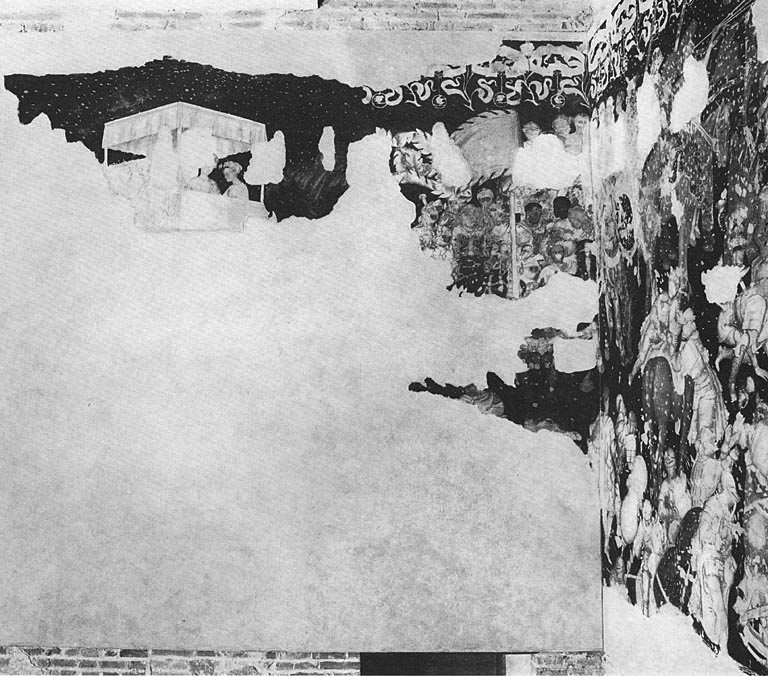
In the “conspiracist” mystery that surrounds the saga of the Grail, the cycle of frescoes commissioned from Pisanello by Ludovico Gonzaga around 1440 would deserve a place of honour. First of all, the work was left unfinished. Then it was partly, if not substantially, destroyed: the collapse of the ceiling beams, then vigorous blows of the pickaxe and coats of whitewash, and a complete refurbishment of the Hall, to the point of – literally – consigning it to the attic. Forgotten and erased. Finally, its chance, if not “miraculous”, and fairly recent rediscovery in the 1960s, and its laborious but fruitful recovery.
Unusual for the time, the hall had no name (for example, “of the knights of the round table” or “of Lancelot”), but was called the “Pisanello room” – as if to acknowledge the great importance of the artist, or to leave him the whole responsibility for what it recounted.
The history of Pisanello’s works is marked by collapses and losses: the Sala del Maggior Consiglio in Venice, destroyed; the frescoes of the castle of Pavia, lost; the decoration of San Giovanni in Laterano, removed during Borromini’s renovation. In Verona, in the Pellegrini chapel of Sant’Anastasia, only the famous and splendid episode of St. George and the Princess remains. Perhaps this is a fate common to many works in fresco, bound to the solidity of their support; but it has been particularly relentless against Pisanello. Obviously, it is just a series of unfortunate accidents. But that intervention by Borromini… (Incidentally, what were Borromini’s relations with the Vatican nobility? And why, when he was already working under Bernini, did he become his adversary, and not only in art?)
Bernini, together with Galileo, was one of the leading exponents of the sect of the Illuminati, and that he was practically placed in quarantine, save for a later reconciliation, with Pope Innocent X, who weakly opposed the Treaty of Westphalia and the relativism of cuius regio eius religio. All right, it is fantasy, but… what do we really know about Borromini’s suicide?
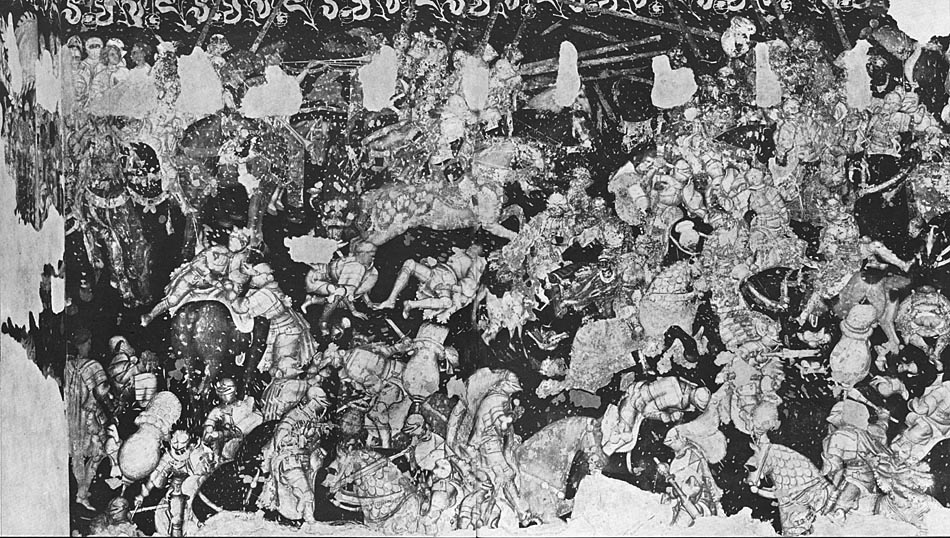
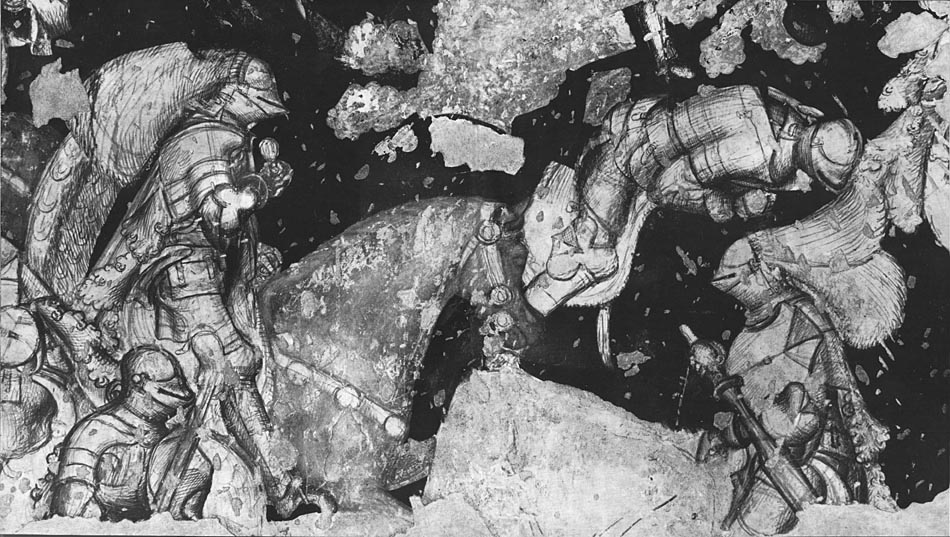
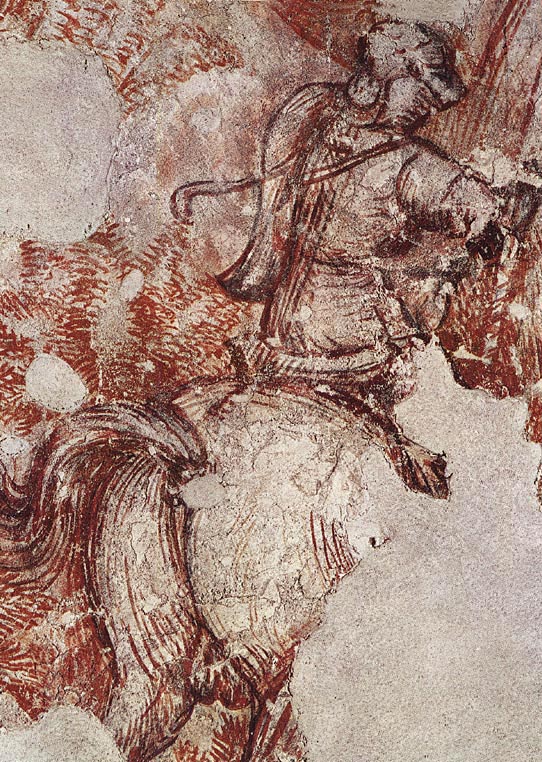
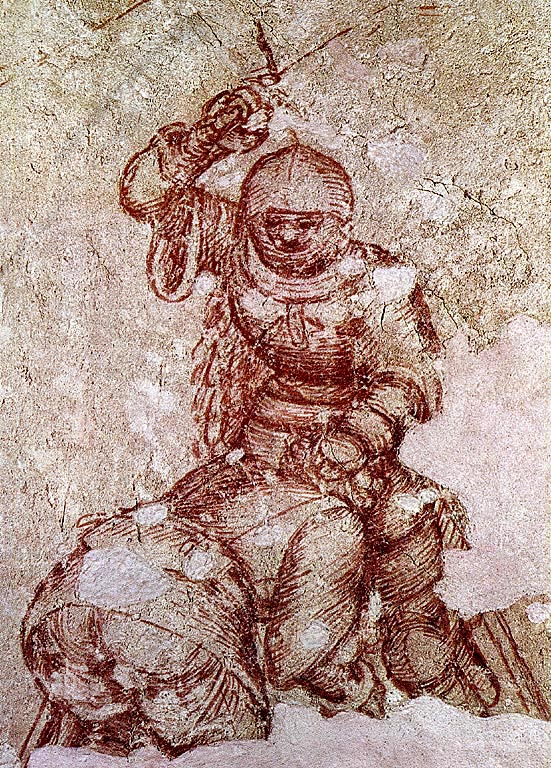
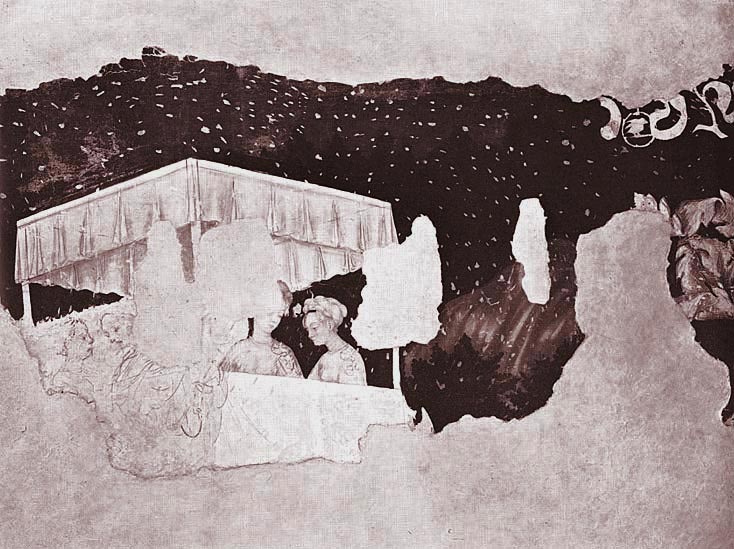
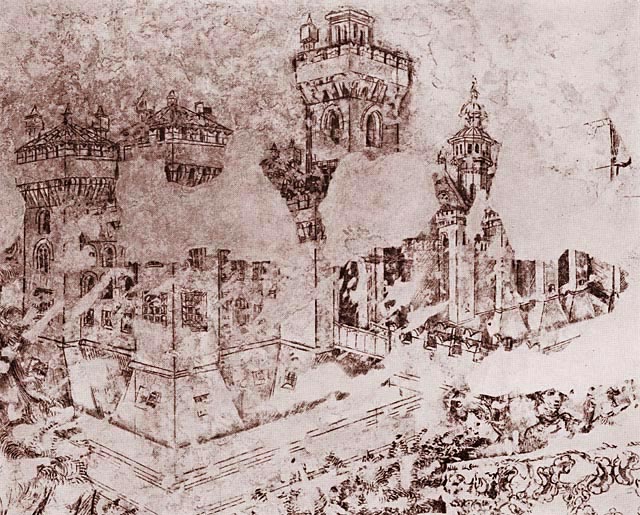
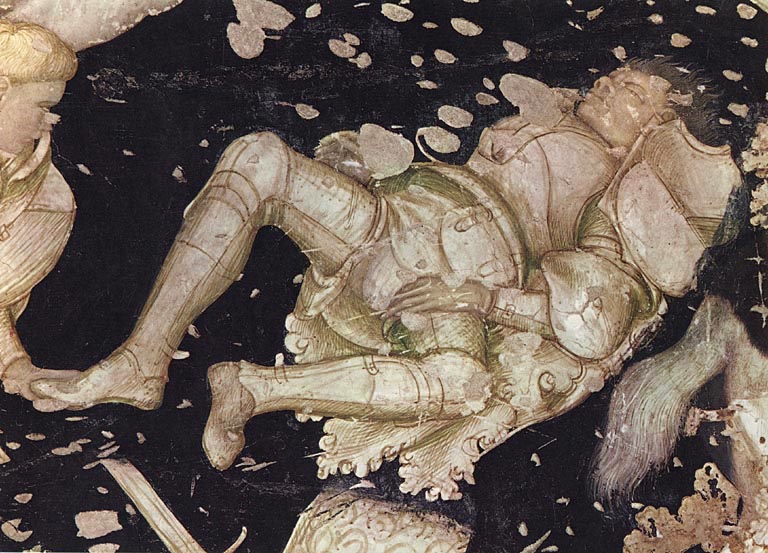
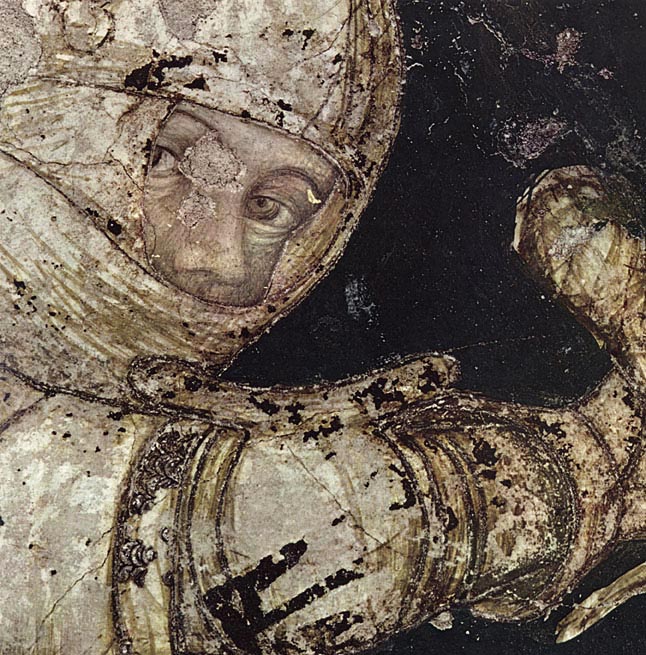
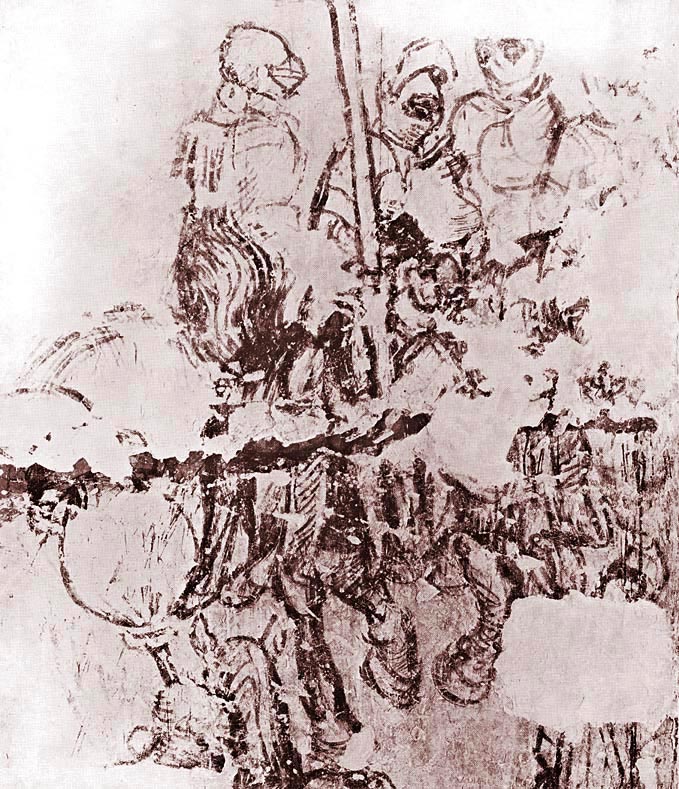
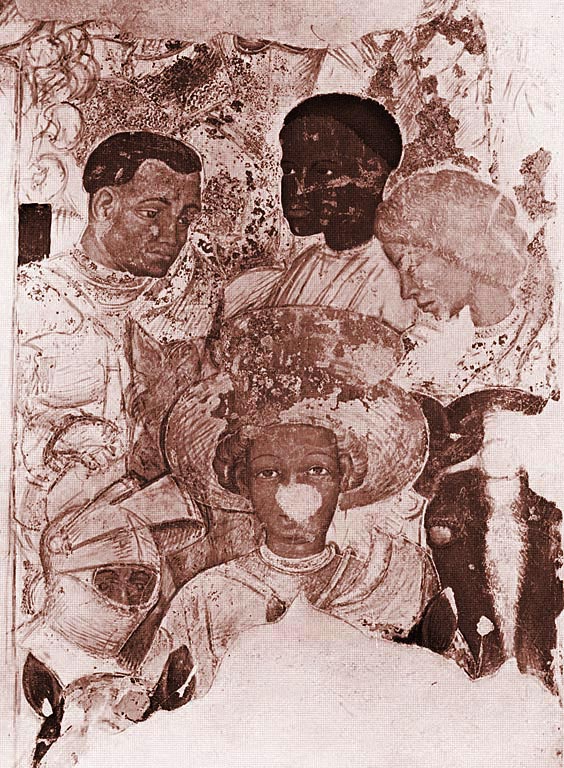
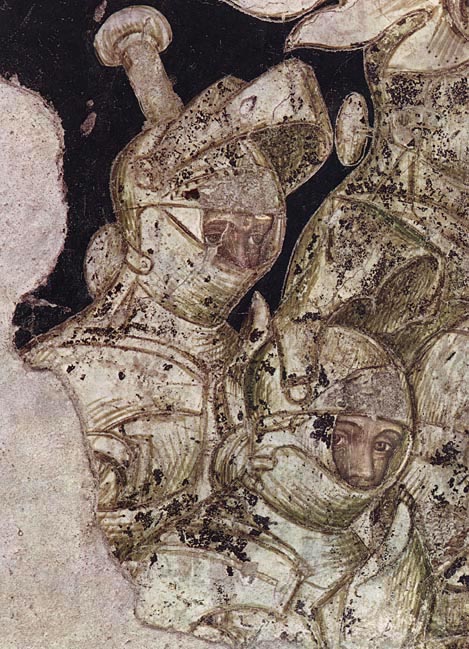
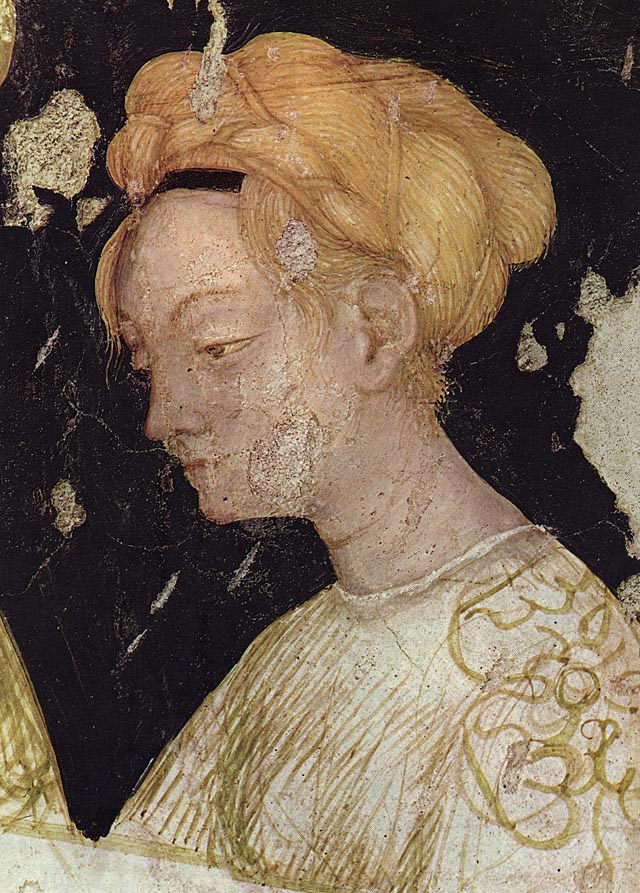
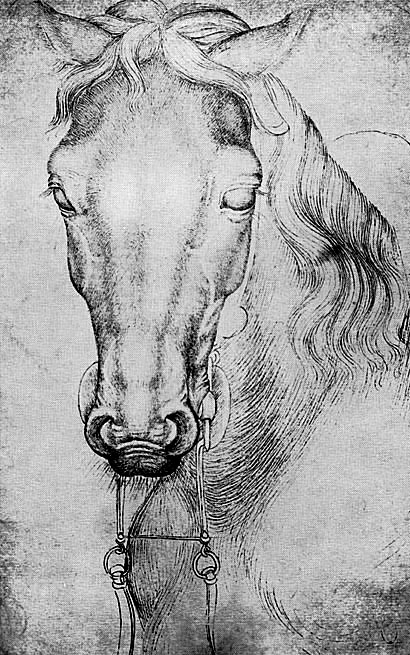
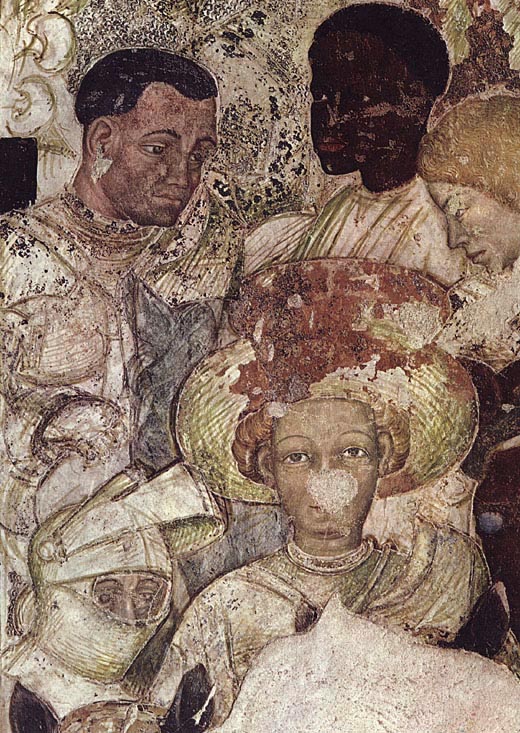
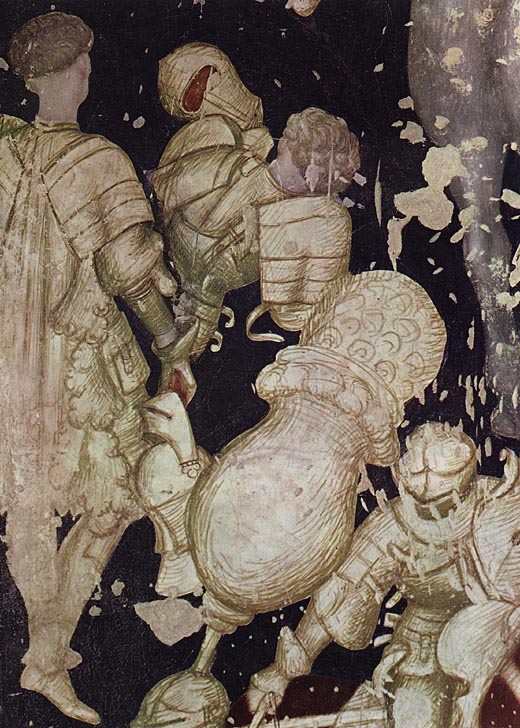
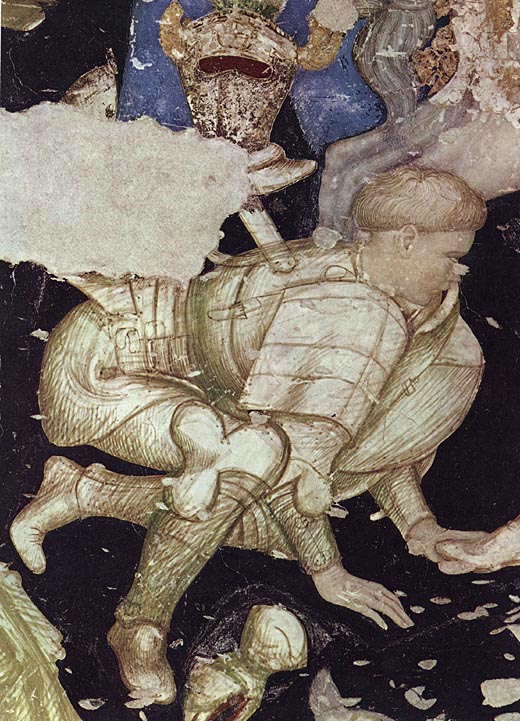
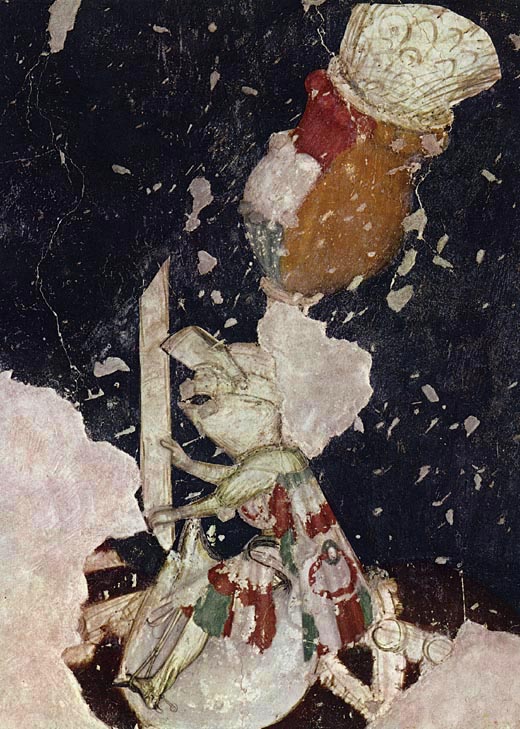
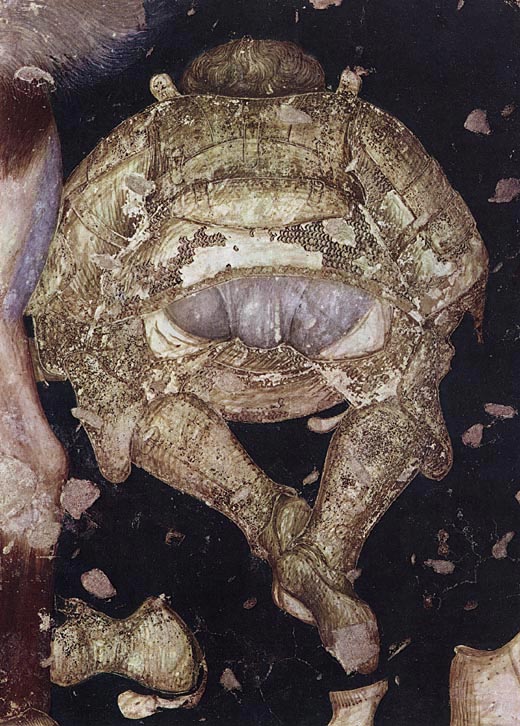
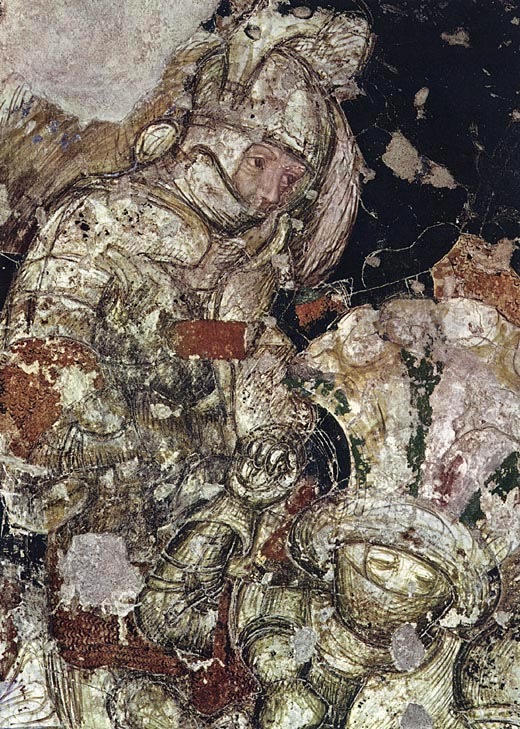
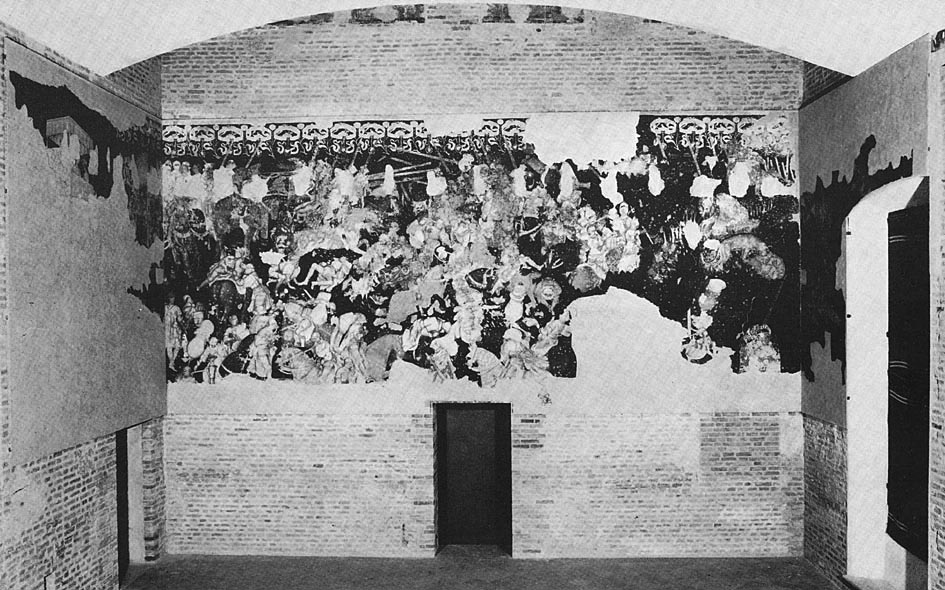
Let us return to Mantua, where we still have the fortunate opportunity of seeing a unique work, and one, moreover, caught in the making. The surviving and restored fragments of fresco need little comment, given the compact action of the scene depicted, the daring viewpoint and the details carefully finished as if by someone who did not suspect he would be forced to suspend work because of a disagreement with his patrons. The sinopie, the rapid strokes drawn in preparation for the subsequent painting, are no less interesting: they show the artist’s intentions, his second thoughts, his changes of mind, his way of inventing and arranging the enormous number of figures taking part in the battle.
And the Holy Grail? There is no longer any doubt that it is the protagonist, after the in-depth analyses of Giovanni Paccagnini (Pisanello e il ciclo cavalleresco di Mantova, Electa Editrice, undated), who, after the discovery he himself made, searched the Gonzaga library for the literary references that gave rise to the idea of the fresco: among them the French Arthurian cycles, very popular at the time, the Queste del St. Graal, Chrétien de Troyes’s Perceval ou conte del Graal, the Roman de Tristan. The battle between the knights depicted by Pisanello is not a tournament like so many others, a display of prowess before the well-known and beautiful ladies Guinevere and Iseult. What was at stake was not their favours, but the task of continuing the search (the queste) for the holy chalice that had gathered the blood of Christ, first metaphorically during the Last Supper, then concretely, it is said, through the lance of Longinus. Lancelot and Tristan fight each other at Louverzep for this far higher mission, after having witnessed or decreed the defeat of other valiant knights: Calibor as dures mains, Arfassart li gros, Malies de l’espine, Sarduc li blans, Kallas le petit, Calaarot le petit, Patrides au cercle d’or. And others. But how were they identified? Simply because names appear beside the various figures in the sinopie. An unexpected didacticism, unnecessary in a cultivated milieu like that of the Gonzaga, and not called for in a work certainly not originally intended for the general public.
Pisanello perhaps wanted to identify his characters in order to say that it was really they who were involved, the nobles of the Round Table and not fighters of his own invention, and to send a message that would reach beyond the walls of the Palace: to make known what an insane and destructive dispute the queste had unleashed. He celebrated the heroism of the knights, but in his own way: he also showed their sprawling corpses and threatened beheadings. The scene is extremely violent, and the very decision to illustrate the battle near its end, rather than in its preparations or at least in a balanced phase of its course, seems to be a choice of Pisanello’s that cannot have pleased Marquis Ludovico. Too many dead: corpses lying face down and face up and always sprawled, executions threatened on the spot, a pierced knight crawling on all fours, blows struck in the back, riderless horses. A representation hardly in keeping with the mythical code of chivalry. Hence, probably, the interruption of the work; as Paccagnini says (op. cit., p. 54), due “perhaps [to] the poor correspondence of Pisanello’s decadent vision with those commemorative concepts” of “nobility, of military and chivalric virtue”. The meaning of “decadent” is elusive: Pisanello’s vision was probably just realistic, or at least well informed. There is no record of any passion of his for the macabre, even though in Verona, above St. George and the Princess, he managed to include a couple of hanged men: common elements in the urban landscape of the time.
The work was therefore suspended, then hidden, because at the Gonzaga court it was felt inappropriate to show other, real knights, champing at the bit, in a bad light: on the contrary, it would have been useful to give them a halo of glory while they butchered in the service of princes. The patron Ludovico, as Maria Bellonci recalls, “served for pay”; and he, who was known as the Turk, perhaps hoped to have his troops take part in the crusade (never begun) against Turkey called for by Pius II, since he had generously hosted the diet convened for it in 1459. To illustrate even the battle for the Grail – not to mention a crusade – as a matter of death and dust and human blood must have sounded like blasphemy.
The cruelty (crudus-crudelis and cruentus share the root CRU of cruor, blood – specifically, venous blood) of these frescoes takes no little nobility away from the “chivalric” activity that had become, or had always been, a mercenary’s job. But who really stopped Pisanello? And do we really care to play detective? Perhaps it can only help us to look a little more attentively at his frescoes and sinopie in Mantua.
The photographs