Kariye-Camii — Byzantine mosaics of Istanbul
The name Kariye-Camii was given by the Turks to the church, transformed into a mosque after the taking of Constantinople.
After Hagia Sophia, it is considered the most important Byzantine church in Istanbul, not so much from the architectural point of view as thanks to its interior decoration, which presents a series of 14th-century mosaics and frescoes among the most beautiful in the world. The architectural composition of the church of the Saviour in Chora, the original name of Kariye-Camii, appears as a disorderly assemblage of different elements, although this irregularity is not at all visible from the outside.
The church, dating from no earlier than the 11th century, was restored between 1316 and 1321 by Theodore Metochites, a learned statesman, who had the two narthexes and the funerary parekklesion, to the south of the church, added to the original monastery. Since the new parts had to adapt to the existing ones and to specific functional requirements, they gave rise to various stylistic irregularities. It is certainly for this reason that the architecture is inferior to the marble revetments and to the famous mosaics and frescoes of the interior, to which, moreover, Metochites devoted his greatest attention.
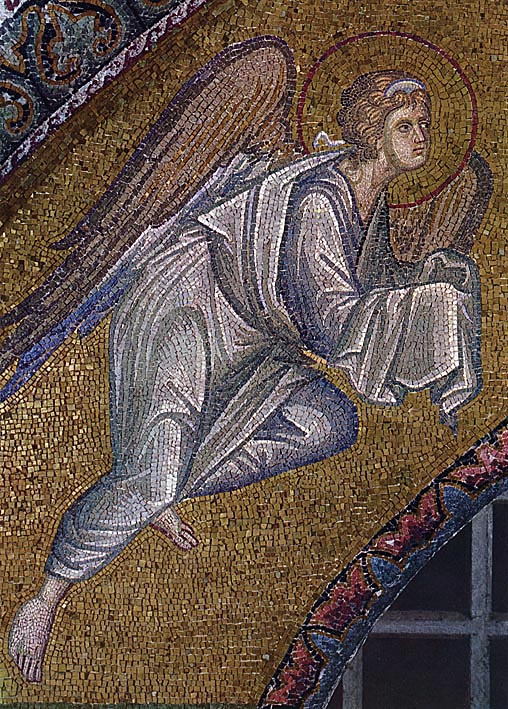
What truly astonishes visitors is the impression of standing not before wall decorations but before jewels. This impression is due to the splendid colours, heightened by carefully studied lighting, to the frequent use of gold, to the detailed execution and to the way in which all the images, executed moreover on a rather small scale, fit perfectly into the architecture. It can be stated with certainty that the preciousness of the whole decoration has no significant parallel in any other Byzantine church of the period.
Most of the mosaics and frescoes of Kariye-Camii are on the vaults, while the walls are almost entirely covered with polychrome marble.
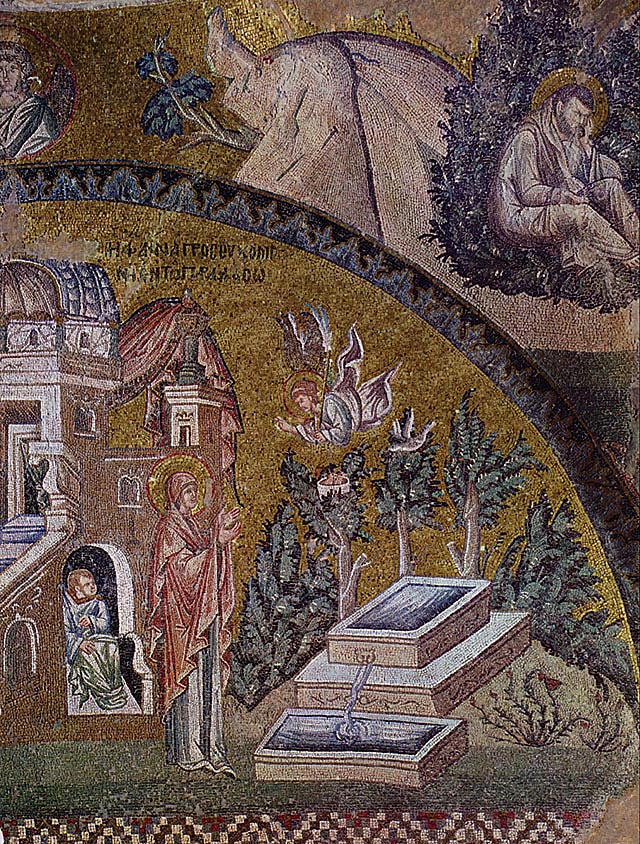
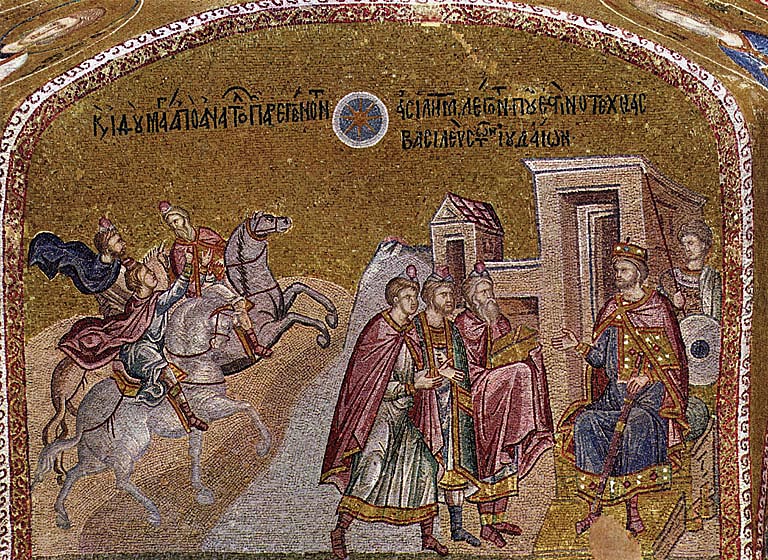
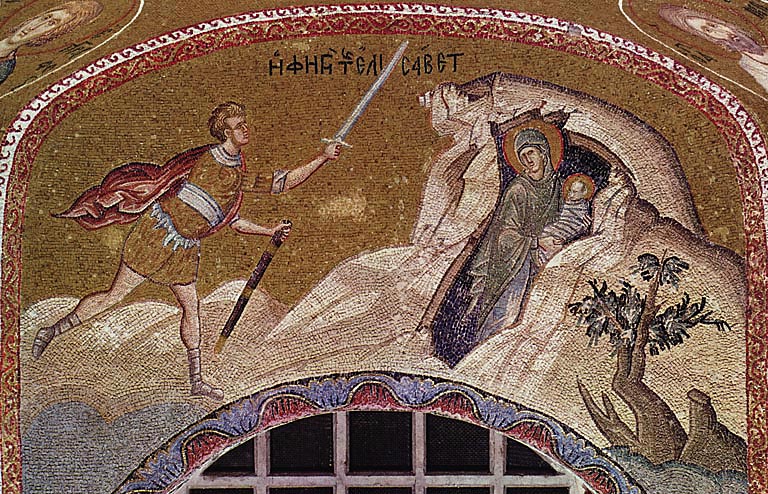
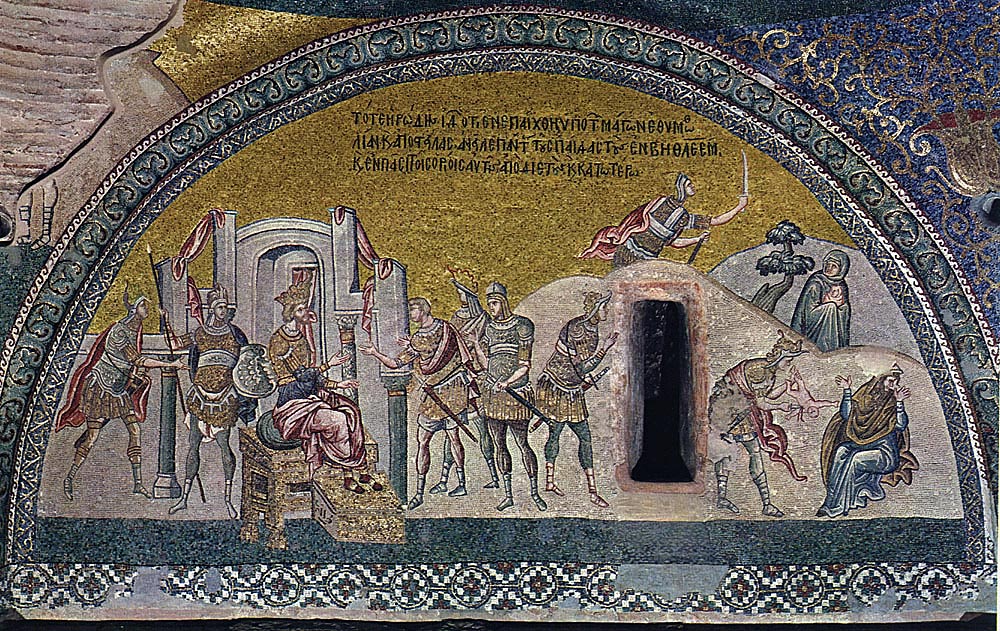
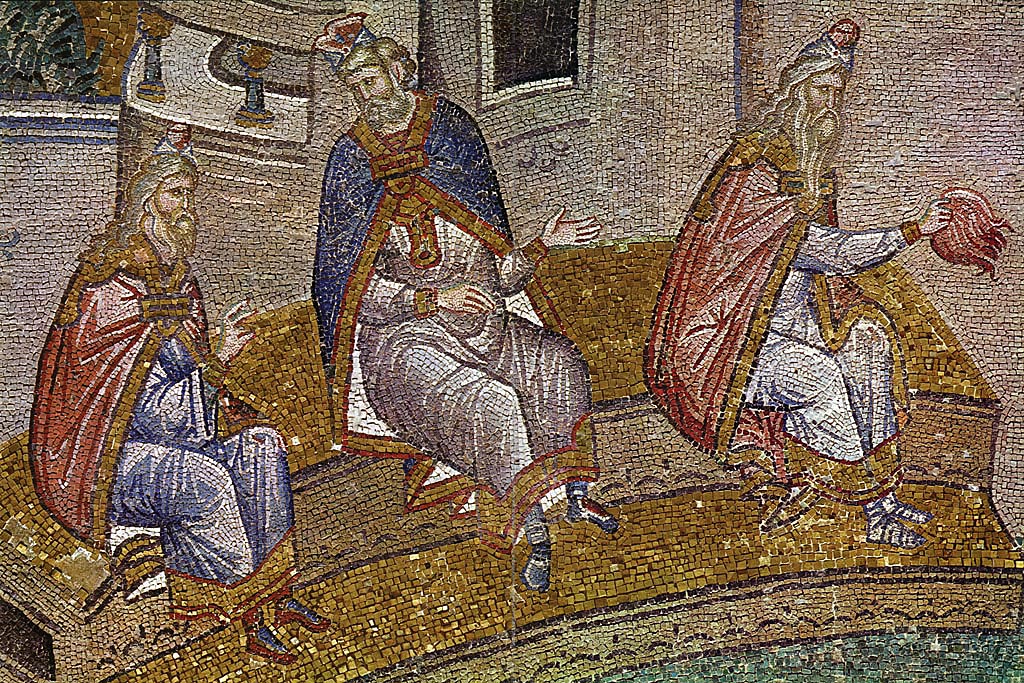
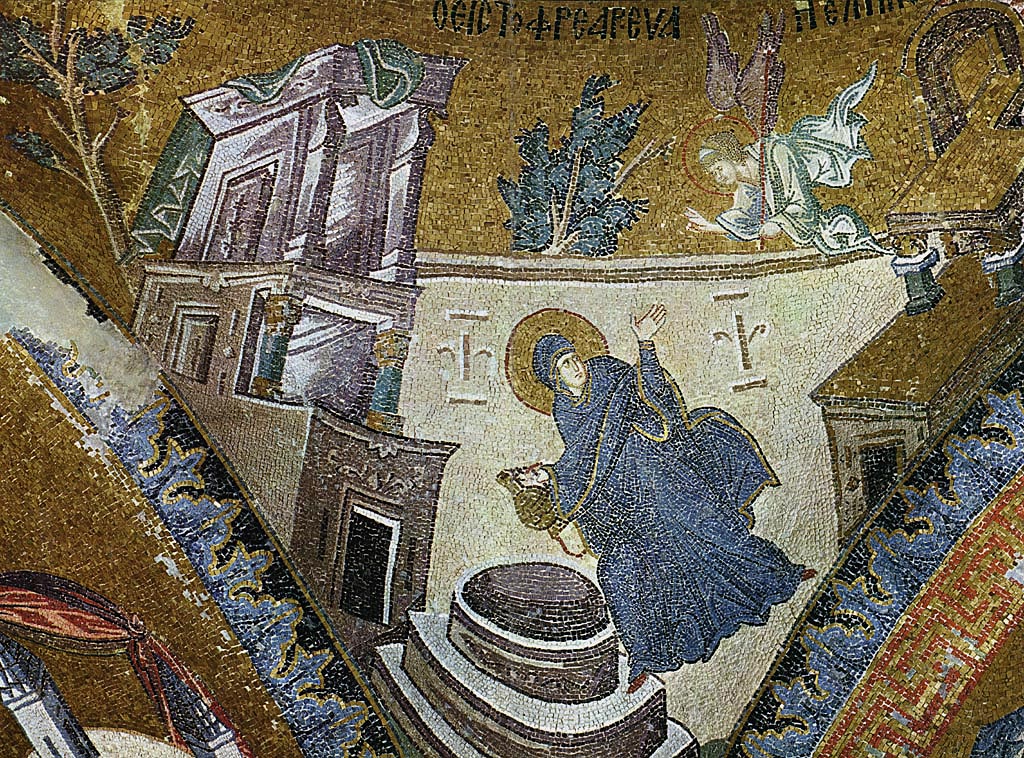
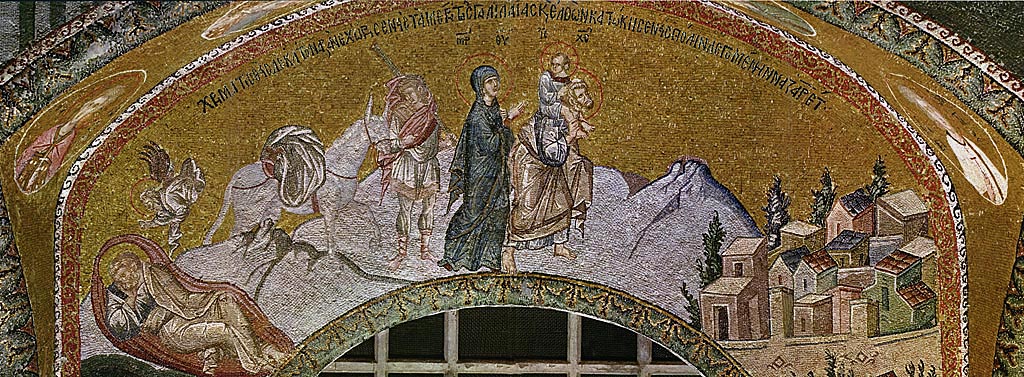
The few panels that find a place on the lower walls are, however, always set within projecting frames, painted or in marble, so as to form a niche, a lunette or an arch. The artist uses colour in a range of rather similar tones, then contrasted with the primary colours. The discordant effect that might arise from this contrast is softened by the background, for which gold is used. Moreover, the irregular application of the background produces the characteristic shimmering effect. Further enriching the whole are the ornamental elements, frames and medallions, which embellish the images. It has been argued that the mosaics of this church represent the synthesis of the Palaeologan Renaissance, whose most significant characteristics lie in the tendency to depict the Incarnation of Christ and his earthly life with liveliness, and in endowing the sacred figures with emotional meaning, to the point of making them lose their frontality and absolute immobility and leading them to act and move. This last innovation gives the figures a certain volume, so that they need a space in which to be set. This is why, inside Kariye-Camii, one finds a certain bond between landscape and architecture rarely seen until then. As concrete examples of this observation we may cite the Return to Nazareth, where the city is surrounded by splendid hilly landscapes and beautiful tree-filled gardens, and the Annunciation to Anne where, in the garden in which the scene takes place, a vast architectural complex appears, its proportions carefully studied.
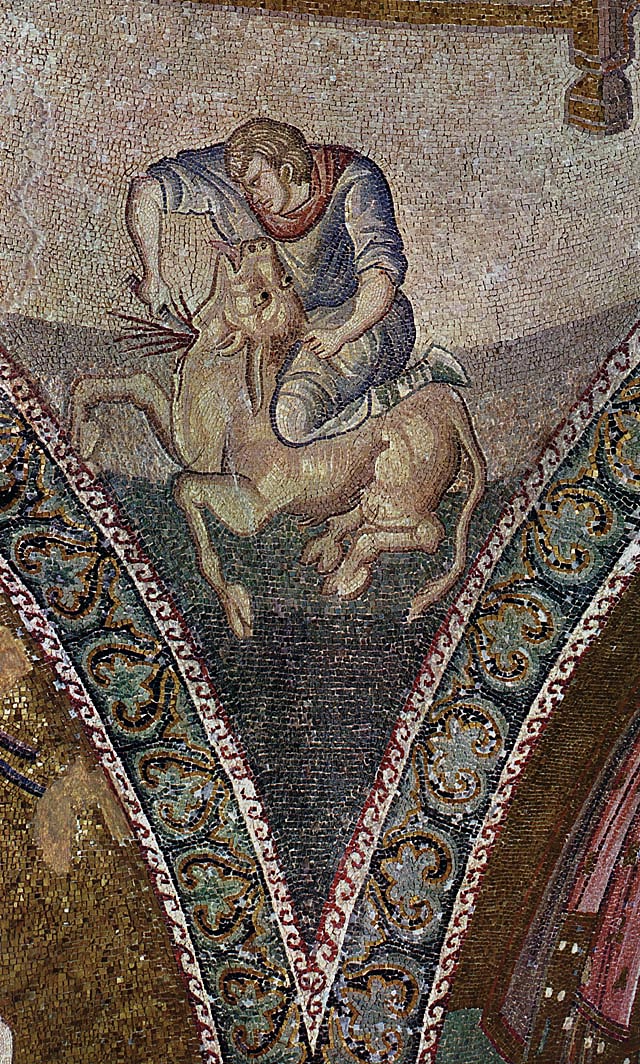
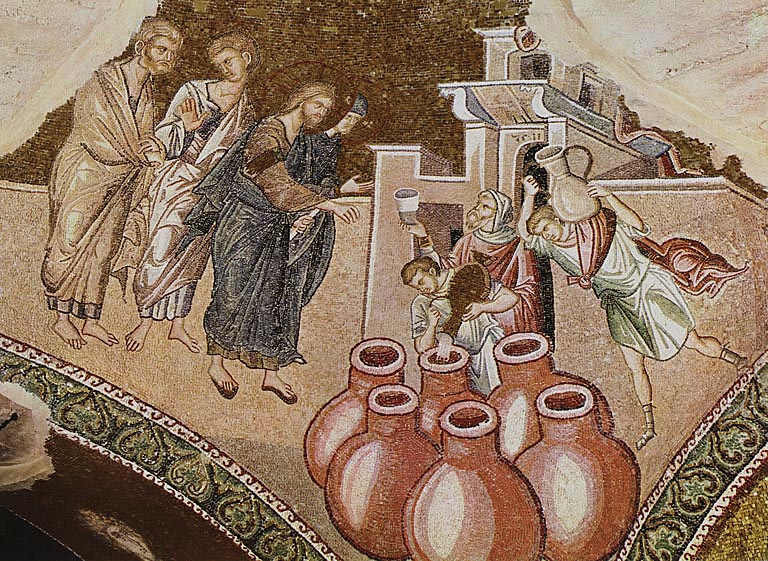
The Hellenistic derivation of these and many other examples is indisputable; among them we would draw attention to the Marriage at Cana. Here a particular episode takes place in which a man slaughters a calf. Both appear vigorous, depicted with meticulous attention to anatomy so as to bring out the musculature, and they give the impression of being in perfect symbiosis, so much so that they seem to form a single whole. It has often been claimed that the mosaics of Kariye-Camii lack realistic innovations, as is indeed frequent in Byzantine art, but this is not at all true. In fact, within the depictions certain faces stand out, as does a characteristic deformation of the nose, entirely realistic and by no means common in Byzantine representations until then. Besides these peculiarities, one must also remember the importance of the use of the ray of light, essential in making the depictions realistic.
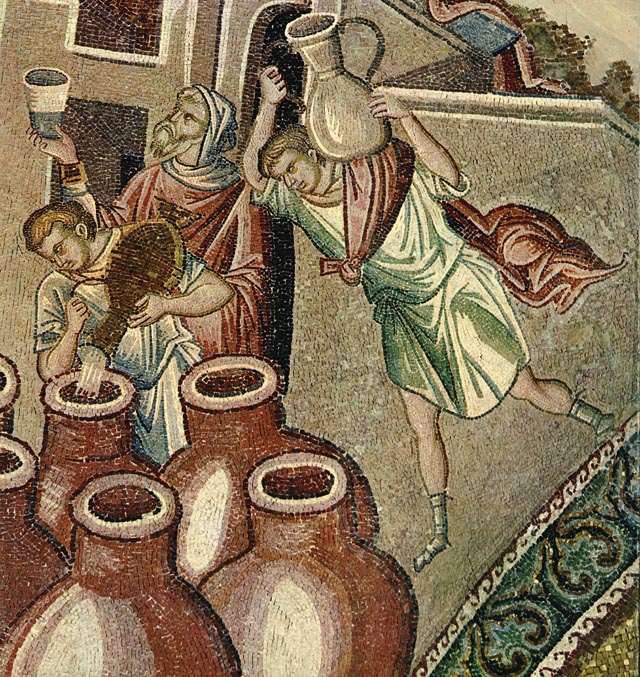
A concrete example to explain its effect is the Miracle of the water transformed into wine, where the jars in the foreground, struck by this ray, take on a three-dimensionality of their own.
Besides the elements examined, however, there is a notable presence of figures with classical features, in keeping with the most common Byzantine traditions. It should also be pointed out how the figures, although depicted with clearly defined musculature, appear fragile, with decidedly small heads and thin legs, and how everything is rendered in so precise and detailed a manner as to take on a precious and refined appearance that recalls, in many respects, Gothic painting. Among the most significant elements, particular emphasis should be placed on the artist’s great knowledge of anatomy, as he replaces the typical outline of the anatomical parts of the Byzantine nude with the use of a very soft chiaroscuro, and on an astonishing awareness of perspective.
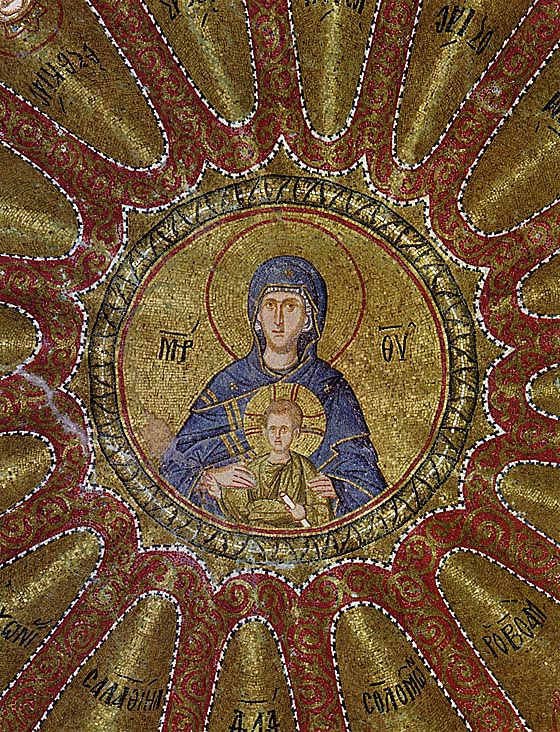
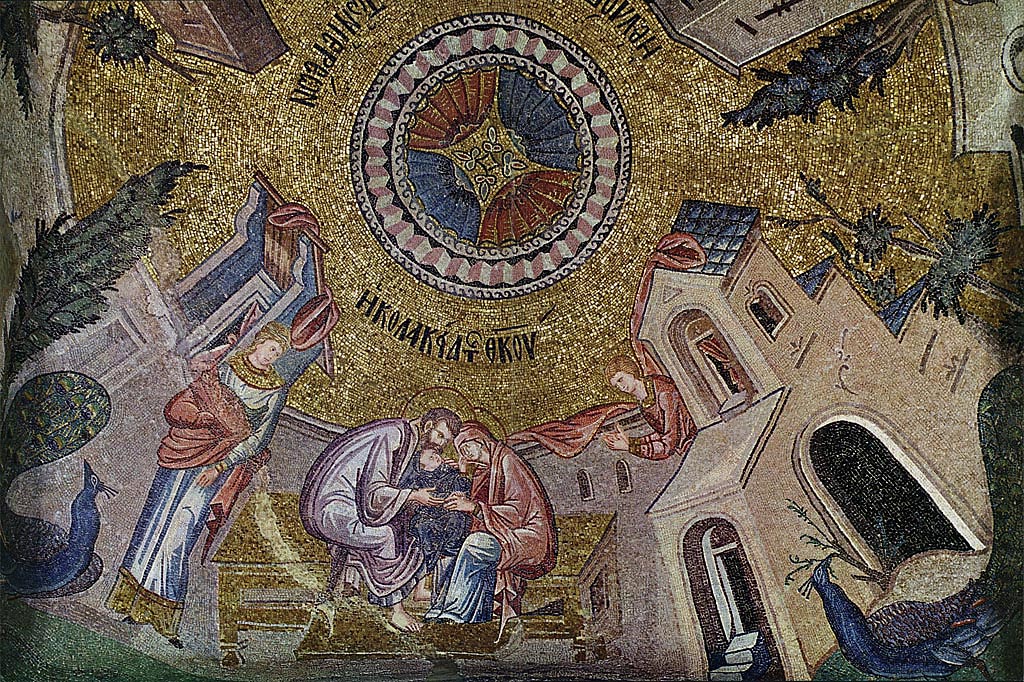
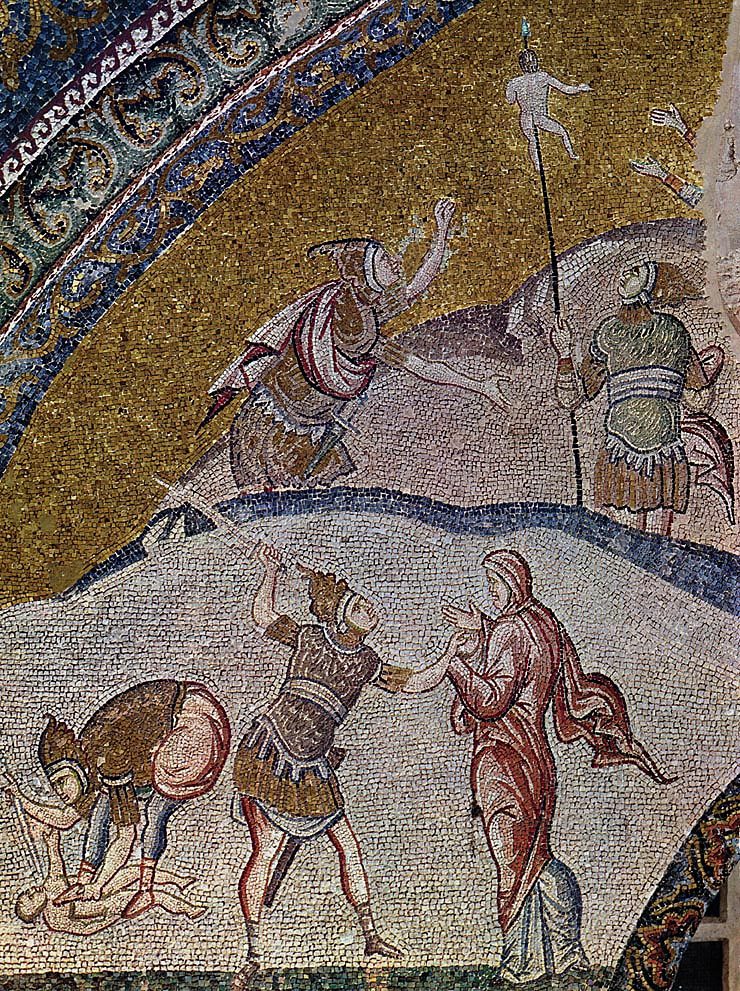
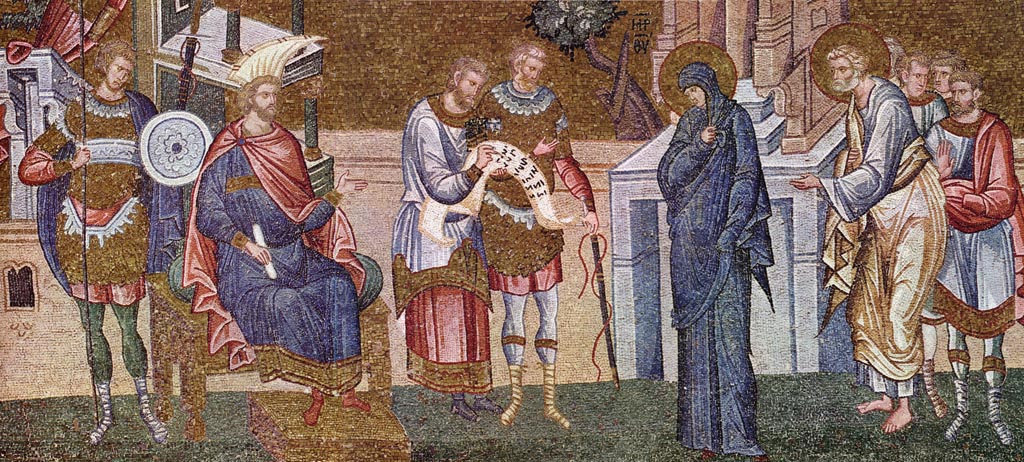
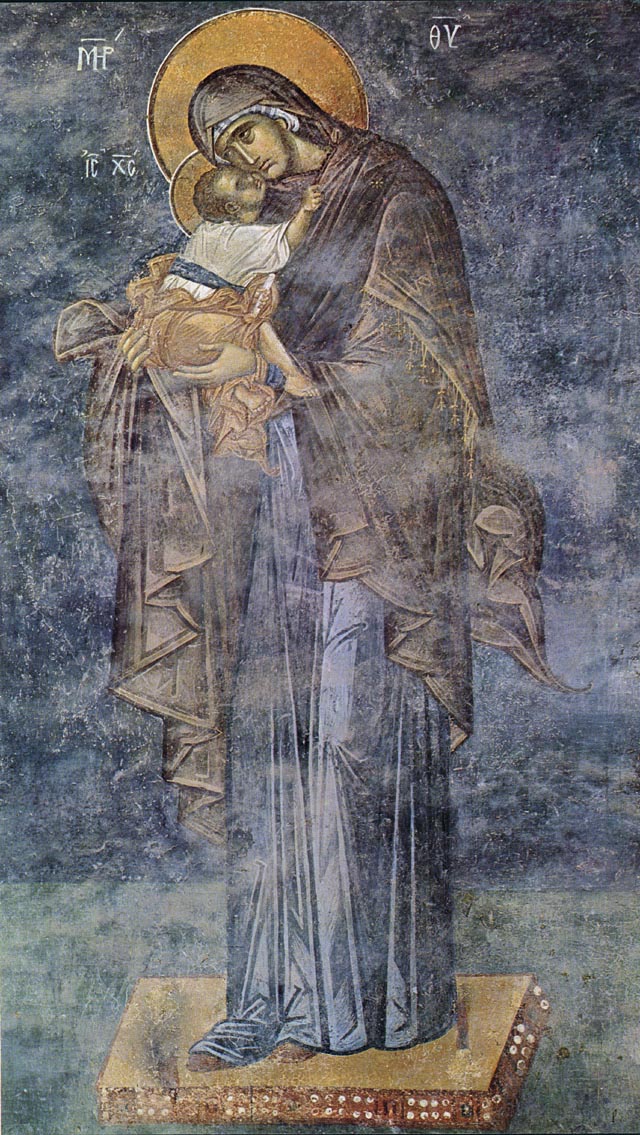
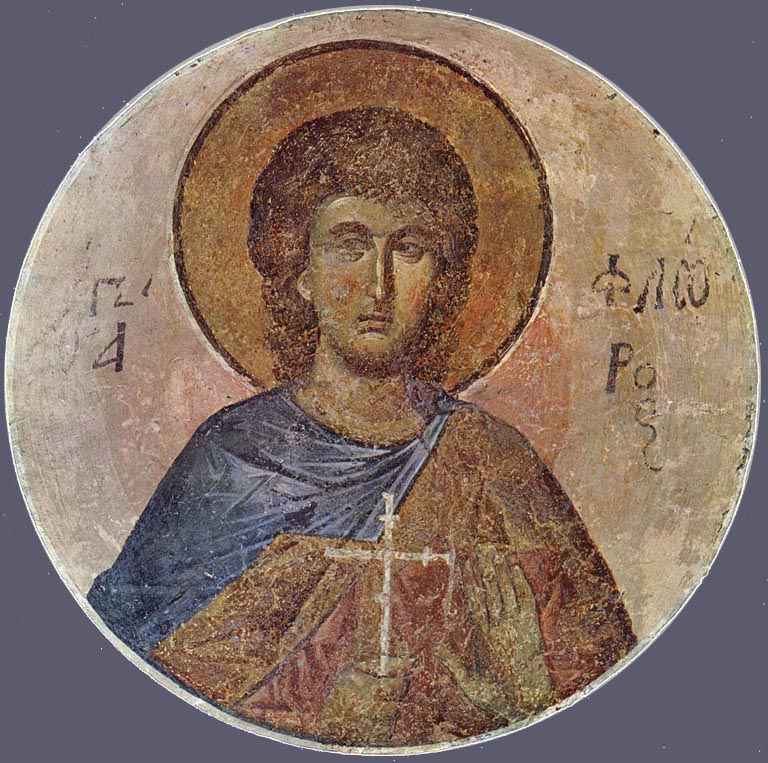
In the mosaics of Kariye-Camii, the depictions of the Gospel narrative take on a fairy-tale quality that, through poetry, goes beyond the usual static and repetitive character typical of Byzantine works. The most admired mosaics in the church are the great cycles on the vaults but, to fully understand the atmosphere that can be felt inside Kariye-Camii, it is important to mention the isolated mosaics placed on the walls of the nave and the vestibule, in which Christ, the Virgin and the apostles often appear. We may recall the two medallions on the two domes of the narthex, depicting Christ and the Virgin and Child respectively, around which, in two superimposed rows, are depicted the biblical ancestors of Jesus on one side and the prophets and other figures of the Old Testament on the other. This last observation is rather important, since Byzantine art never depicts biblical events except in the Palaeologan period. At this point it is possible to make a topographical distinction, with the biblical cycles in the vestibule preceding the nave and the cycles relating to the New Testament in the nave. The particular feature of the narratives in this work lies in the fact that the stories are limited to the childhood of Mary, then to that of Jesus, while for the rest of the Gospel story only the miracles of Jesus are treated. The scenes concerning the childhood of Mary and of Jesus are on the vaults and tympana of the narthex and on part of the vault of the exonarthex. The mosaics concerning the miracles of Jesus, on the other hand, are placed in a vestibule and form a cycle that remains independent of the series of the great Gospel feasts, which comprises all the other depictions and whose essential theme was the expectation of the Son of God and his Incarnation. In the arches between the vaults of the two narthexes a long series of saints and martyrs is depicted, while in a tympanum there is a mosaic depicting the Virgin holding the Child Jesus to her breast. Attached to this image is an inscription that reads: “country (Chora) of those who have no country”, which recalls the Greek name of the monastery.
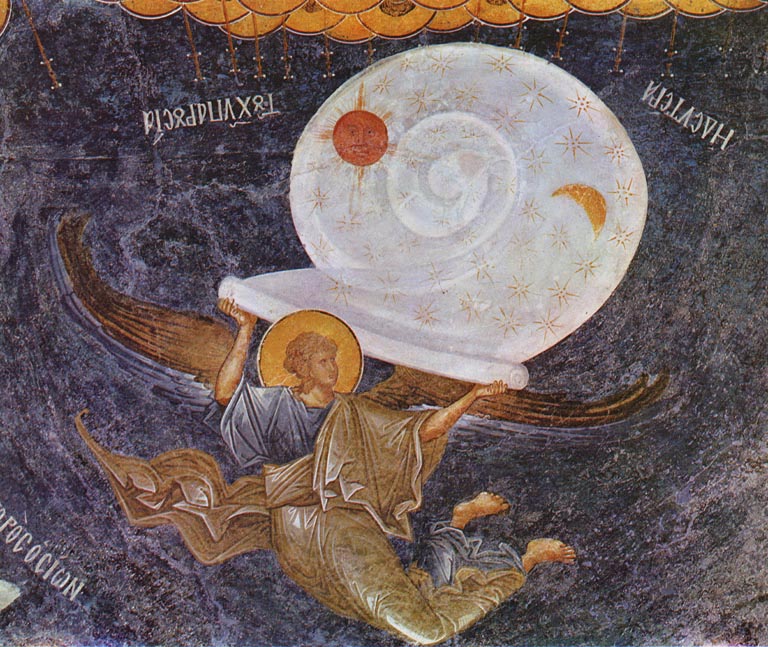
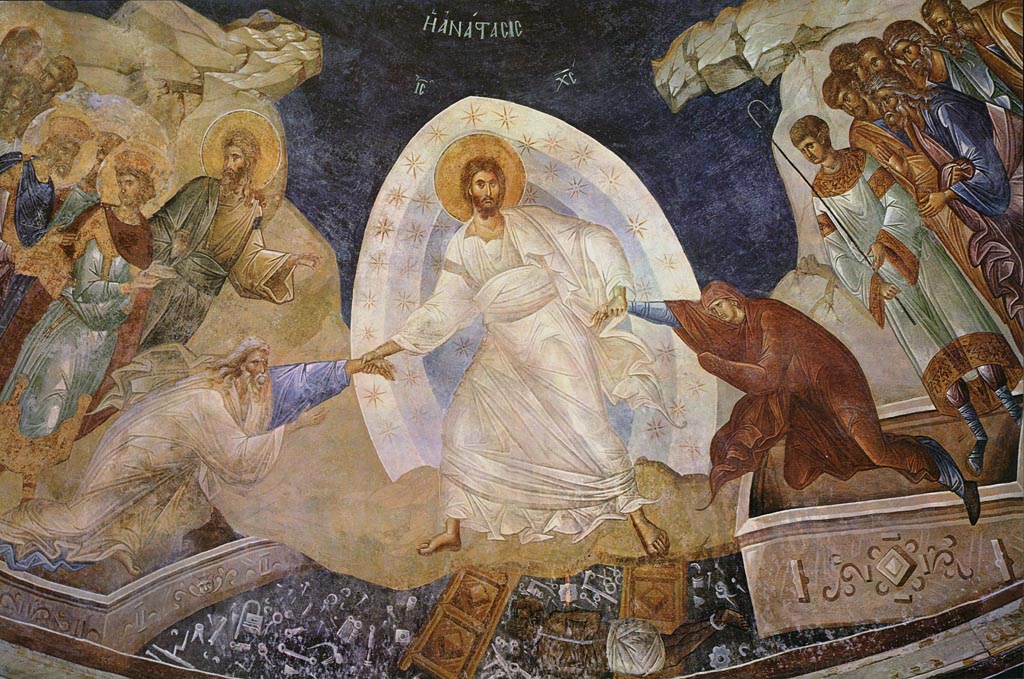
In the south chapel are the frescoes of the Descent into Limbo and two scenes of resurrection performed by Christ. The vault in front of the apse is entirely devoted to the Last Judgement, while in the second vault, through great historical scenes, some biblical events are recounted that are regarded as emblems of the Mother of the Saviour. Another splendid image is in the dome of the entrance nave: a Virgin and Child surrounded by a circle of angels.
The photographs