Michael Pacher
The fascination one feels before the figure and work of Michael Pacher arises from a set of uncertainties, almost an aura of mystery of both a biographical and an artistic nature. We do not know exactly when he was born, nor where (encyclopaedias play it safe and say: perhaps Novacella, Bressanone, around 1435; died in Salzburg, 1498); we know who inspired him, but not his masters, meaning those of the “workshop” that, by long-established tradition, he must have attended; we are unsure whether to classify him as a painter or as a sculptor-woodcarver, if we ask ourselves – idly – which form of artistic expression he preferred and which was regarded as his “trade”. At times his painting combines high points with the odd slip and unexpected simplifications, so much so that critics have long debated the boundary between autograph work and the contributions of pupils and assistants. Finally, the literature on Pacher offers such a range of conflicting datings, of disparate hypotheses on the schools that inspired him, and of overall assessments, as to make one’s head spin. A difficult subject, then: better to regard him as a “great isolated figure” and admire his work.
The exact date of his birth is of relative importance; there are documents proving his presence and activity in known years and places; the places where he lived (Val Pusteria, Alto Adige) are significant, because they make Pacher a border artist, the link between distant and at times opposing cultures, such as that of the Veneto and Padua, with the works of Giovanni Bellini, Paolo Uccello, Mantegna and Donatello, and the realist-leaning culture of the schools of Vienna and Salzburg and of the Flemish painters. His stay in Padua, with excursions to Venice, was in any case decisive for his painting, in which one sees enthusiasm for Mantegna’s architectural vistas, the use of light as the protagonist of the picture following the lesson of Lippi, a love of detail and boldness in colour contrasts.
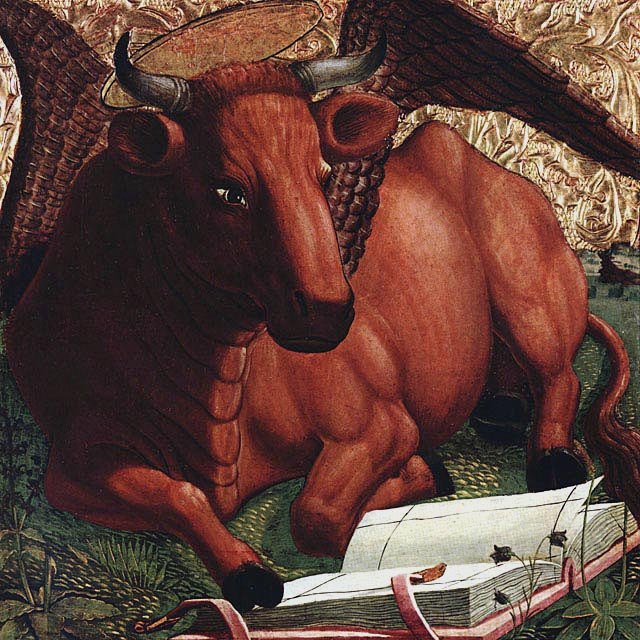
In one of the works considered early, the Altarpiece of St. Thomas Becket, datable to between 1460 and 1465 (though one critic moves the date to 1475, and yet another, to make things easier, puts it at the end of the century), of which only two small panels survive, in Graz, one can already see innovations compared with the broadly “German” tradition: the bull symbolising Luke the Evangelist, on an inner wing of the altarpiece, is placed in a new perspectival position, decidedly foreshortened. The animal is portrayed realistically, even if the diagonal view makes its legs look a little short and its ears “strange”. But pay attention to the book between its legs, which bears no writing, yet the lines of what could be the page layout grid are made visible even on the edge of the closed pages, and look at the grassy ground beneath: a botanist could not have drawn the plantain and the bellflower in front of the book, or the common sage on the left, any better. The arrow-shaped leaves under the bull’s right leg might then seem excessively geometric, almost a moment of weariness in the painter’s hand: but they are those of field bindweed, evidently not yet in flower. These are moments of “evident descriptive pleasure”, as one critic wrote. It is as if Michael Pacher carved out for himself, in every work, moments of private recreation, perhaps letting other details slide, such as the bull’s ear.
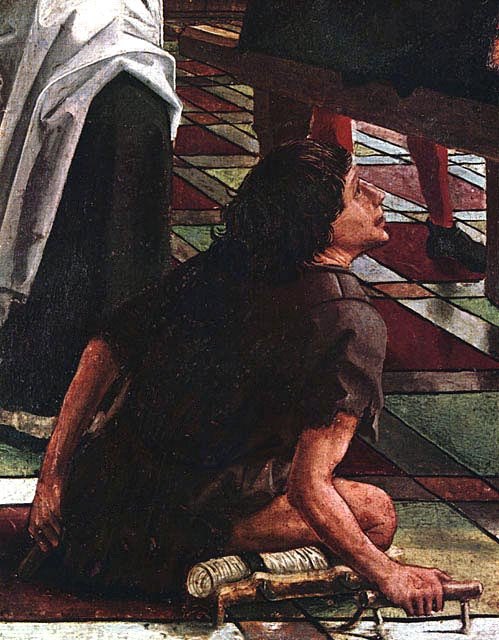
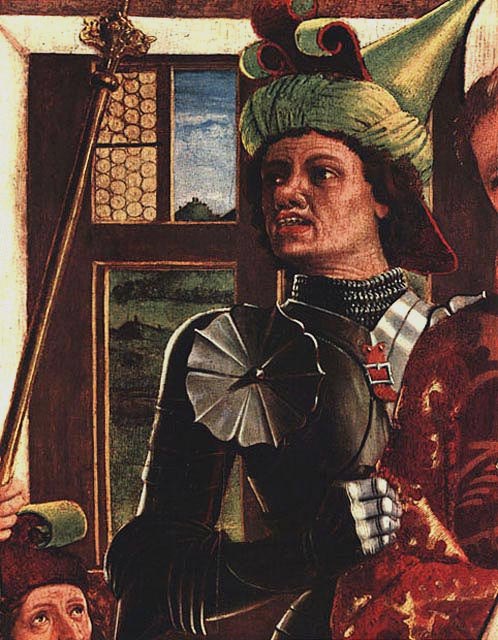
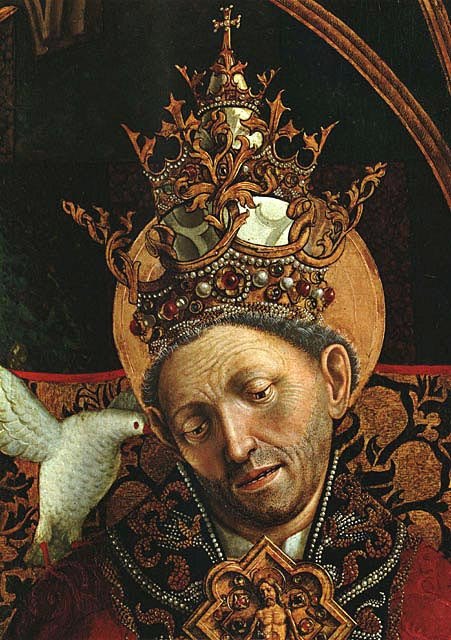
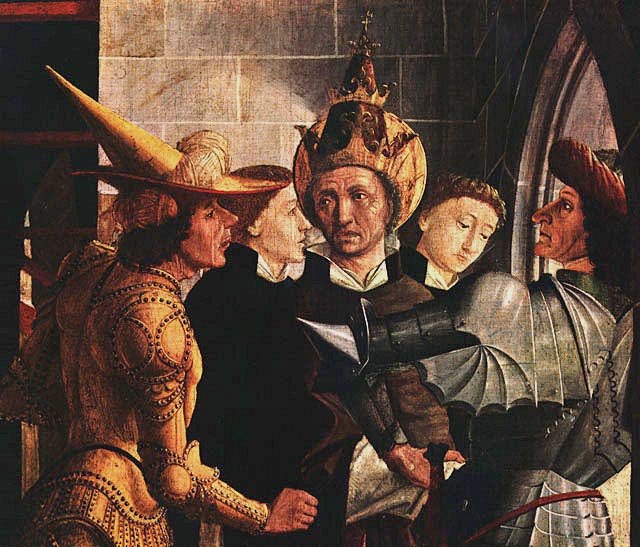
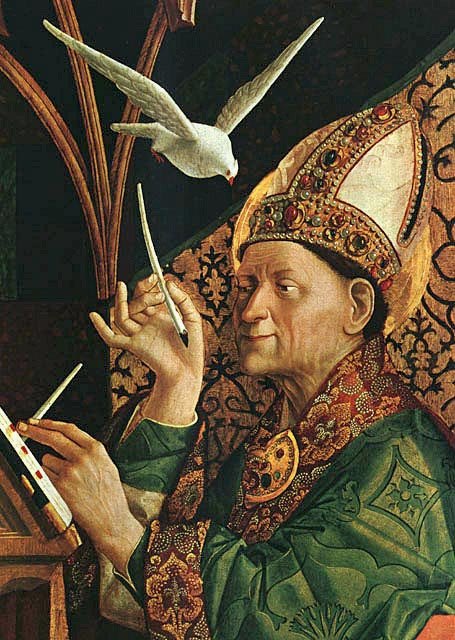
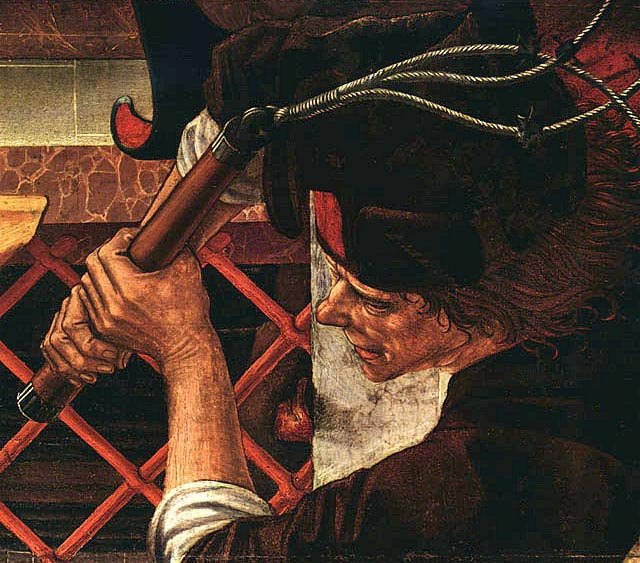
The same care for detail can be admired again in the floor of the Funeral of St. Thomas Becket, and in the details of the armour of the soldier holding back the saint in St. Lawrence before the Prefect, as well as in the view glimpsed through the window behind him. If, on the other hand, one wished to give due attention to Pacher’s skill in portraying faces, one would have to look for it in the main figures, as in the Capture of Pope Sixtus, another panel of the St. Lawrence Altarpiece, and in the saints of the Church Fathers Altarpiece; and one will notice that while the protagonists have realistic features, like mountain folk from Val Pusteria – such as the St. Gregory with his mitre and highly elaborate vestments and his five o’clock shadow – the secondary figures are at times given stock features, inspired by paintings rather than by real people.
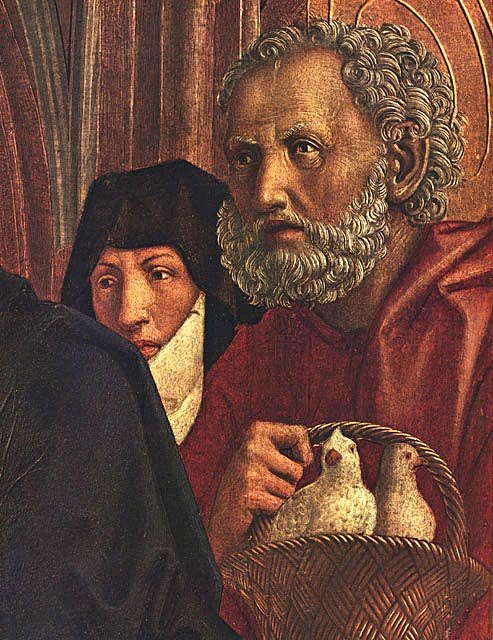
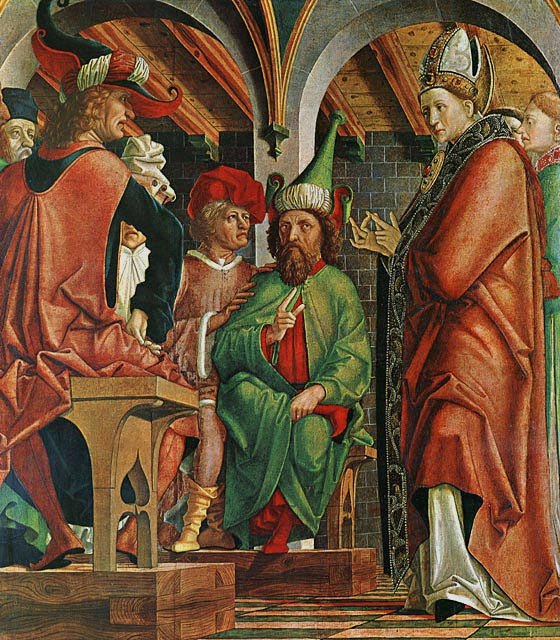
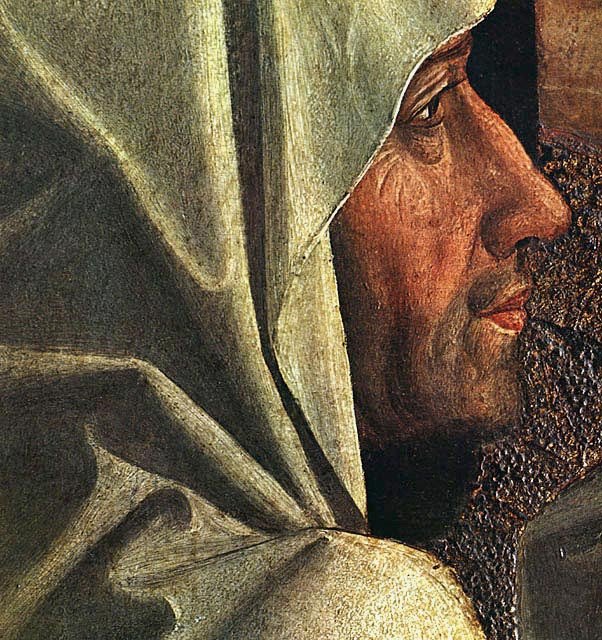
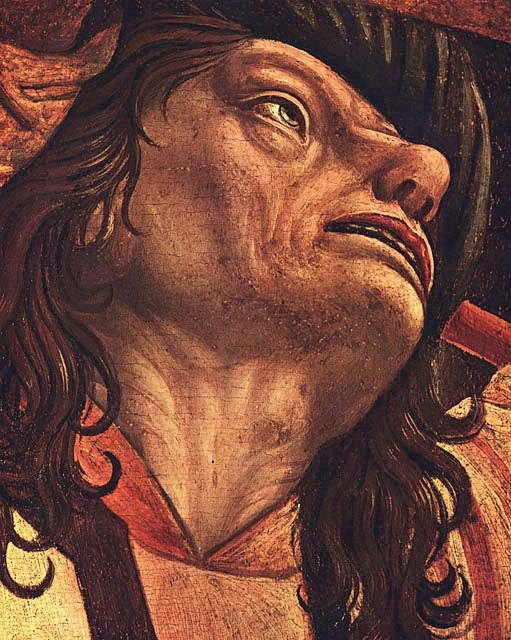
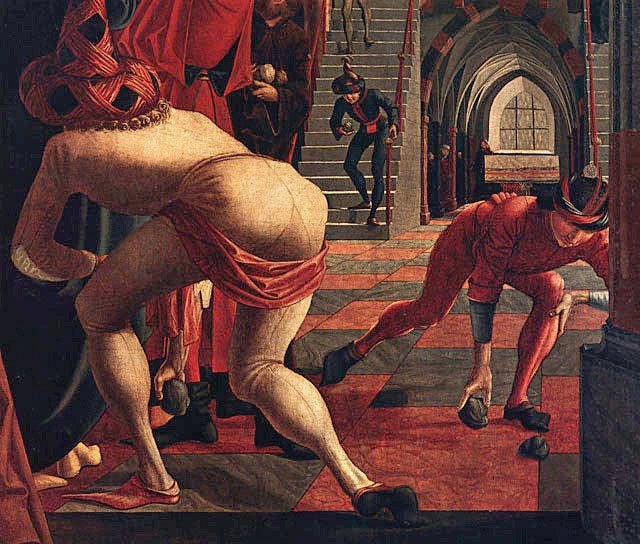
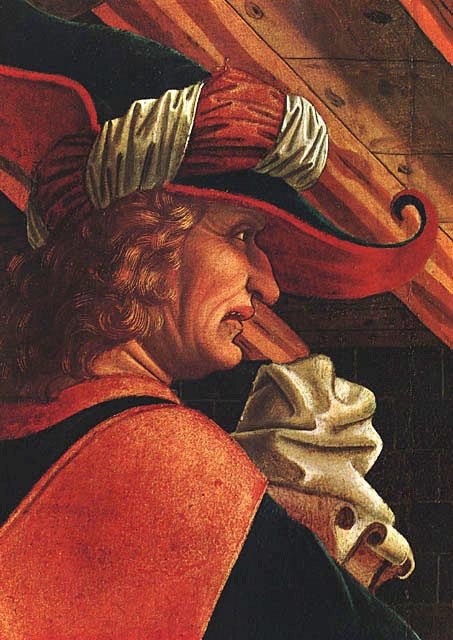
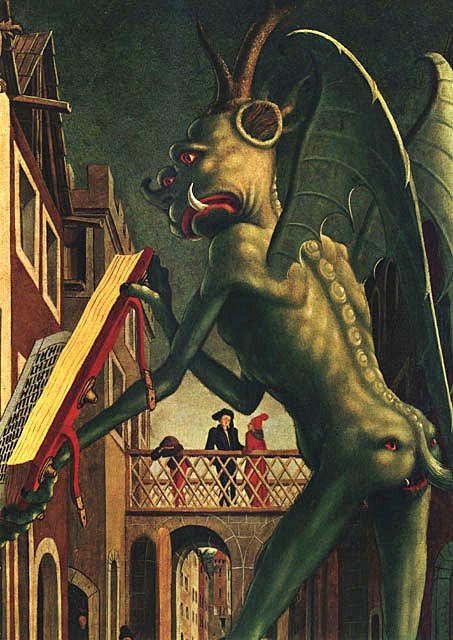
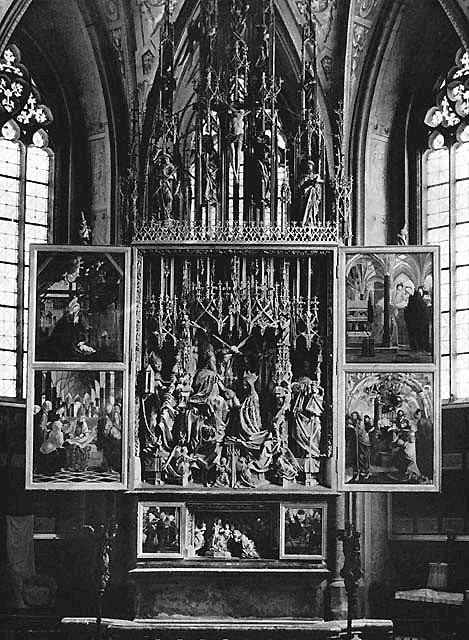
In the high altar of St. Wolfgang, for example, the St. Peter bearing the doves as an offering in the Presentation in the Temple belongs to iconography, and not to the places where Pacher lived and which he often reproduced in his works. The same may hold for the nose, worthy of a Duke of Montefeltro, of one of the heretics in the Dispute, on an outer wing of the Church Fathers Altarpiece. But on the whole Pacher’s work offers a very rich gallery of portraits, mostly male, taken from life: close-ups motionless in contemplation (see the detail of the Circumcision of Jesus), or faces twisted into grimaces, or bodies in poses that smack of anatomical and perspective study, as in the Flagellation of the Salzburg Altarpiece and the Attempted Stoning of Christ of the St. Wolfgang Altarpiece. Nor is there any lack of innovations in colour and draughtsmanship, a surprising example of which is the surreal devil of the Church Fathers Altarpiece, bright green and endowed with a second face in a strategic position. Beyond the figure of the devil, from whose ears flames innovatively issue, one glimpses the gate and houses of a Tyrolean town laid out as a lesson in perspective.
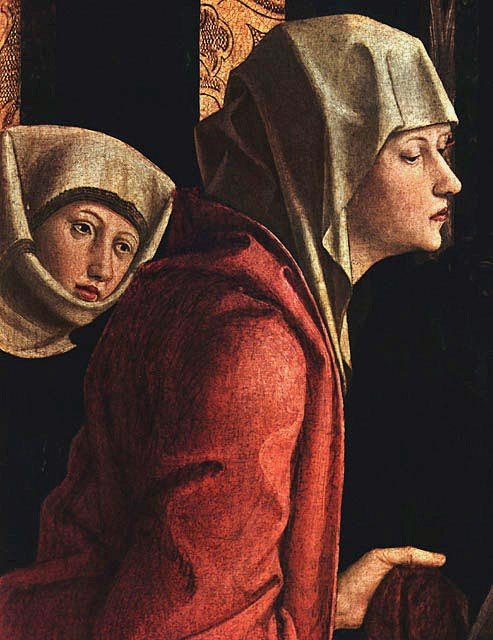
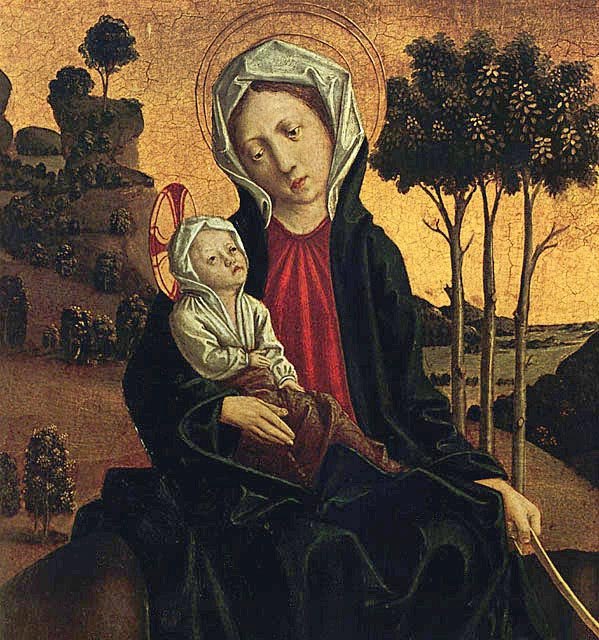
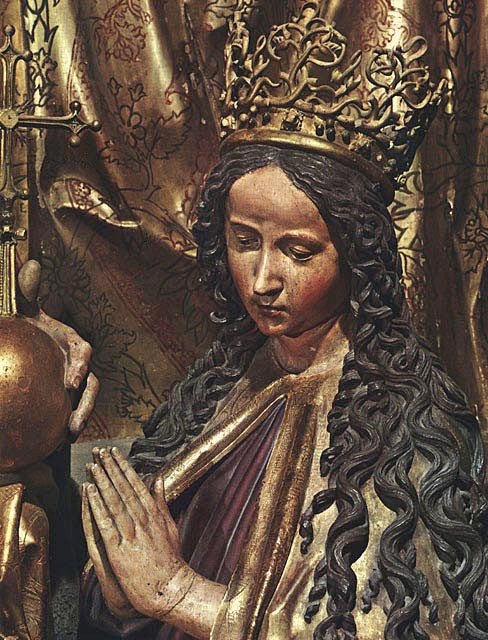
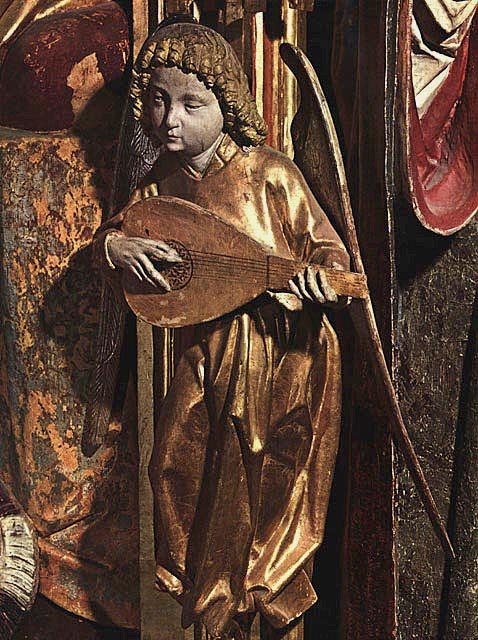
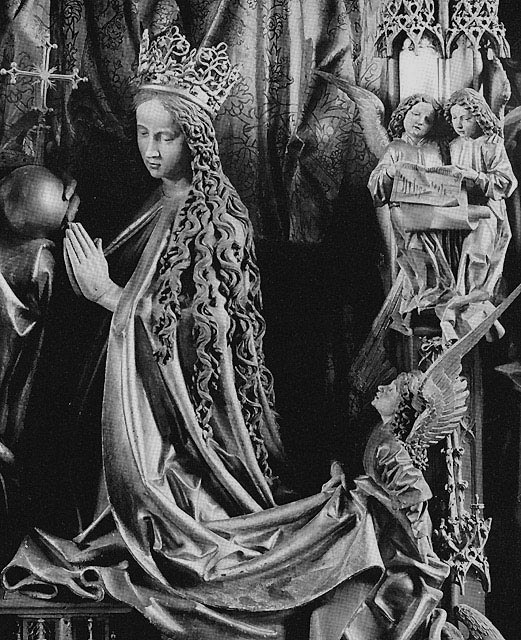
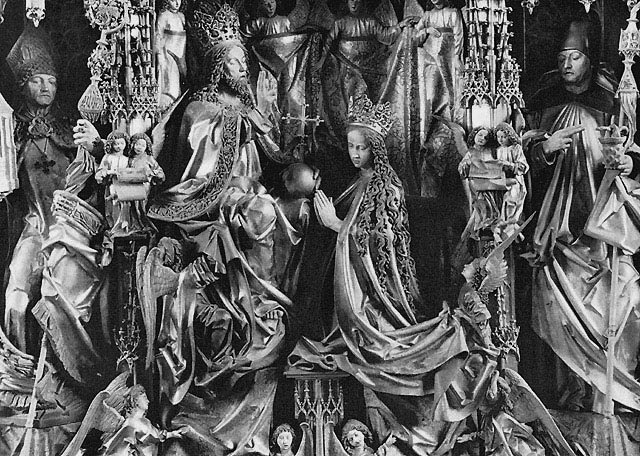
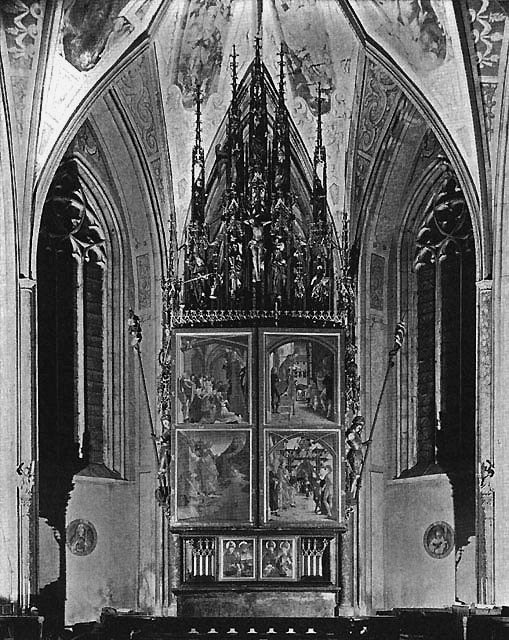
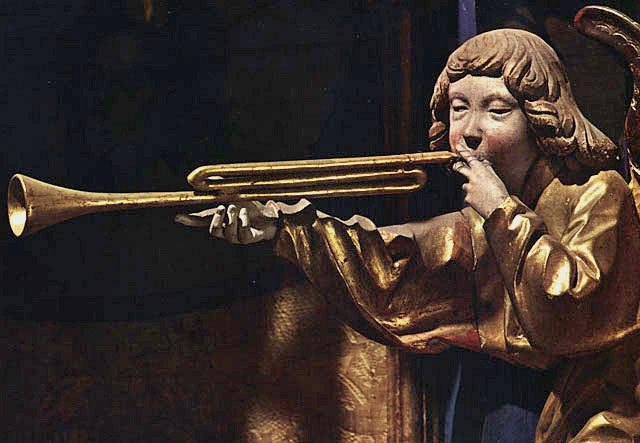
If one is looking for female portraits, it is best to pass quickly over the face, more gloomy than sad, of the Madonna in the Flight into Egypt – a work perhaps to be attributed rather to Johann Pacher, Michael’s son – in the high altar of the parish church of St. Wolfgang (note the difference from the faces of the women attending in the Circumcision of Jesus, on an inner panel), and to admire instead the wooden sculptures, such as the Madonna of the shrine of the same altarpiece. It should be pointed out that the making of altarpieces such as these, extremely complex works from an architectural, sculptural and pictorial point of view, could take a very long time, and therefore require the involvement of many collaborators: documents on St. Wolfgang show that Pacher took no less than ten years to complete it. The hands of the Madonna of the shrine, the result of a restoration, are a modern addition: but what is there in this polychrome statue more modern than hair of a length never seen in a depiction of the Virgin, or the delicate yet daring colouring of the cheeks? It would truly seem that Pacher had a happier, or freer, hand in the complex architectural and statuary construction of the altarpieces: still rather rigid and symmetrical in the shrine of the one at Gries, but decidedly animated, full of draped figures and delightful details, in the altarpiece of the church of St. Wolfgang. Yet even in the Gries shrine one can see how Pacher is almost more of a realist in sculpture than in painting. The music-making angels have entirely natural postures, instruments and hands, far more innovative than any precedent in the cultural area in which Pacher worked. One last question, then: is it still possible, as some commentators have done, to describe him as a “late Gothic” artist? Clearly this is part of Pacher’s mystery, and of his appeal, for few painters and sculptors know better than he how to win admiration while at the same time raising questions that prompt us to study him, or at least to look at him, with ever greater attention.
The photographs