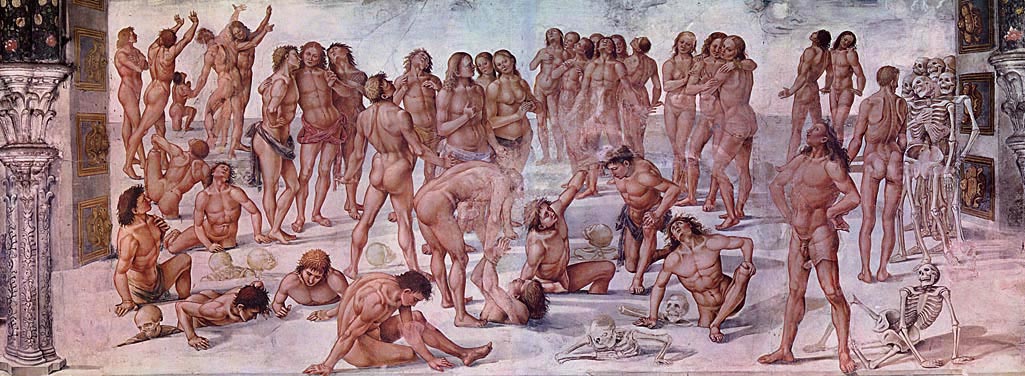
Signorelli — Cappella di San Brizio, Duomo di Orvieto
The frescoes of the chapel of San Brizio in the Cathedral in Orvieto represent one of the greatest Italian Renaissance works of art.
The work, carried out between 1499 and 1504, was completed by the great master Luca Signorelli. The frescoes of the chapel had first been commissioned from Fra Angelico in 1447, but he painted only two of the four vault sections entrusted to him and, what is more, took a full two years over it. Fra Angelico was then suddenly called to the Vatican, and the work inexplicably remained at a standstill until 1499, the year that marks the start of work by Signorelli. The initial commission was limited to the two vault sections already designed by Angelico and left unfinished, but Signorelli, thanks to his mastery and speed of execution, so impressed and astonished the people of Orvieto, who were tired of waiting for the work to be completed, that they immediately entrusted him with frescoing the other four vault sections of the entrance bay and the walls of the chapel. The people of Orvieto, however, were not the only ones to benefit from that commission; for Signorelli too, in fact, the work meant a great deal. He was indeed going through a difficult time in his art, full of doubts and uncertainties caused by the various influences of the culture of the time.
Very probably, therefore, he took that opportunity to put an end to his various experiments and seek a new way of expressing himself. Moreover, the space to be frescoed and the subject to be treated offered a truly unique opportunity to put himself to the test, demonstrate his talent and make known the innovative elements of his art.
His masters, Piero della Francesca, Pollaiuolo, Masaccio and many others, with their teachings, led him to become a forerunner of Renaissance art.
Signorelli came to tackle that work at a time of social and political crisis and decided to set aside every kind of archaic element, with which he had worked until then, preferring to devote himself to his work with a painting capable of expressing his feelings, his strong emotions and, above all, the ideas of his time.
In this regard it is only right to mention Berenson, who described him almost as an illustrator who immerses himself in his work with all his culture, his ideals and his feelings. Signorelli, taking Dante as his source of inspiration, he succeeds in creating an extraordinarily monumental work, by means of a melodramatic narrative.
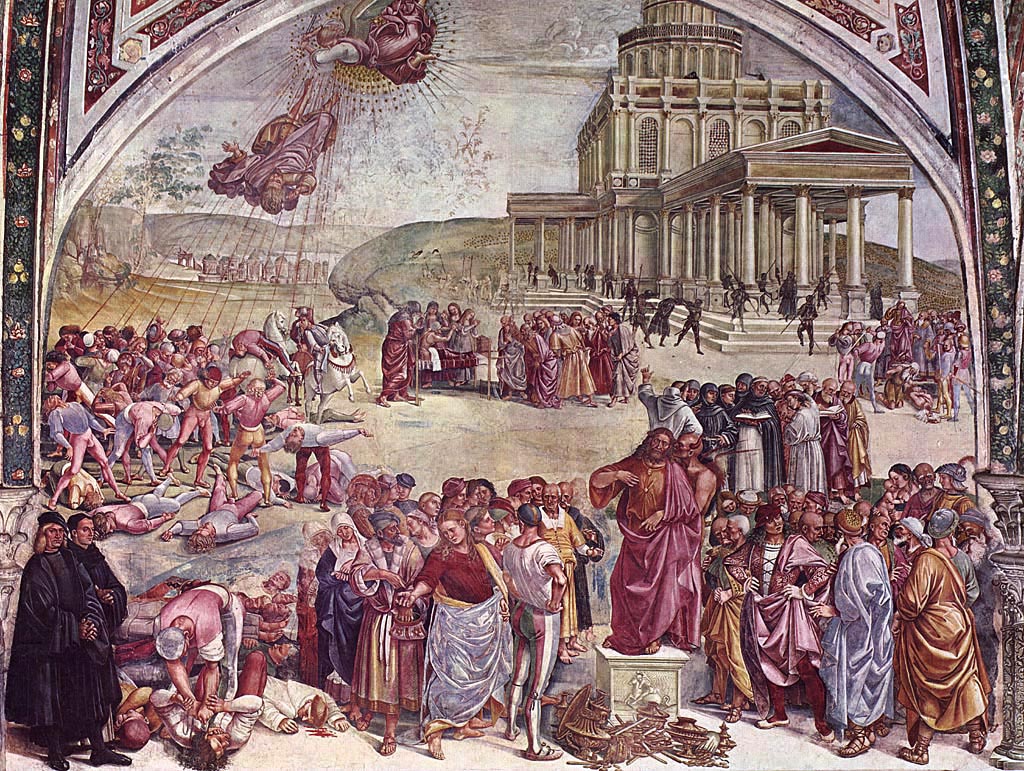
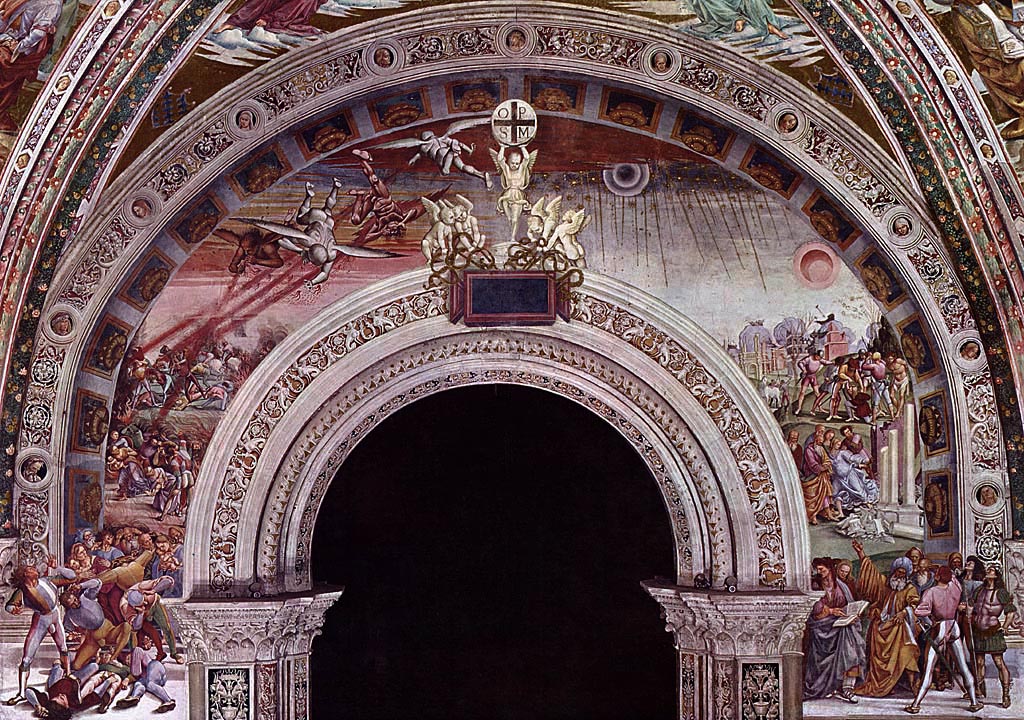
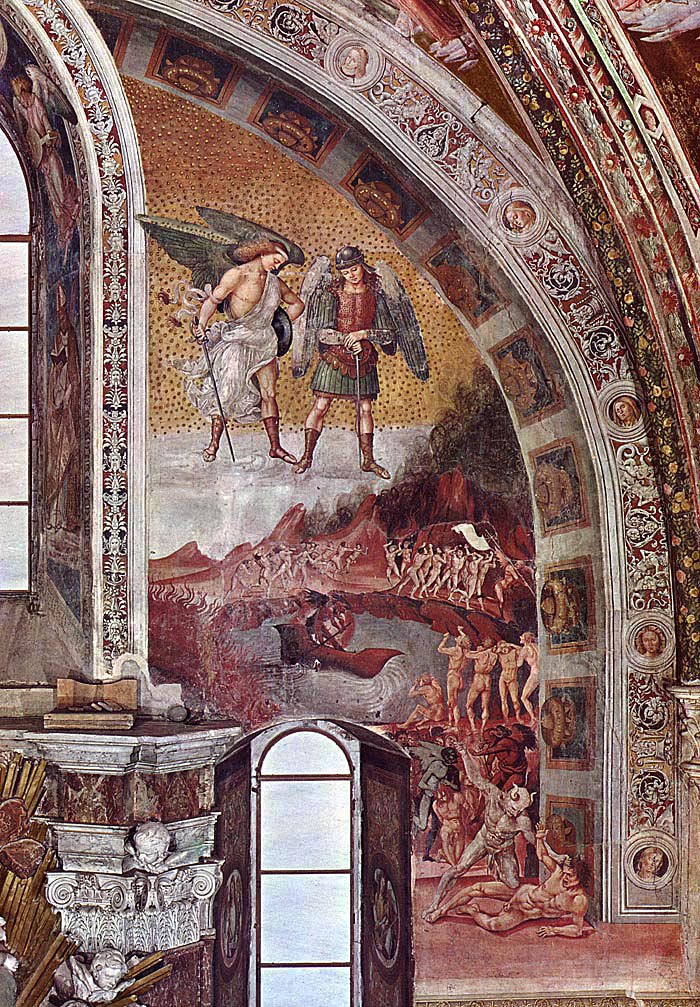
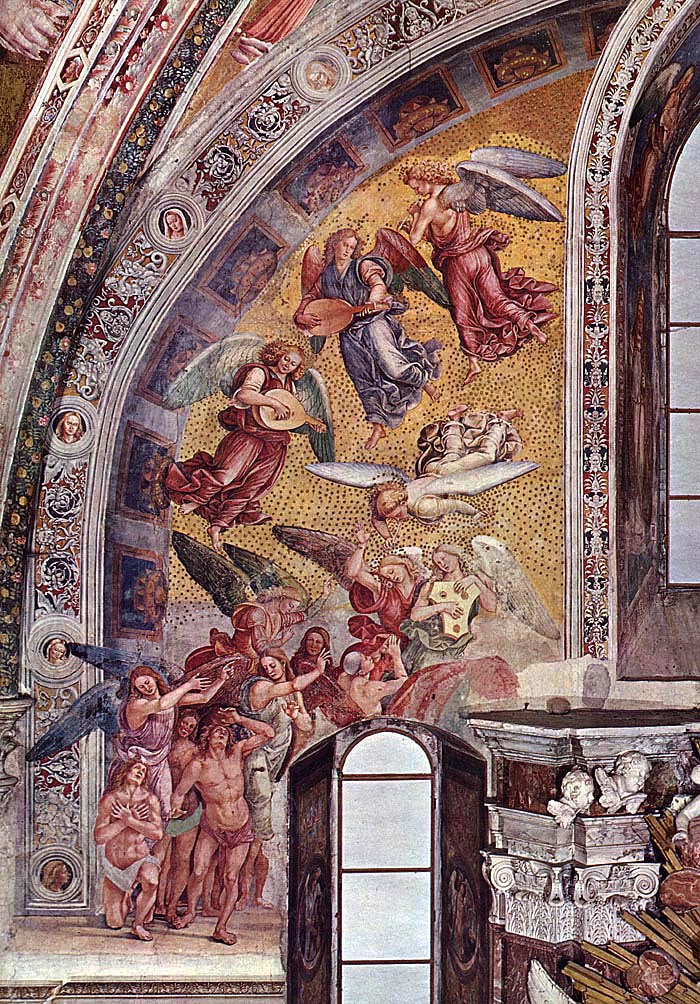
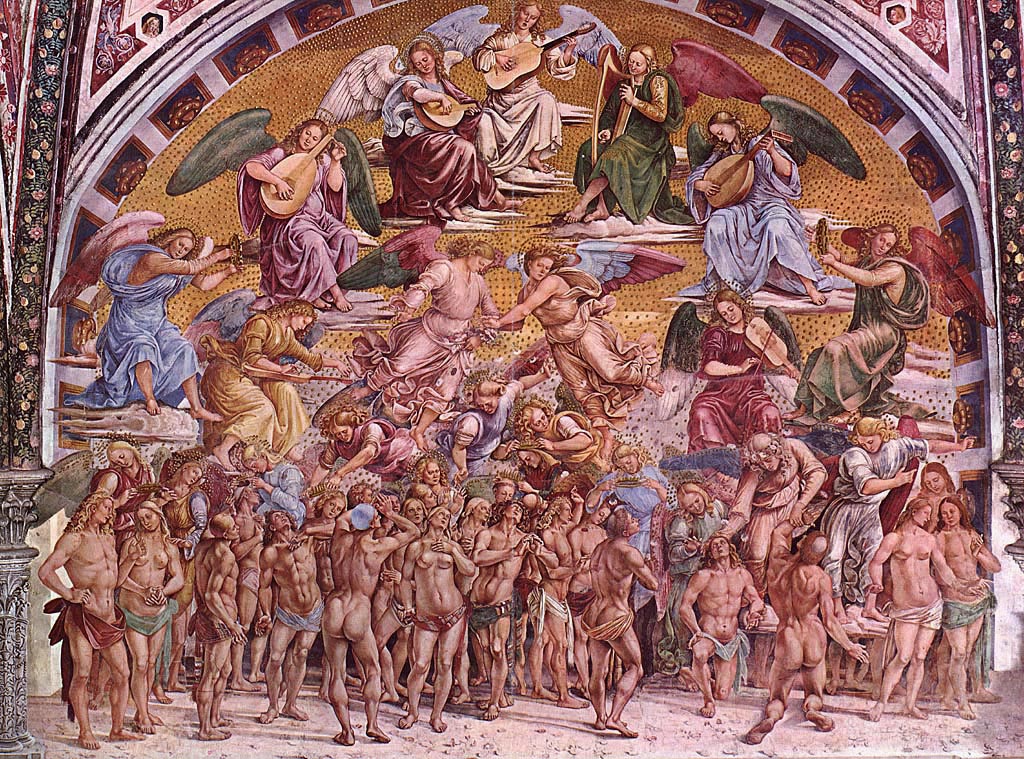
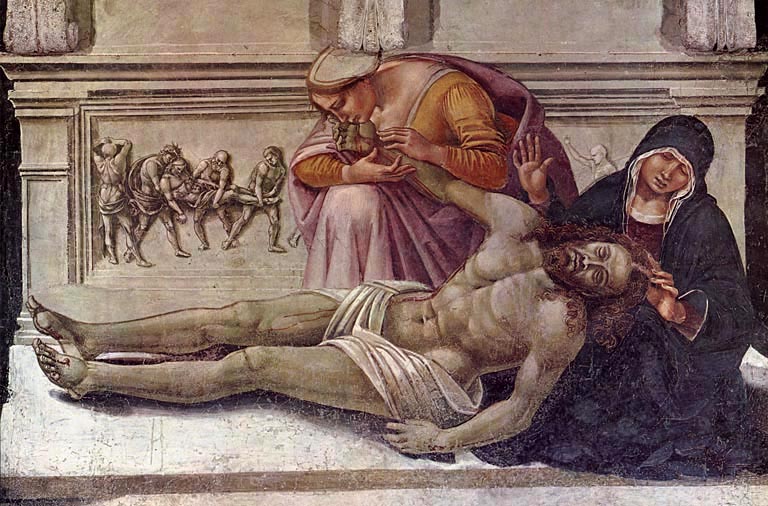
His work, indeed, has often been called theatrical, precisely because of his tendency to pay the utmost attention to the smallest detail, as if the scene were to turn into a spectacle, and to ensure that, within the splendid choral unity of the work, every figure lives a life of its own. Seven frescoes were masterfully painted by Signorelli to represent the Apocalypse, which has always been considered one of the greatest dramas of human history. Within these frescoes Signorelli, thanks to his great passion for anatomy and his perfect use of perspective, treats the human figure by emphasising not so much its inner life as its physicality and, letting his own emotions show through a hard, statuesque draughtsmanship, creates a new way of conceiving and representing sacred art.
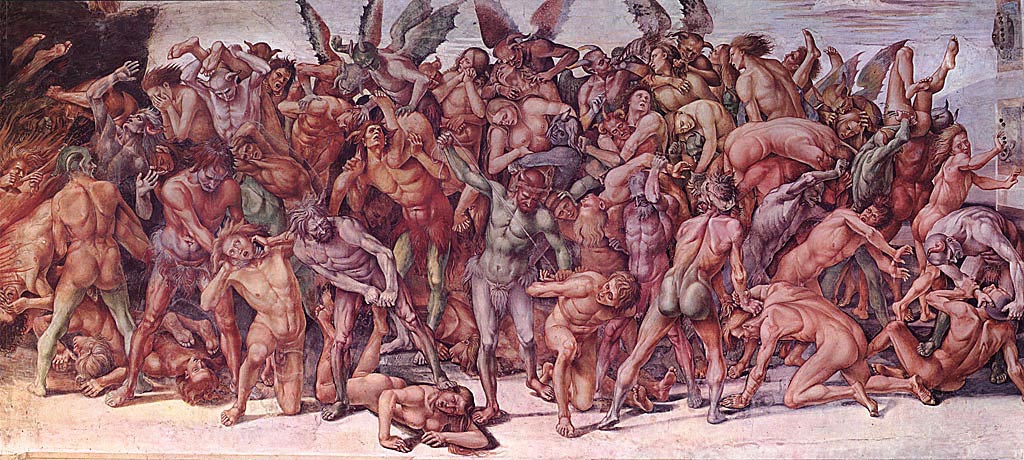
Signorelli paints human bodies realistically, in constant movement, crowded together and entwined with one another, and above all, thanks to his depiction of the nude, he succeeds in conveying a new vision of Christianity, made necessary by the need for renewal in the religious sphere that was bursting forth in those years.
Over all the scenes of the frescoes towers the figure of Christ, depicted high up in the vault as supreme judge, to remind humanity that in the end it will stand before him to be judged. Men will thus be damned or saved according to their conduct on earth.
In Christ the Judge one immediately recognises the hand of Fra Angelico and his workshop, with its perfect, refined style and meticulous attention to detail.
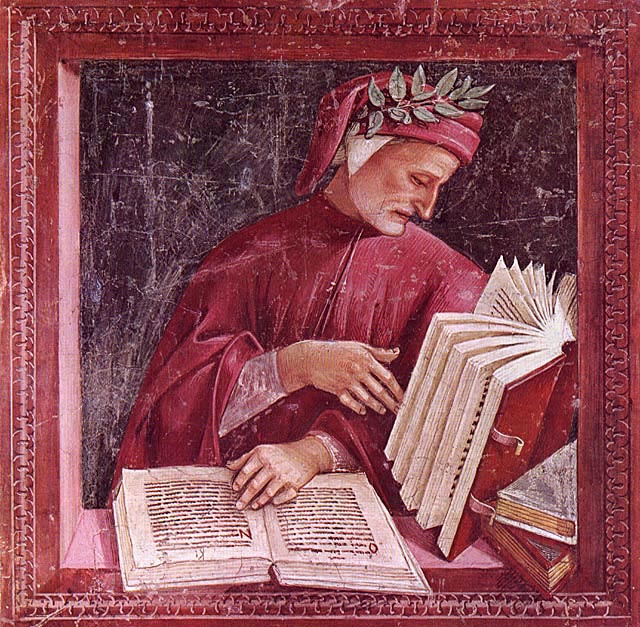
It seems essential, finally, to touch on Signorelli’s relationship with Dante. The latter, portrayed among the listeners of the Antichrist and on the dado, among poets and philosophers, was an inspiration, both ideologically and in formal representation. The demons, in fact, with their cruel savagery against the damned, are the same ones described by Dante in the Divine Comedy
The photographs