Michelangelo Merisi da Caravaggio
Introduction
Milan 1571 – Porto Ercole 1610
Porto Ercole, July 1610
Michelangelo Merisi da Caravaggio, a painter who had enjoyed the protection of cardinals and prelates, famous and imitated, but also wanted by the papal guards for a murder committed in Rome in 1606, is found dead on the beach at Porto Ercole. He was that shabby individual with a scarred face who for two days had been trudging along the shore, cursing the sun and damning a ship that only he could see. “He boarded a felucca with a few belongings to come to Rome [from Naples], returning on the word of Cardinal Gonzaga, who was negotiating his pardon with Pope Paul V. When he reached the beach he was instead taken prisoner and put in gaol, where he was held for two days and then released; but he could no longer find the felucca, so that, flying into a rage like a man in despair, he went along the beach under the lash of the midsummer sun to see whether he could sight at sea the vessel that was carrying his belongings. At last, having reached a place on the beach, he took to his bed with a malignant fever and, without any human help, within a few days he died miserably, just as he had lived miserably.” Giovanni Baglione, Le vite de’ pittori, scultori, architetti e intagliatori..., Rome 1642.
Thus one of his principal biographers recounts Caravaggio’s last days: a commentator who was not exactly detached, as can be seen from the venom in the tail of the sentence, who had crossed paths with the painter “in the courts of law” and, a painter himself, had at first fallen under his spell, only to arrive at a sincere and avowed hatred. Perhaps he had also suffered from his competition, in the field of friendships, patronage and commissions. Baglione’s version of the facts is shared by the abbot Giovan Pietro Bellori: in a work of 1672 he had nothing personal against Caravaggio, but detested him as the leader of the naturalist school of painting. A third biographer has Caravaggio arriving on the Tyrrhenian coast directly from Malta, and in a letter to Cardinal Scipione Borghese we read that “poor Caravaggio did not die in Procida but at Port’Hercole, because, having arrived with the felucca on which he was travelling to Palo, he was imprisoned there by that Captain […] he freed himself by paying out a large sum of money, and by land, and perhaps on foot, made his way as far as Port’Hercole, where he fell ill and lost his life”. Some doubt might therefore be raised about Baglione’s account: but the painter’s death at Porto Ercole is certain and dated to 18 July, and its tragic circumstances truly seem the most fitting conclusion to a tormented life. He may have died of badly treated wounds received the year before in Naples from a group of obscure hired assassins, papal or Maltese, or been murdered at Porto Ercole, or fallen victim to malaria. The two days spent wandering on the beach, alone, his mind already in a critical state (a client of his in Sicily had already described him as a “deranged brain”), burnt by the sun, deprived of his few possessions by the flight of the felucca that was carrying them, add to the drama a flavour of punishment that Baglione will certainly not have disliked. But why go to the Argentario, when Rome was his destination? Because the announced act of grace commuting his death sentence did not yet bear the seal of officialdom, and it was more prudent to land in territory belonging to the Kingdom of Naples rather than in the Papal States. And before that, why leave Naples, where he had no lack of patrons willing to pay him well, if not with the prospect of putting an end to a fugitive’s life and escaping a death sentence that might be carried out even by a hired assassin, as in the obscure attack he had suffered just after returning from Sicily? Moreover, as we shall see, he also had enemies among the Knights of Malta. If one then asks the reason for his arrest and for the hasty departure of the boat – though perhaps it was a kind of mail boat with a timetable to keep – one might suppose a well-laid trap, an organised leak of news about the pardon so that Caravaggio would give himself up to the Spanish guards stationed at Porto Ercole, who were ready to do the dirty work on behalf of others, thus freeing Pope Paul V from the embarrassment in which he had been placed by the insistence of his beloved nephew Scipione Borghese, a cardinal by virtue of family ties and an advocate of the condemned man’s cause. It will be very difficult to discover what happened during those two days of imprisonment; as for the reasons for the arrest, some speak of mistaken identity, with Caravaggio taken for a wanted man partly because of the wounds he still bore on his face (“because of the blows he could hardly be recognised any more” – Baglione), others of a routine measure, under the law requiring the person to be pardoned not to be at liberty at the moment the pardon was granted. And the biographers’ insistence on the large sum paid out to obtain his release would mask a far more vulgar robbery. To complicate matters, Caravaggio is said to have presented himself to the Spaniards as a Knight of Malta, which he no longer was, and not as a Knight of Spain, an honour recently conferred on him by King Philip III.
Naples, 1609-1610
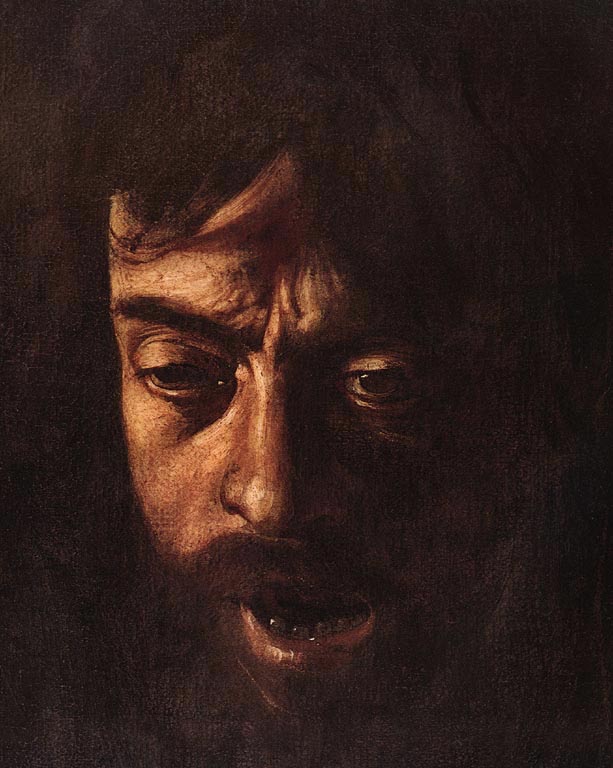
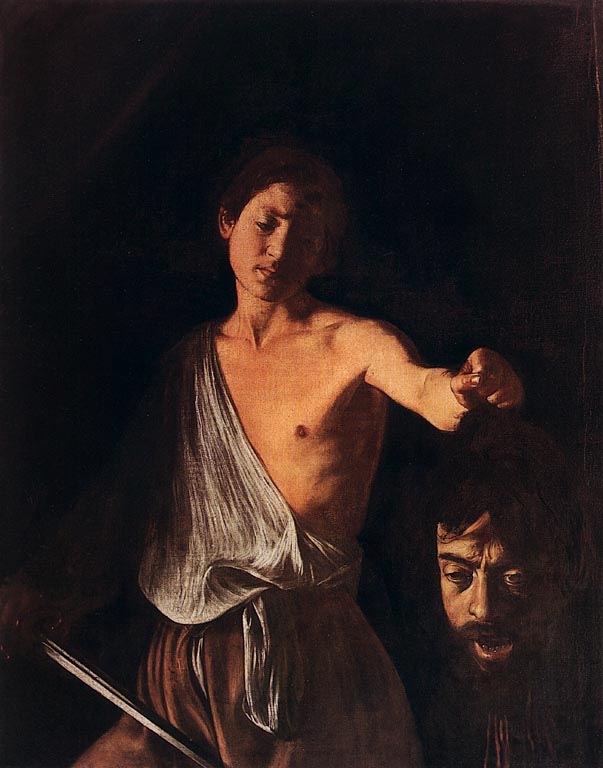
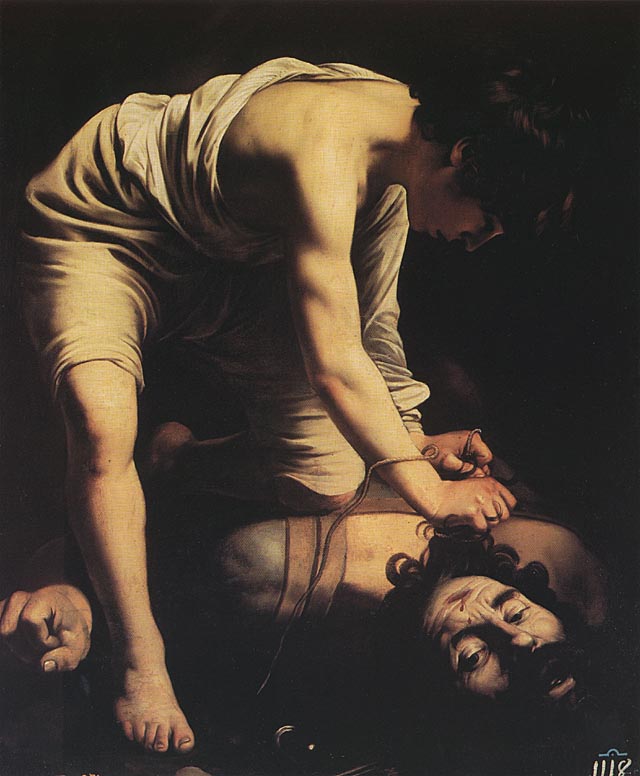
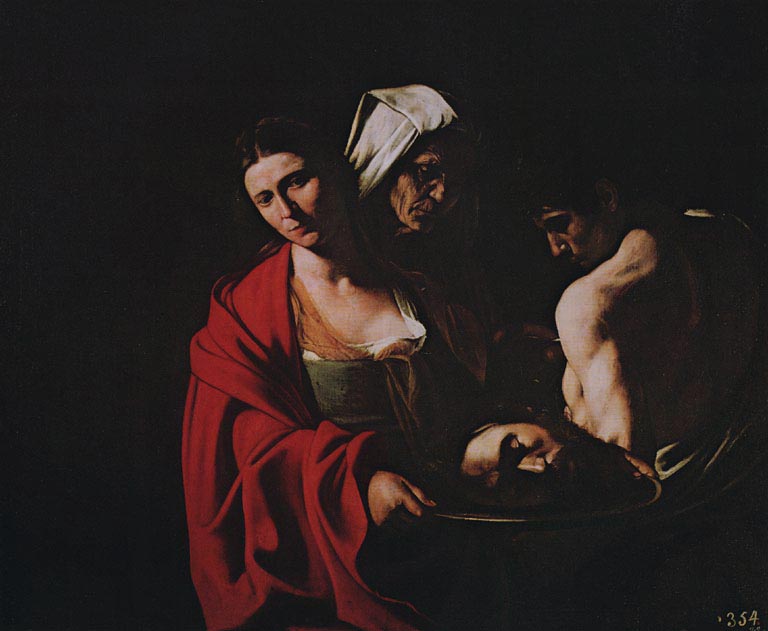
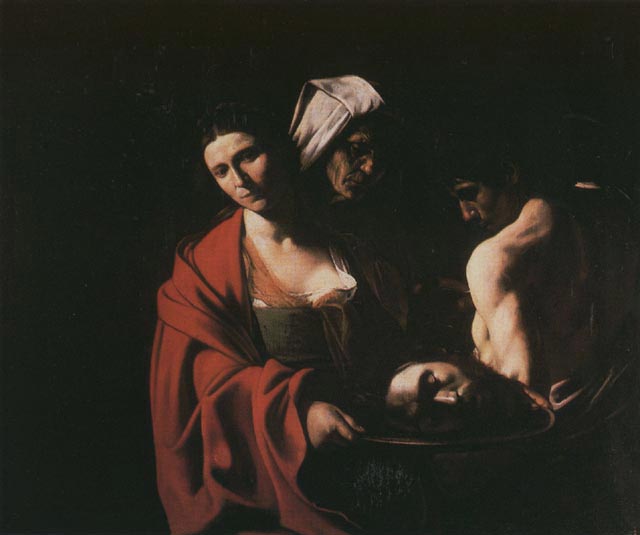
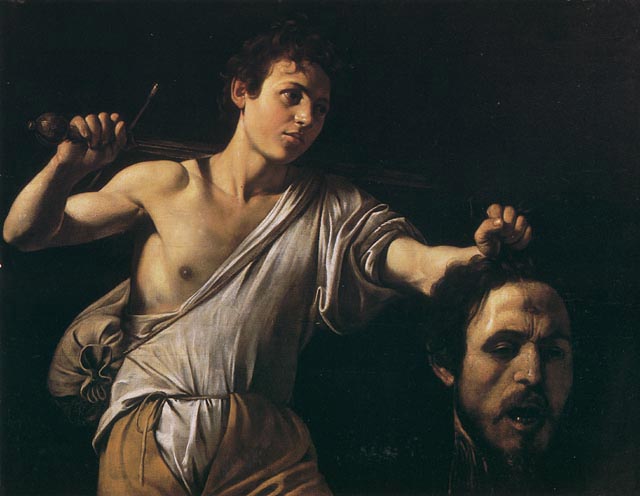
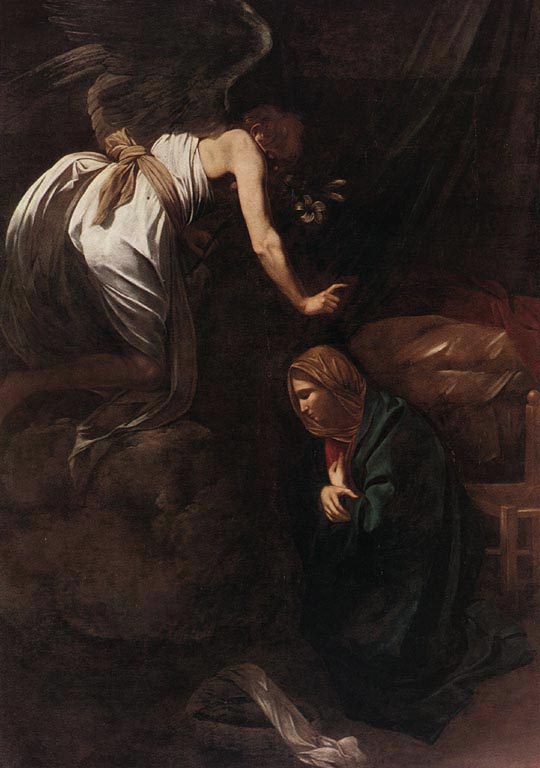
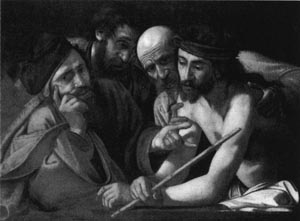
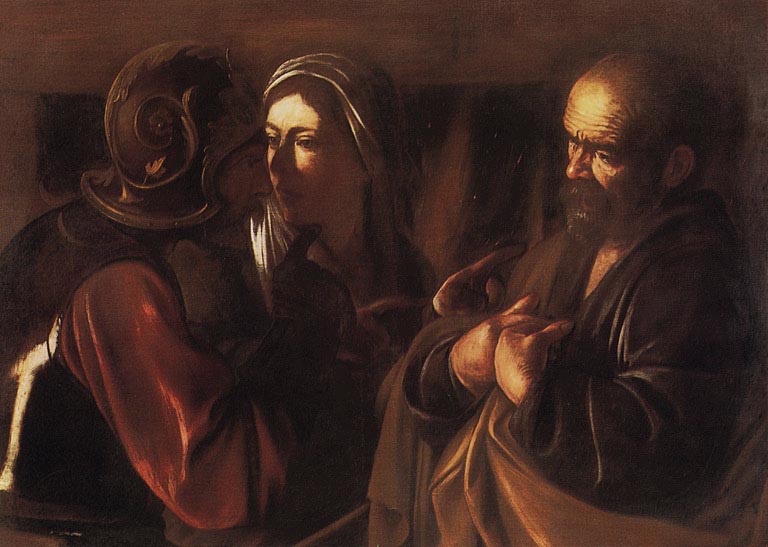
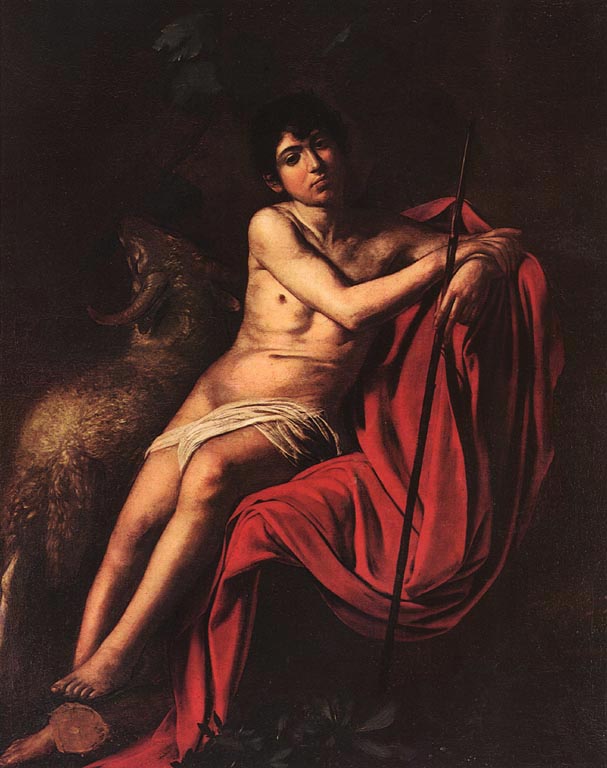
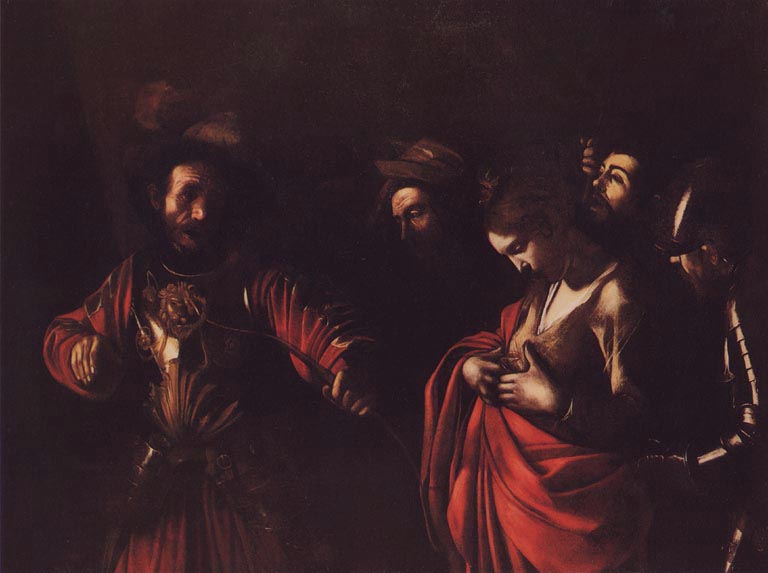
One of the last pictures painted by Caravaggio (for some, the very last, but that would be too significant a coincidence to be true) is the David with the Head of Goliath that he had delivered to Cardinal Borghese, his intercessor with Paul V. The youth who has killed the giant does not have the usual triumphant air, even though according to classical iconography he ought to prefigure the victorious Christ; he appears instead rather pensive and almost moved to compassion towards his former adversary. Through its size, its position in the foreground, its expressiveness and the macabre detail of the dripping blood, the head of Goliath takes the leading role. Except that it is in reality the head of Caravaggio, who was no stranger to placing self-portraits in his works. The wound on the forehead would recall the one from the recent attack, and the most evident meaning is that of a raw and powerful message to the recipient of the picture, to whom it was supposedly sent after the petition for pardon had been submitted. Caravaggio is a desperate man; Goliath’s open eyes are blind because he sees no future, and even his executioner seems perplexed. One can read in it a desire for atonement, a symptom of masochism, or a wish for self-castration (this is the thesis of a curious, almost Lacanian text by two American authors, Caravaggio’s Secrets; other interesting English-language titles speak of Caravaggio Obsession, of the Caravaggio Conspiracy, of Caravaggio and His Two Cardinals): but here the painter declares that he feels himself a dead man, as well as a sinner, and before divine grace he begs for papal grace. And he wants to return to Rome, to get back “into the circle”, to enjoy the rich artistic life of Rome and its pleasures too, to see his friends again, cardinals and others. His stay in Naples (the artist’s second) had not begun well, with the wounding outside the Cerriglio tavern on 24 October 1609. Caravaggio had been in Naples for only about ten days, and had found himself “caught in the middle by some men with weapons”: he had defended himself, but had been so seriously wounded that news of his death had even spread. Despite his wounds, he did not remain idle for long – and perhaps that is why he never fully recovered. Among the paintings of this short period are a Resurrection for the church of Sant’Anna dei Lombardi, destroyed in the earthquake that struck Naples in 1805, the Annunciation in Nancy, the Salome with the Head of the Baptist given to the Grand Master Alof de Wignacourt (to win his favour and put an end to the attempts on his life, or to thank him for having helped him to escape from Malta), the Denial of St. Peter, the young nude of the St. John the Baptist and what is certainly Caravaggio’s last work, the Martyrdom of St. Ursula, commissioned by the Genoese nobleman Marcantonio Doria. In this canvas the typical Caravaggesque “half-figures”, sometimes in medium shot as in the Denial, sometimes in “American shot”, are crowded very close together, caught at the instant in which the arrow pierces the saint. More than suffering, the martyr seems astonished; she raises her hands to her breast and looks at what has struck her. Behind St. Ursula appears a self-portrait of Caravaggio, intent on observing a scene in which the sacredness of the myth is entirely immersed in a very earthly realism. How this humanisation of the saints and of the divine, and this reduction of the sacred, could be reconciled with the teachings of the Council of Trent and of the Counter-Reformation, in matters of art too (Cardinal Federico Borromeo, fairly orthodox in the witch trials, wrote a De Pictura Sacra specifically on the subject), is a widely debated question, almost as much as Caravaggio’s religiosity or homosexuality. Going through his work, one finds few images of Christ, saints and martyrs with their feet off the ground, only the odd angel; and this was already a choice, against Mannerism and perhaps against the suggestions of priests and theologians. The number of Caravaggio’s works rejected by those who commissioned them because they were “vulgar”, or suspected of heretical or at least unorthodox content, is considerable, and could serve for writing the story of the tormented relationship between artist and institution. It should be noted that if the Church repudiated some canvases, cardinals and prelates hurried to buy them for their private collections.
Sicily, 1608-1609
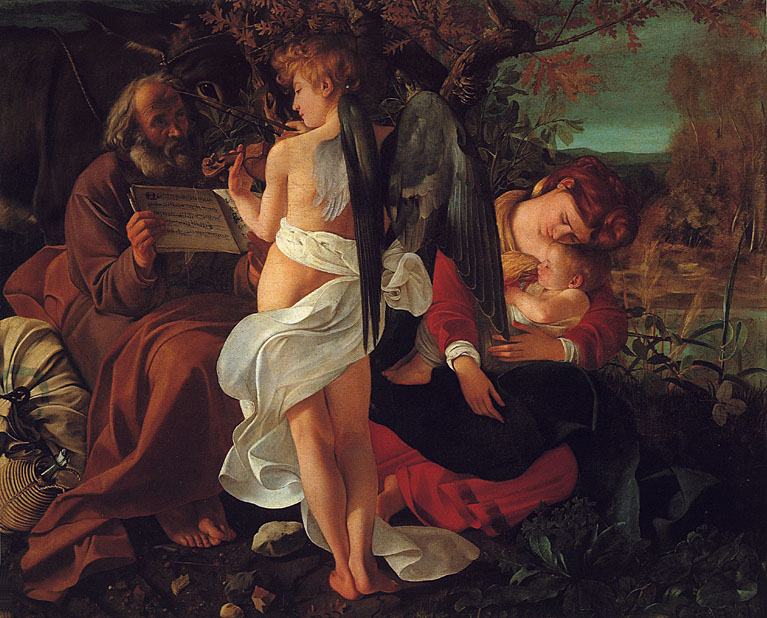
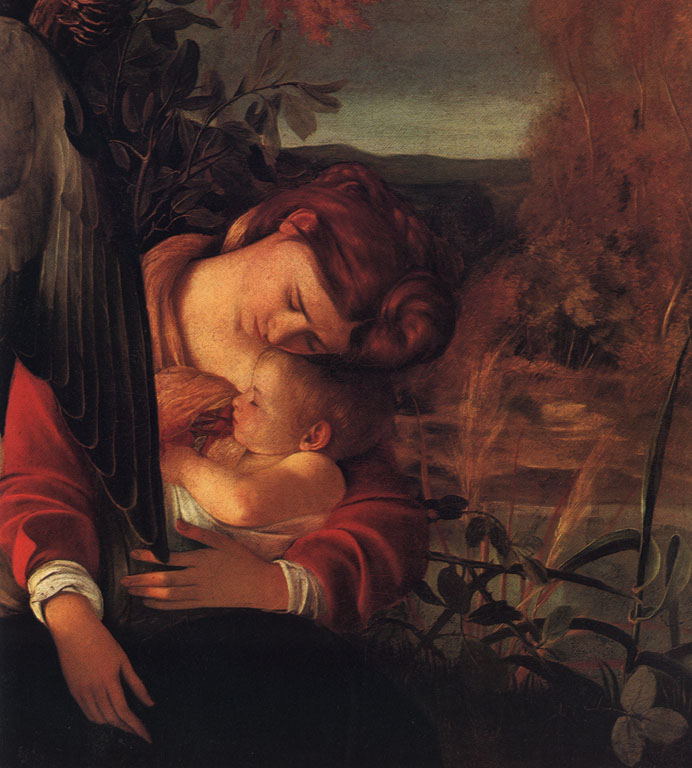
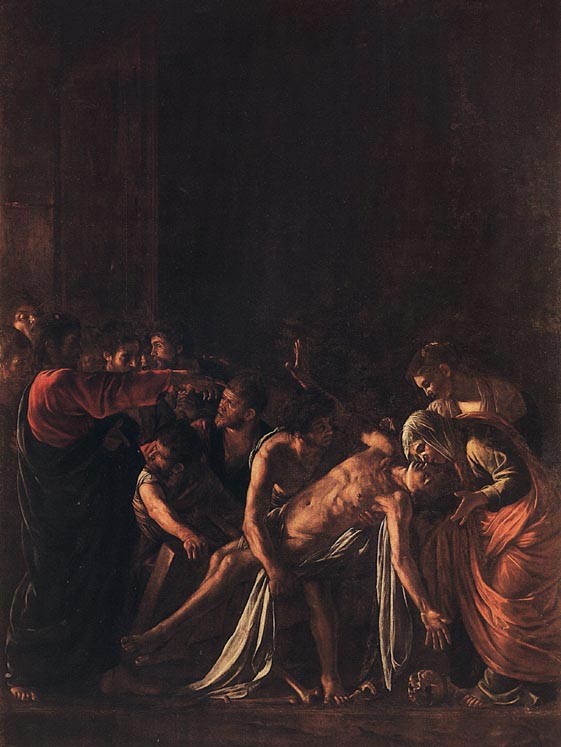
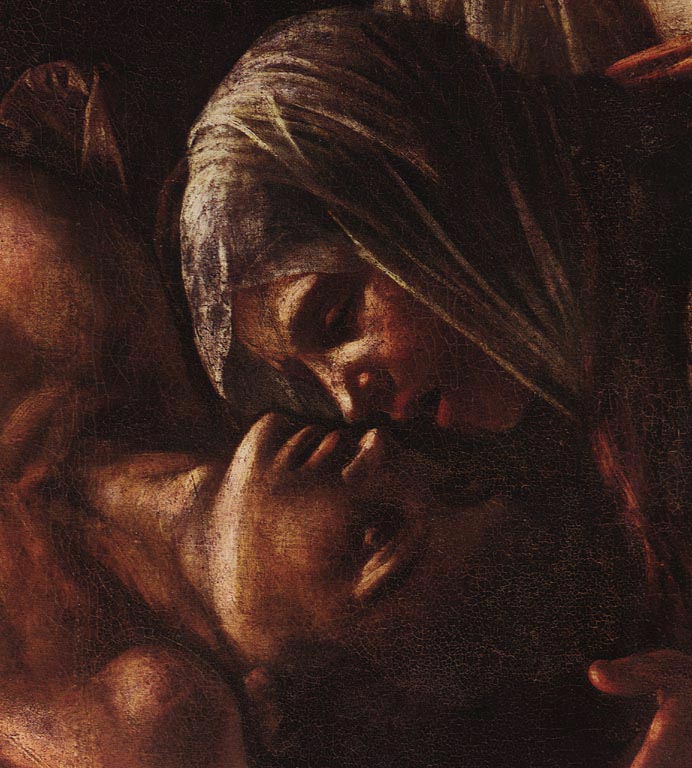
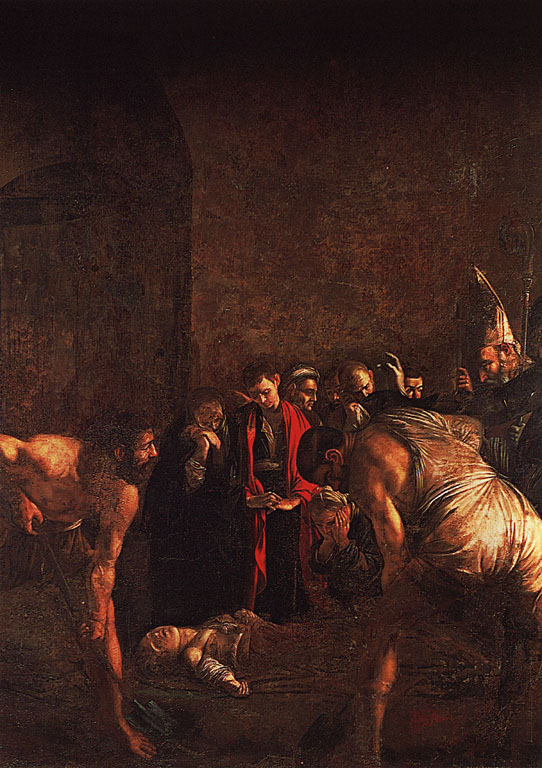
Caravaggio’s brief stay in Sicily did not end in flight as it had begun; the painter probably wished to return to Naples, where years before he had been very well received, or intended to make a stop on the way towards Rome, having received news that gave good chances to the revocation of his sentence for the Tomassoni murder. Another hypothesis would have it that he had received threats from Malta, after his rise to the honour of knighthood and his very rapid expulsion from the order, with his consequent imprisonment and escape. In Syracuse he found a friend and colleague from his Roman days, that Marco Minniti who had often modelled for him, and who used his influence with the Senate to have some commissions conferred on him. The first commission was the altarpiece of the Burial of St. Lucy for the church dedicated to the Syracusan martyr, a canvas of 408 by 300 cm executed in a very short time (having arrived in mid-October, by December Caravaggio was already leaving for Messina). The great wall that forms the background to the scene, over two thirds or nearly of the surface, has been put down to a certain weariness on the painter’s part and judged an expedient for getting the work finished; but, like a theatrical wing, it has the effect of diminishing the size of the actors, who appear oppressed by the sad ceremony they are witnessing. The rather daring placing of the two massive gravediggers in the foreground, who seem to step out of the picture, reinforces the unity of the group of mourners, while the institutional figures, the bishop in full regalia and the soldier, are set to one side, almost as if they were there on duty. The outstretched body of the saint shows one of Caravaggio’s most audacious foreshortenings: the distance between the shoulder and the hand does not exceed thirty centimetres. Caravaggio certainly worked in haste on the garments, painted with rapid strokes; nevertheless the work, as the historian Francesco Susinno wrote a century later, “was so well liked that it is commonly celebrated, and such is the deserved esteem for this painting that in Messina, and likewise in all the cities of the kingdom, many copies of it are to be seen.” In Messina a rich Genoese merchant, Giovanni Battista de’ Lazzari, asked him to paint an altarpiece with the Madonna and saints; Caravaggio proposed to him, in homage to his name, a Raising of Lazarus. According to Susinno, a first version of the work was cut to shreds because of some slight criticism: “Michelangelo, with his usual impatience, drew the dagger that he was always wont to carry at his side, and dealt it so many furious blows that that admirable painting was left wretchedly torn apart.” The dagger reappears during work on the second canvas, brandished by Caravaggio to persuade the “porters” to go on holding up Lazarus, who for the sake of realism was an exhumed corpse “already stinking for some days.” Lazarus, in fact, has not yet obeyed the peremptory gesture of Christ, and seems reluctant to return to life, with one hand stretched out towards a skull (death as the consequence of original sin) and the other towards the Saviour. Pages and pages of exegesis have seen in this picture the reflection of the existential drama of Caravaggio’s religiosity, suspended between hope and despair, longing for atonement but sceptical about his own redemption. Mysticism aside, it should be noted that the self-portrait figure, in a youthful version, looks neither towards Lazarus nor towards Christ. In this canvas too the action takes place indoors, following a practice adopted by Caravaggio after a brief period of “light manner”, to which the Rest on the Flight into Egypt of 1596-7 may bear witness, presenting one of the few, and finest, Caravaggesque landscapes. “He never brought any of his figures out into the open sunlight, but found a way of setting them within the dark air of a closed room…” observed Bellori. This allowed Caravaggio to use lighting coming from different sources, positioned like stage lights, the better to work on the shadows; while it is true that he always intended to respect reality (“he professed himself so obedient to the model that he did not claim as his own even a single brushstroke, which he said was not his but nature’s”), he reserved the right to measure out and control the drama of the contrasts, “confining the force of the light to a few parts.”
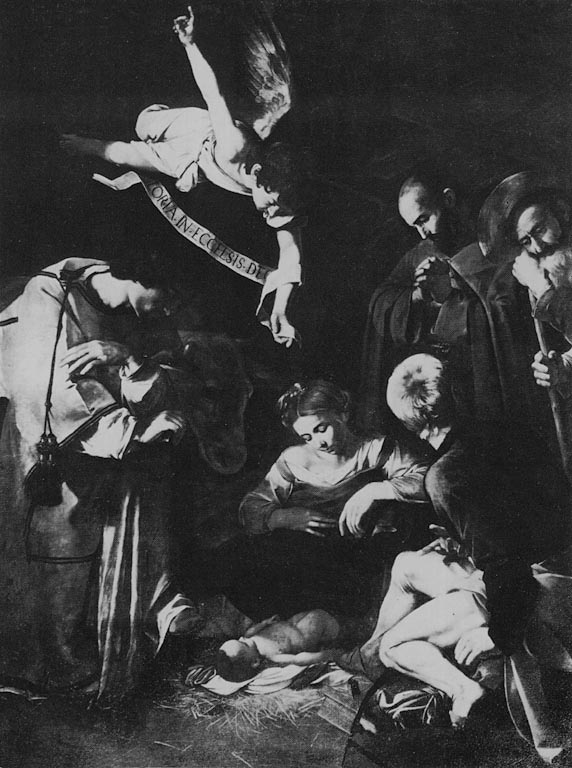
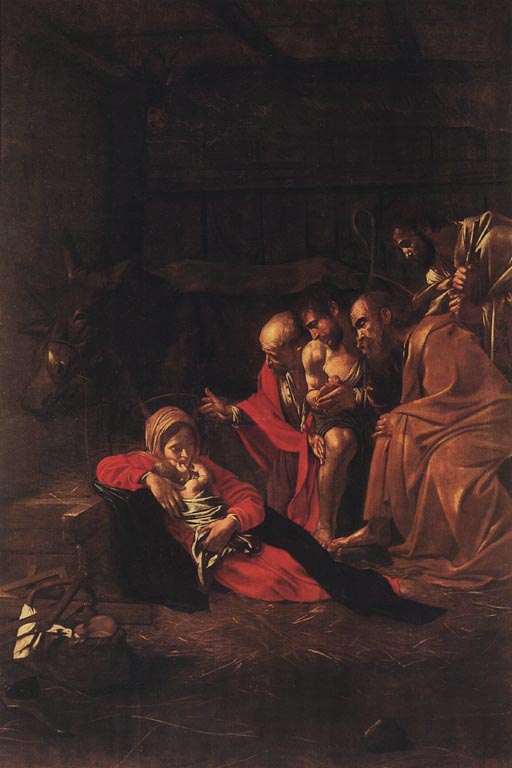
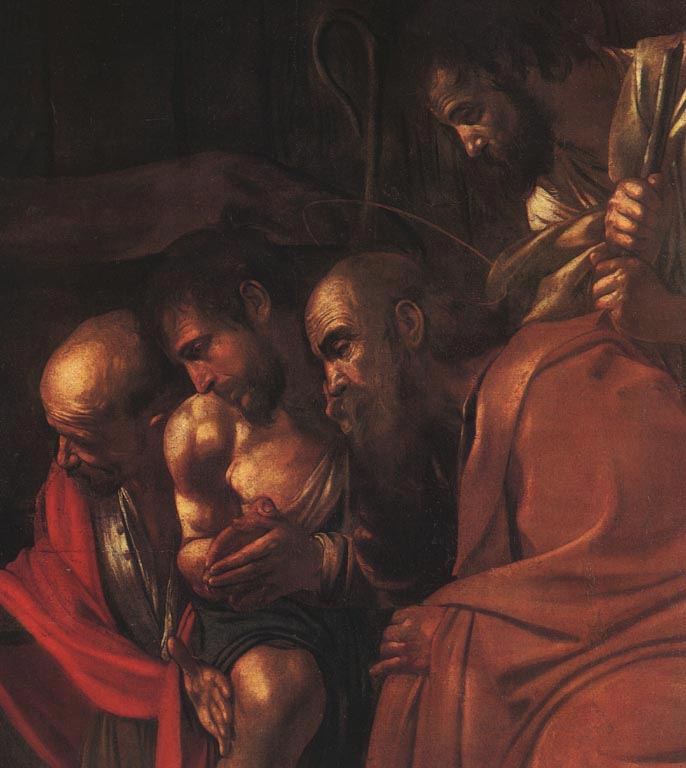
Other works executed in Sicily are the Adoration of the Shepherds, or Madonna del Parto, a hymn to humility with a very humble Mary half-reclining on the straw, set against the geometric block formed by the shepherds, and a Nativity (stolen in 1969) of such conventional composition that according to some critics it should be dated to 1600; and probably one of the many St. John the Baptists painted by Caravaggio in the guise of a nude youth in the company of a ram. The boy’s features are markedly insular, and we learn from the not always reliable Susinno that the painter wounded in the head a certain schoolmaster, Carlo Pepe, who protested against his manoeuvres to recruit models among the pupils “to form his fancies with them.”
Malta, 1607-1608
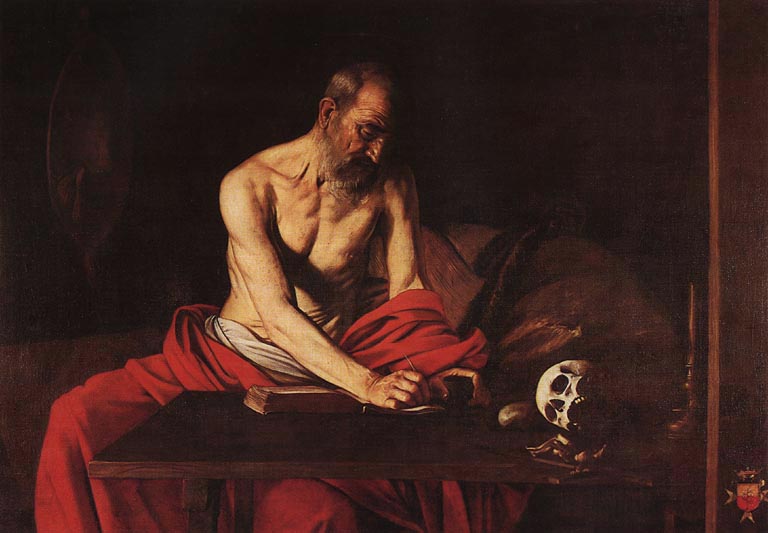
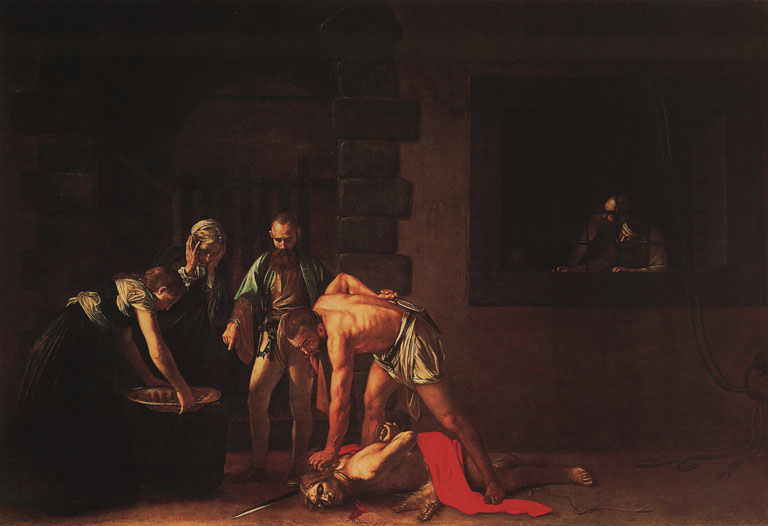
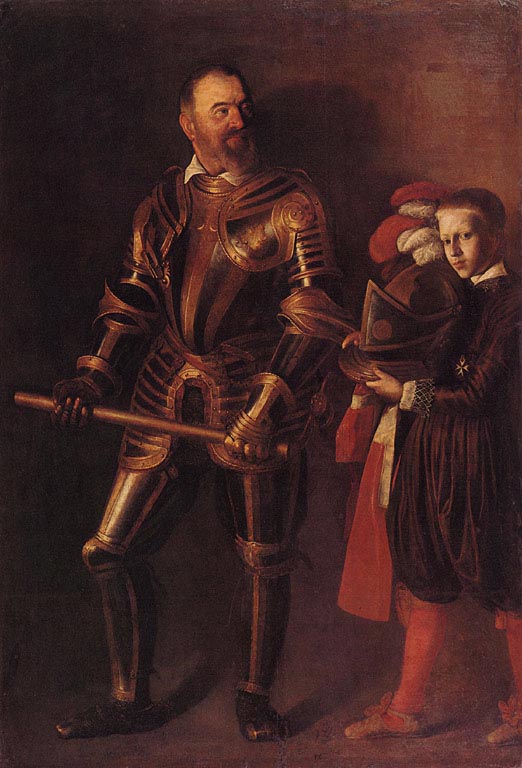
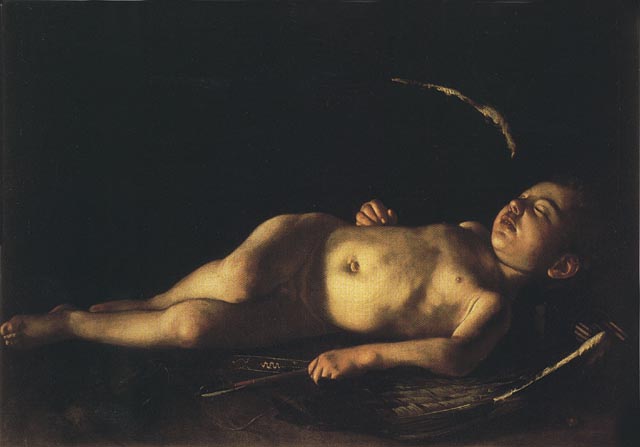
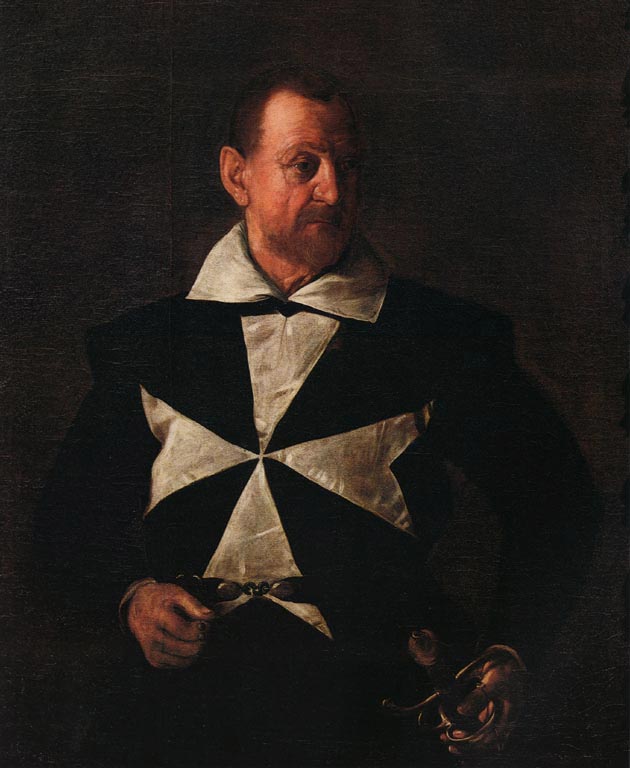
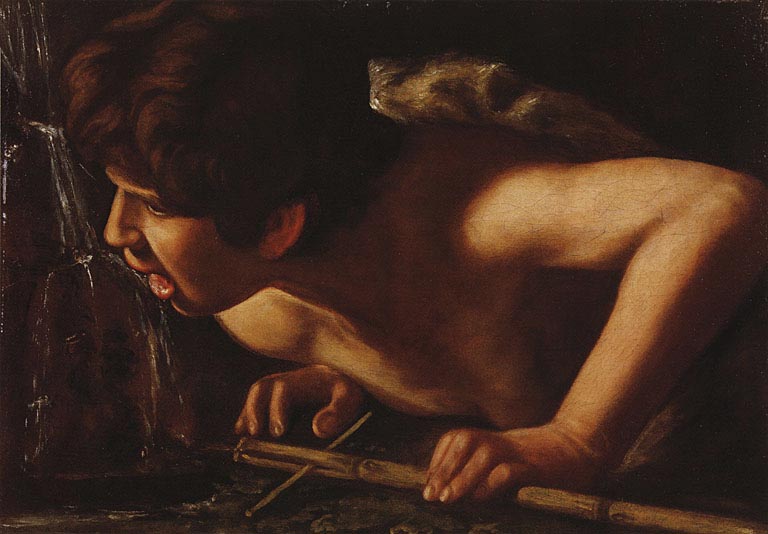
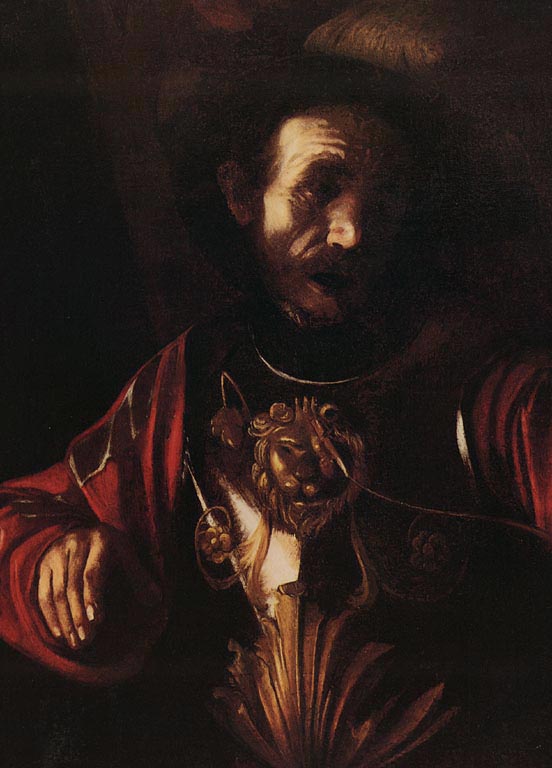
On 1 December 1608 the assembly of the Knights decreed the expulsion of Caravaggio from the order to which he had been admitted in July for artistic merit, branding him membrum putridum et foetidum. Rather strong adjectives, and it is not known to what offence or sin they were due. The biographers Baglione and Bellori speak of an affront to a noble “knight of justice” or of a wounding; others suggest that news had reached Malta of his death sentence for the murder of Ranuccio Tomassoni, until then miraculously/somehow kept hidden. The defenders of the faith certainly could not accept among them an individual condemned by the Church; perhaps something had cracked on a personal level between Caravaggio and the Grand Master Alof de Wignacourt, whom he portrayed in three works (or four, but the identification of the fourth is disputed, and one, the first executed in Malta, has been lost). In the first the Grand Master lends his face to St. Jerome Writing; the second is the Portrait of Alof de Wignacourt in Armour with his Page. The presence of the page is an unusual note in the portraiture of the time, but de Wignacourt loved to surround himself with pages, following a courtly custom. The third portrait is more prudently called Portrait of a Knight of Malta, and is known for the virtuosity with which the texture of the fabric of the great cross on the knight’s breast is rendered. Returning to the relations between Caravaggio and Alof de Wignacourt, we recalled that the latter was the recipient of the Salome with the Head of the Baptist. While it is rash to suppose that the painter portrayed himself as a saint, one might nonetheless find some of his features in the severed head, and read in that canvas too a message asking for forgiveness. The most important work executed in Malta concerns, once again, an execution: it is the enormous canvas of the Beheading of the Baptist, commissioned precisely through the intervention of the Grand Master (whose coat of arms appears on the original frame). The picture was greatly admired: “so that, besides the honour of the cross, the Grand Master placed a rich gold chain around his neck and made him a gift of two slaves” wrote Bellori. The detail of the signature traced in the blood flowing from the martyr’s neck particularly struck the interpretative imagination of Maurizio Calvesi, the father of all psychoanalytical iconologies, who saw in it “a polysemy, based on the triple meaning of ‘segnatura’ (signature, bleeding, the act of crossing oneself with holy water, which also serves for baptism), an allusion to the sacrament of baptism connected with the Baptist: the dagger would be identified with the aspergillum, the coup de grâce with the bestowal of Grace, the blood with the holy water.” This signature would thus be the height of Caravaggio’s baroquism. How much of the Baroque there is in Caravaggio, and how much in his commentators, is open to debate; to the interpretative criticism of the objects present in the canvases we prefer being helped to grasp the weight of light and shadow, the geometries in space, the speed with which the paint was laid on, which shows the importance the painter gave to one element rather than another, and perhaps to see an X-ray revealing his second thoughts (as in the Martyrdom of St. Matthew of 1600). In Malta Caravaggio also painted a Young St. John at the Spring, and a Sleeping Cupid very different from the triumphant Cupids of former days, a sort of “imago mortis” in brown, black and grey that reveals the painter’s funereal state of mind, and perhaps the Crucifixion of St. Andrew, which most scholars date to the preceding Neapolitan period.
Naples, 1606-1607
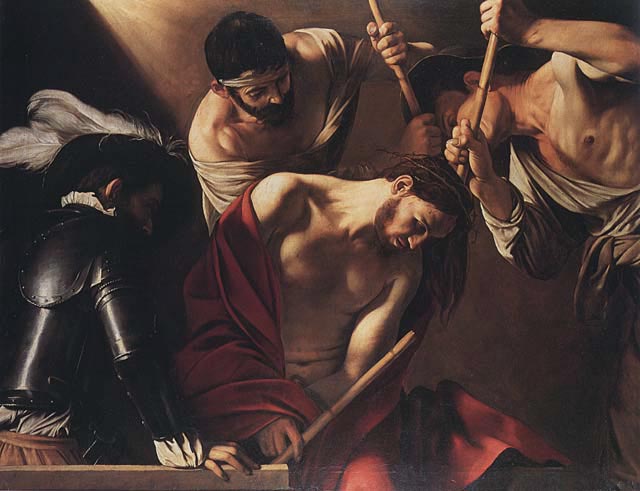
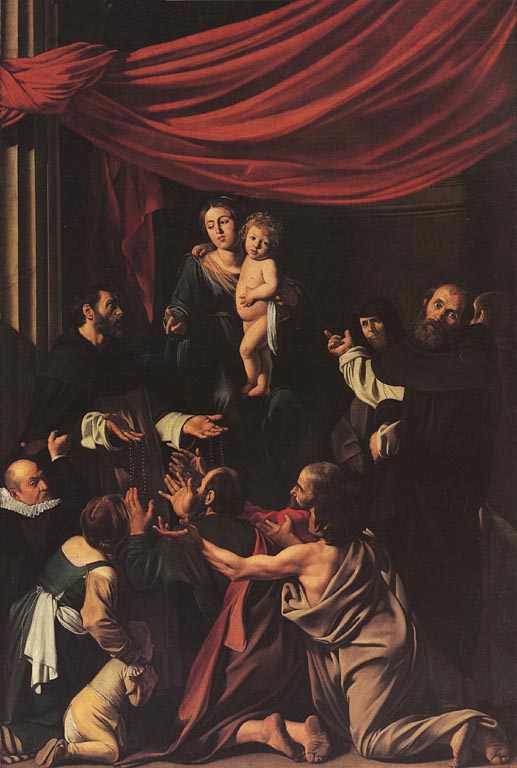
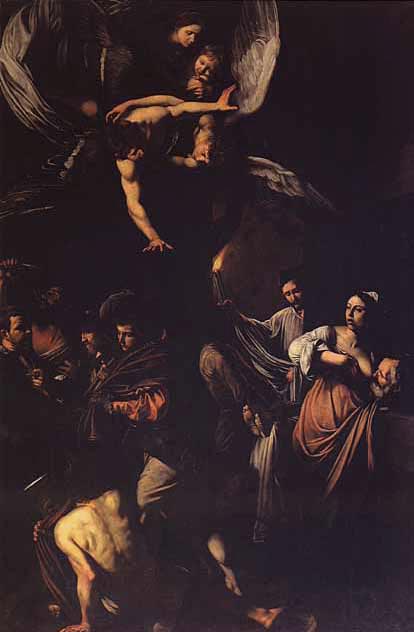
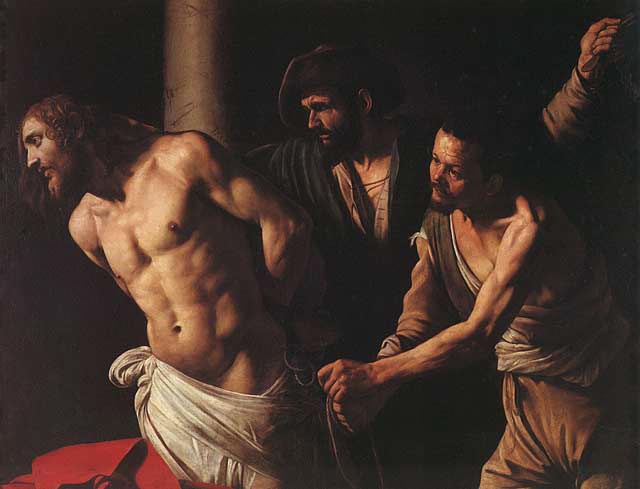
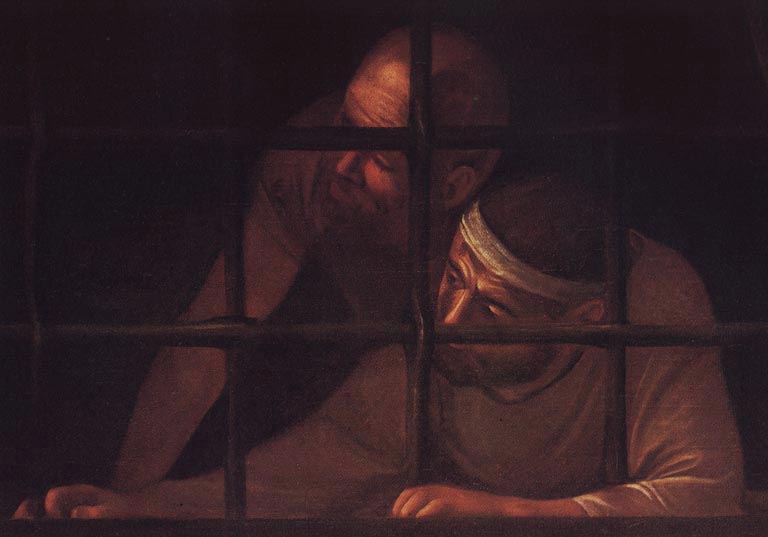
The hope that had driven Caravaggio to leave Naples, namely to obtain in Malta an honour that would offer him better chances of a pardon from Rome, had collapsed miserably, as we have seen, and had only doubled the enemies he had to escape. Naples too had been the destination of a flight, an exile from the papal territories. Here he had found hospitality with Luigi Carafa, son of the Duke of Mondragone and of Giovanna Colonna, sister of Cardinal Ascanio. He had no lack of good protectors, despite the “capital ban” issued against him for the murder of Ranuccio Tomassoni. It seems that the celebrated Virgin of the Rosary was commissioned from him precisely by Luigi Carafa, whose family chapel was dedicated to the Madonna of the Rosary, to whom victory at the battle of Lepanto was credited, a battle in which Luigi’s father, Antonio Carafa, Duke of Mondragone, had also fought. The altarpiece was never placed in the chapel, and in 1607 it was offered for sale for 400 ducats, but it is hard to imagine why the patron failed to take delivery of it: if many other works had been removed from altars because they were judged indecorous or suspected of containing theologically controversial themes, here everything is chaste and sacred, apart perhaps from the repeated offence of the dusty feet of the supplicants in the front row. It is well known that realism prevented Caravaggio from retouching nature, and it would not have been the first time that dirty feet were judged a little too much in a sacred subject, as in the Madonna of Loreto. In this picture, with St. Peter Martyr, venerated also as patron of the Holy Inquisition, on one side, and St. Dominic on the other, and the Madonna-Church, mediatrix of grace, in a dominant position, there was no suspicion of a lukewarm adherence to the Counter-Reformation – quite the contrary. Great realism applied to doctrinal themes is found in another important commission from the Pio Monte (a welfare and charitable institution), the Seven Works of Mercy. Someone has written that it seems set in a bustling Neapolitan alley, the group of angels and Virgin and Child apart. The decision to bring the seven representations together in a single scene was an absolute and courageous novelty compared with the tradition that wanted each work of mercy in a space of its own; here everything moves and overlaps, proceeding by hints (of the dead man to be buried only the feet appear…) and by references to biblical themes, to everyday scenes and to pre-Christian myths, as in the visiting of the prisoners, acted out by Cimon and Pero. Perhaps the model used in the Madonna of the Rosary looked too much like the Pero who bares her breast to suckle Cimon, and Caravaggio was in the habit of picking up his models from the street. In the Seven Works of Mercy almost all the figures are of humble origin, and the presence of the Madonna, this time raised off the ground as she watches the efficacy of (her) Grace in the Works, responds to a specific request of the patrons. Along with the altarpieces, Caravaggio produced in Naples some “easel pictures” such as a David with the Head of Goliath, the Crowning with Thorns, and a Salome with the Head of the Baptist known only from a copy, the original having been lost. Other large canvases are the Flagellation and the Crucifixion of St. Andrew, which some would have painted in Malta. The stay in Naples must have been a happy interlude for Caravaggio: welcomed as an innovator, with many admirers and followers, so much so that he decisively influenced the transition of Neapolitan painting to more modern forms. Why he moved to Malta still remains to be investigated, apart from the (simplistic) hypotheses already considered; to Naples, in any case, he had come fleeing from that Rome which had welcomed him warmly in 1592, when he had left his native Lombardy.
Rome, 1592-1606
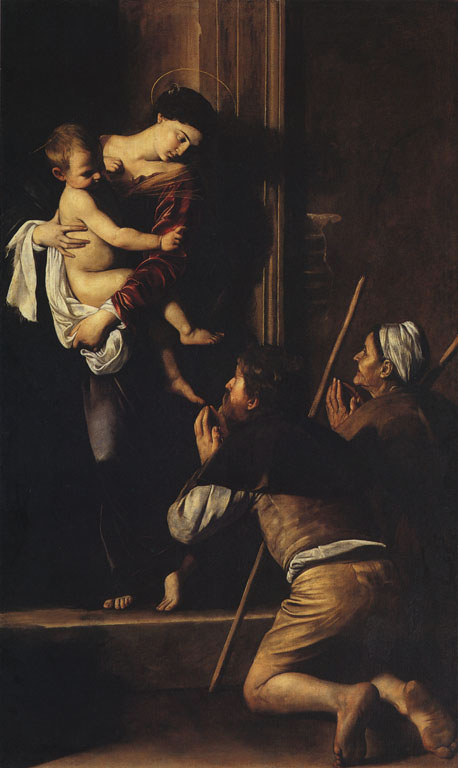
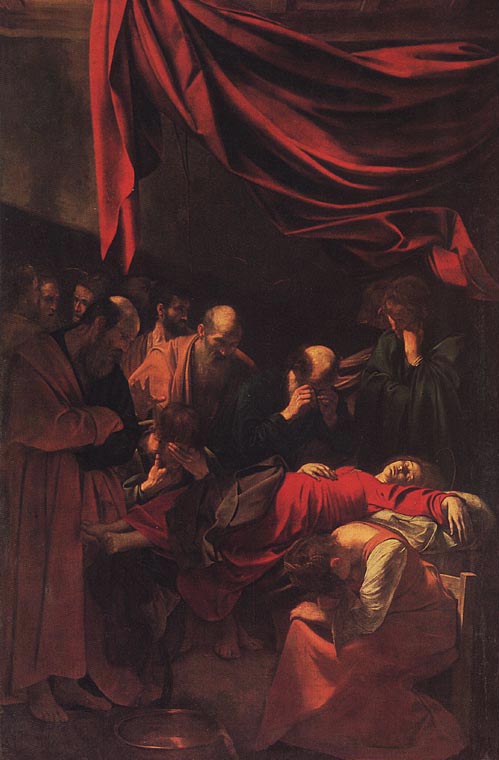
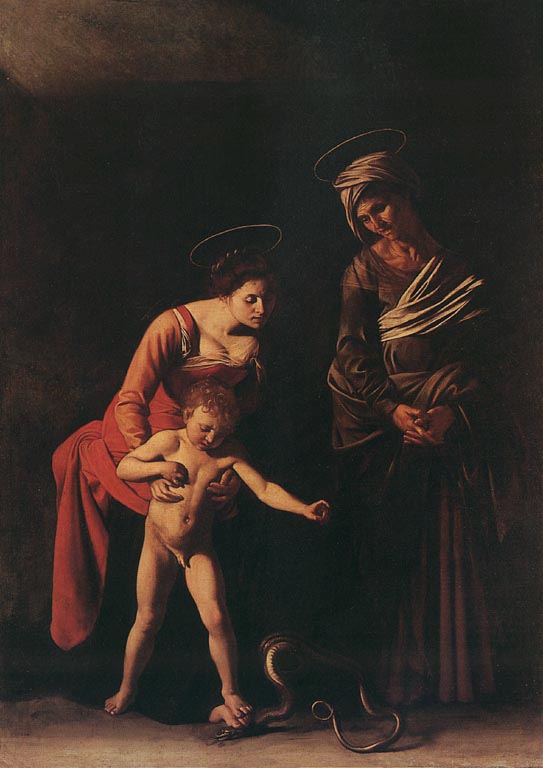
The idea of a resemblance between the model of the Seven Works of Mercy and that of the Madonna of the Rosary arises from the painter’s habit of frequently reusing the people he portrayed, and from the established identity of the woman who posed for many other altarpieces: that Lena who was at the root of many of Caravaggio’s troubles (together with his quarrelsome character, his habit of going about armed even without authorisation, of frequenting the worst parts of Rome between one and five in the morning, of wholeheartedly loathing the constables and never missing a chance to provoke them). Lena was a splendid woman of the people, and by trade she “stood in Piazza Navona past the doorway of the palace of Signor Sertorio Teofilo”. Elsewhere she is described as a courtesan, and by some even as a “filthy harlot”, if the hypothesis that she also posed for the contested Death of the Virgin is true; only some innocent soul could put forward the idea that she ran a small market stall. Over Lena he had a brawl with a notary, one Pasqualone, and a resulting trial that ended with a plea for forgiveness and a reconciliation. Other trials were brought against the painter for minor brawls, illegally carrying weapons, insulting the guards, and defamation (famously the one brought by the painter Giovanni Baglione, his far from kindly biographer, who had been mocked in little poems in which the mildest epithet was “Giovan Coglione”): all of them ended without serious consequences, a clear sign that Caravaggio still enjoyed good protection from high-ranking figures of the Curia, among them Cardinal Francesco Del Monte, who had long given him lodging in his palace. The last trial, however, the one for the killing of Tomassoni, had a fatal outcome. To return to Lena, using her in the guise of the Madonna caused Caravaggio problems with his patrons, who rejected altarpieces perhaps by invoking questions of orthodoxy, but in substance because of her presence and perhaps because of the novelty and naturalism of the narrative. The Madonna of Loreto, or Madonna of the Pilgrims, the work chosen as the symbol of the 2000 Jubilee, was not removed from the altar but caused “a great uproar” among those who flocked to see it. It is not known what this was due to, but the altarpiece certainly did not respect the traditional iconography of the house carried by angels that many would have expected; instead it showed a Madonna in a rather spiralling, if not sinuous, pose on the threshold, like the mistress of the house, welcoming two pilgrims with the requisite dusty feet in the foreground – tradition required the faithful to walk the last stretch of road leading to the sanctuary barefoot, and Caravaggio faithfully recorded the fact. The Madonna’s left foot has caused some puzzlement: too dainty, or anatomically wrong? Another altarpiece in which Lena appears was removed less than a month after it had been installed in the basilica of St. Peter’s, moved to another church and then put up for sale. This is the Madonna of the Serpent, or Madonna dei Palafrenieri, of 1605. The Christ Child too naked, the breast of Mary too prominent as she bends to watch the serpent she is crushing, or the figure of St. Anne too intrusive: in any case the work was rejected. Another canvas with a troubled history was the Death of the Virgin, judged scandalous for the Madonna’s bare legs (in fact her ankles), for her corpse-like swelling, and because the model had been a courtesan or worse. But once again Caravaggio had sinned through realism, and had rejected the traditional idea of the “transit” of the Virgin, the dormitio of Mary, in order to paint a painfully human death that denies the hope of a future beyond life. Caravaggio’s heresy had been twofold, doctrinal and artistic; it was rumoured that for the Madonna, instead of Lena, he had used the corpse of a drowned woman. In his reading, Maurizio Calvesi broke away from everyone else and, with an injection of the Baroque, chose to see in it a “Madonna swollen with Grace”.
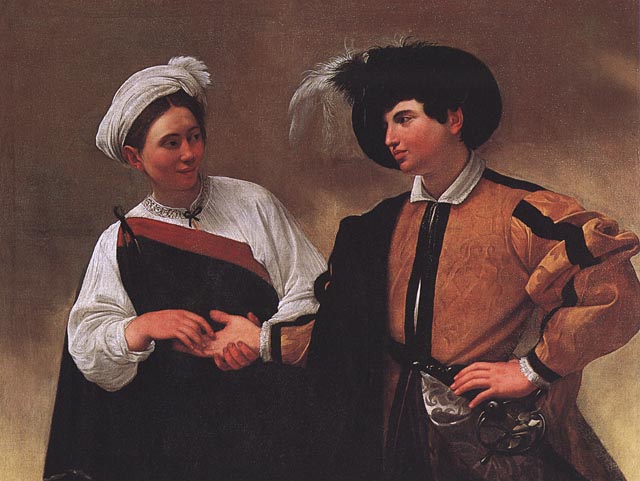
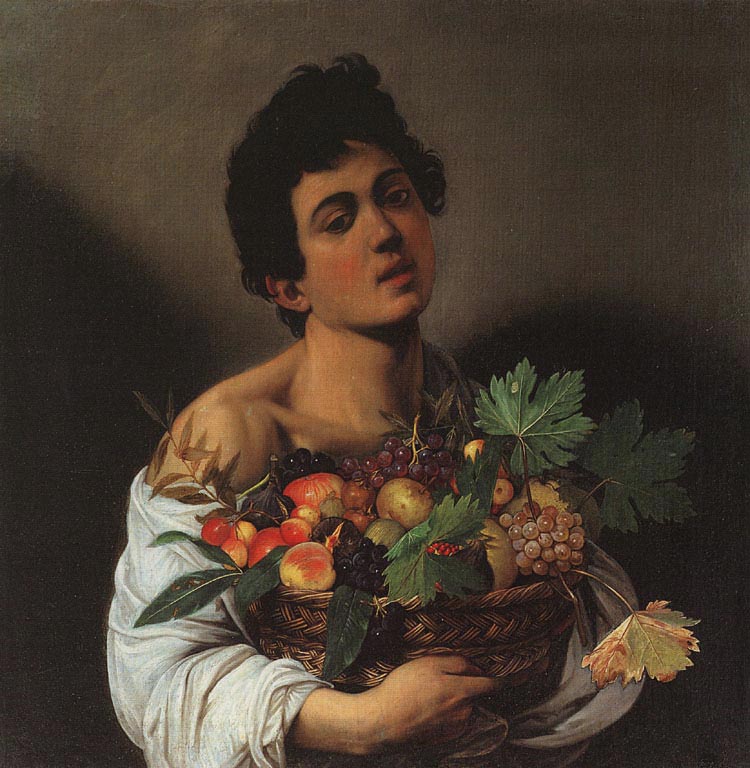
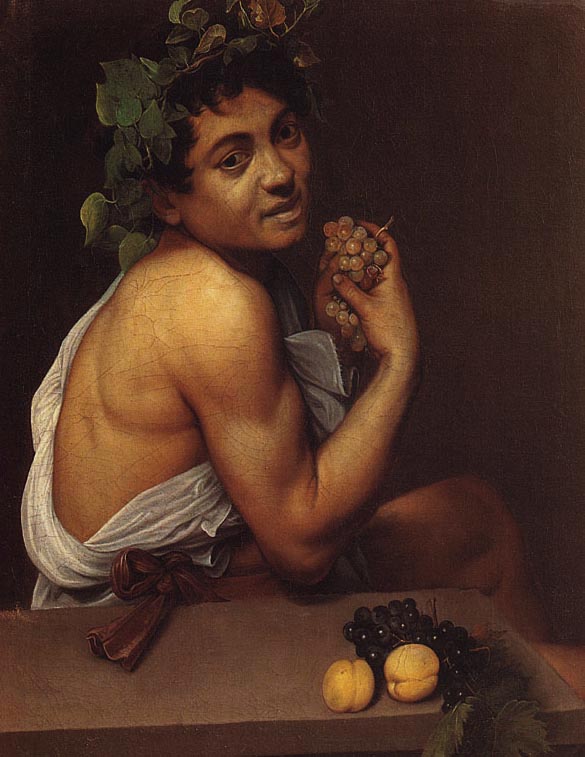
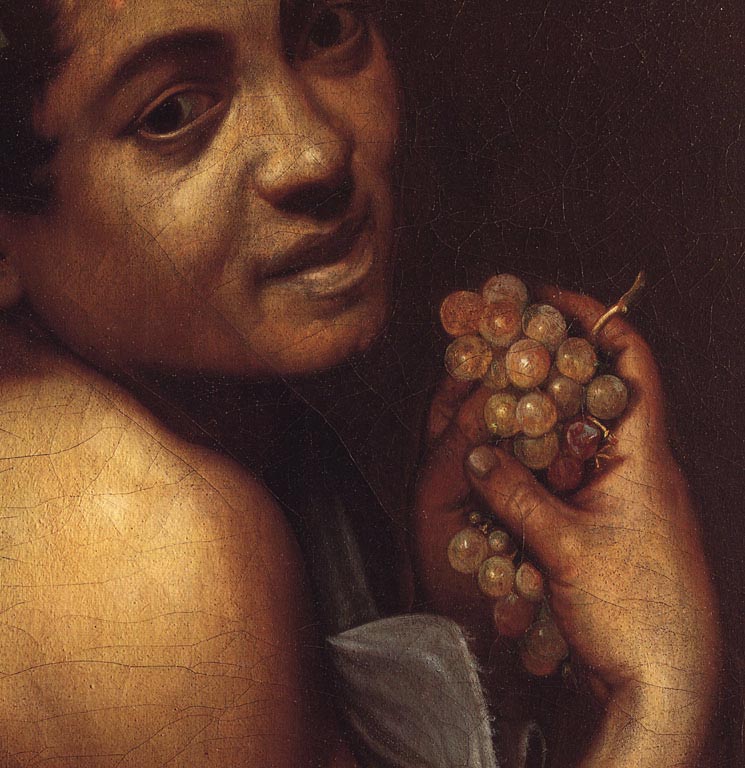
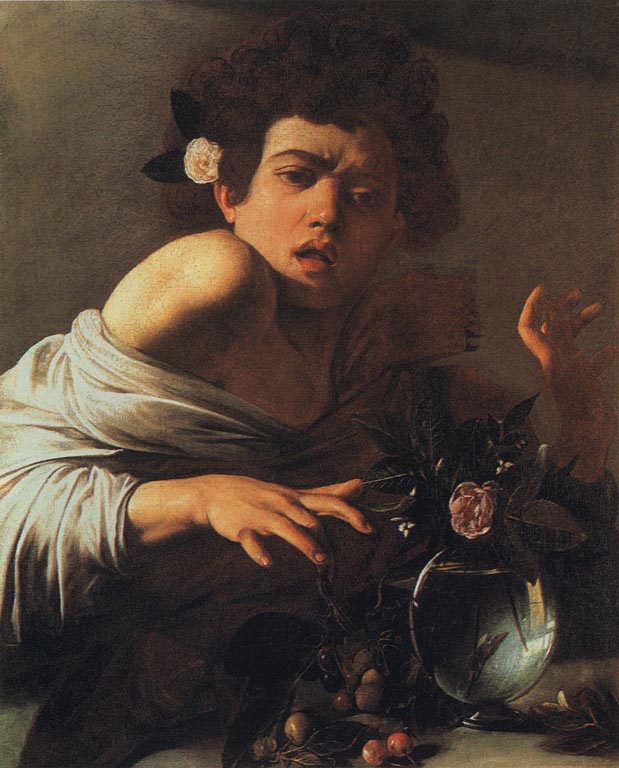
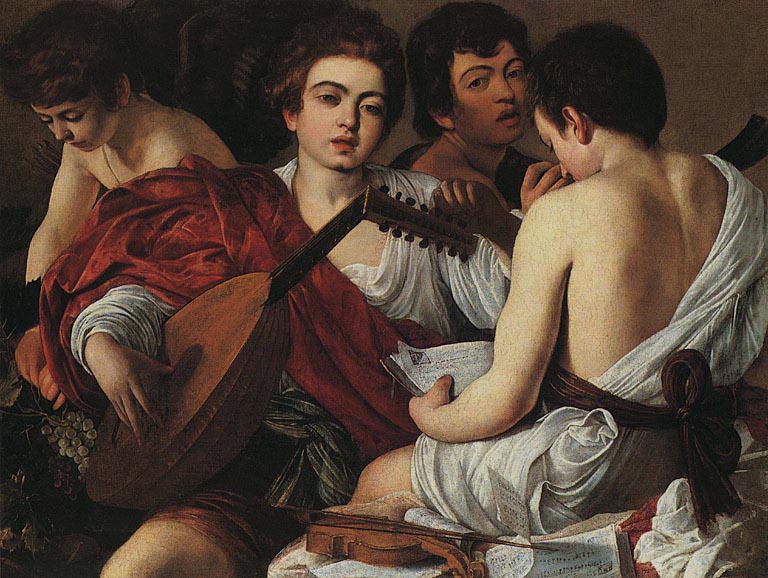
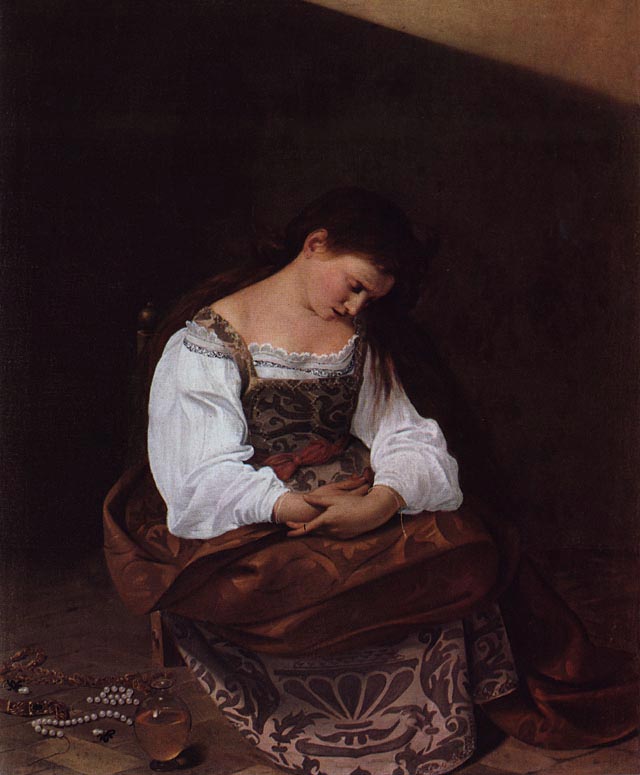
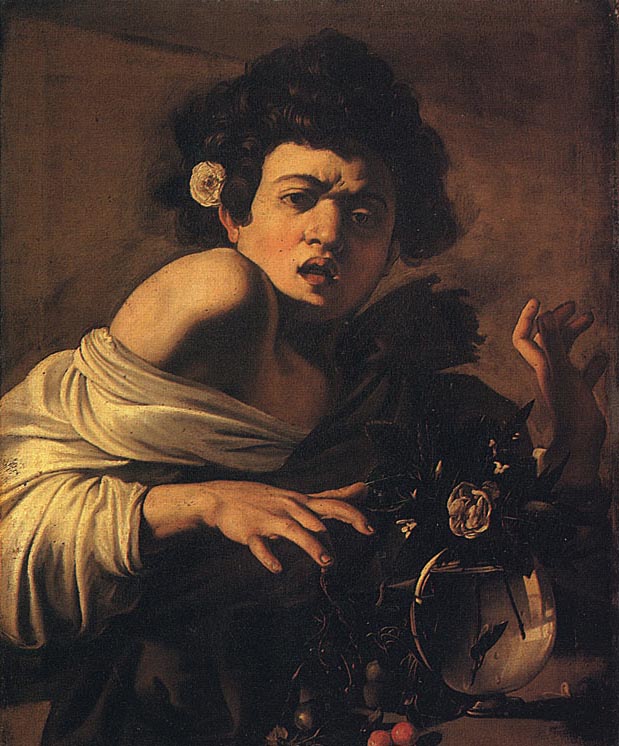
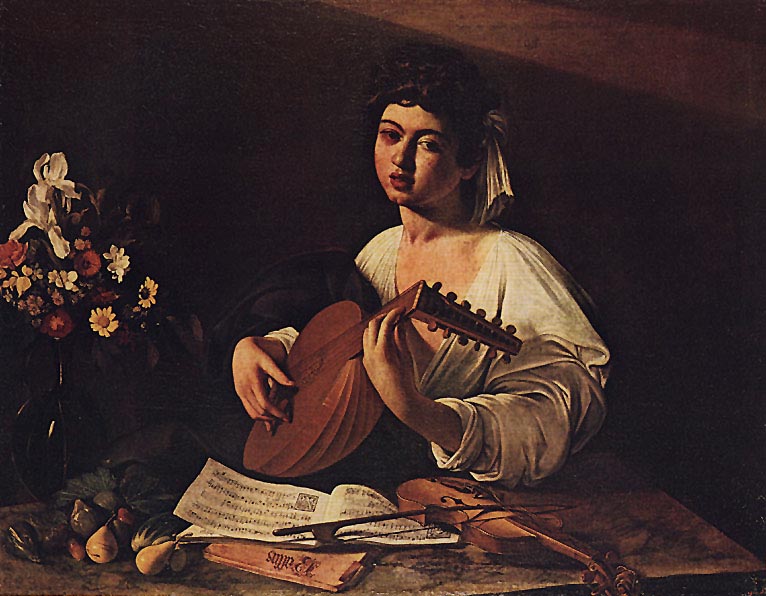
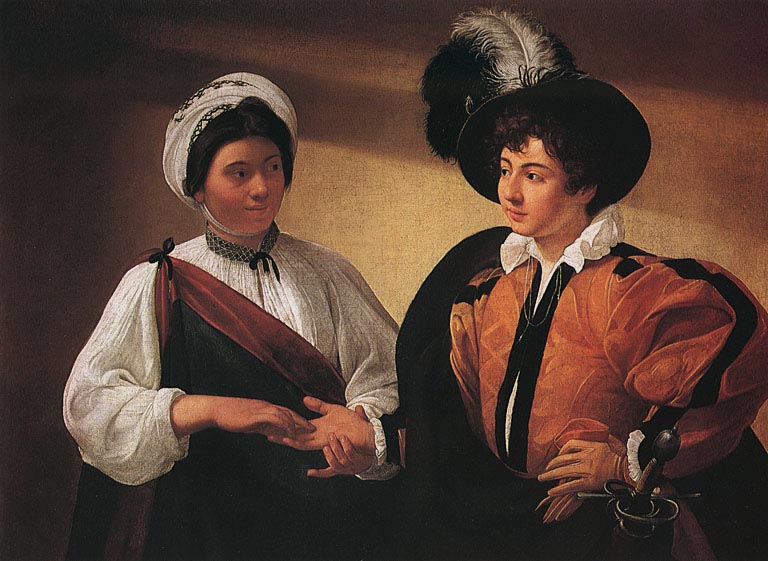
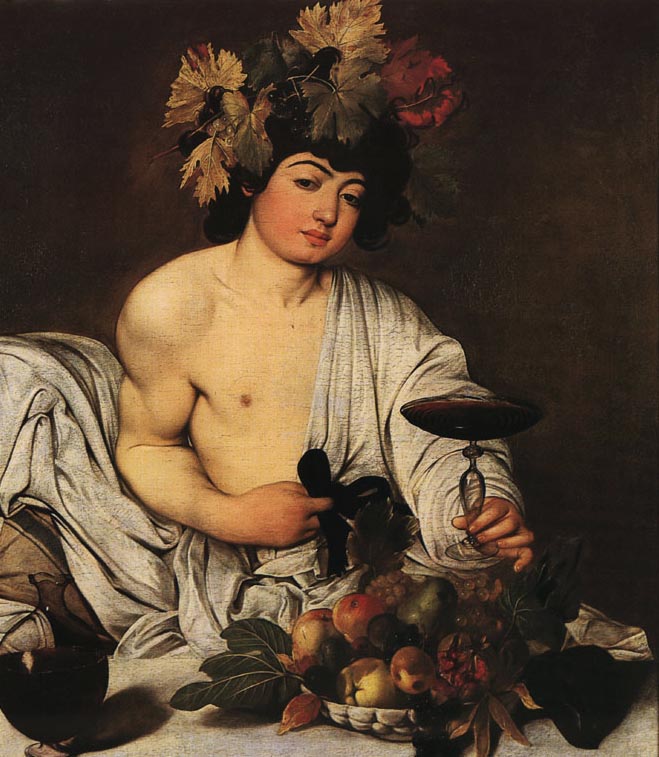
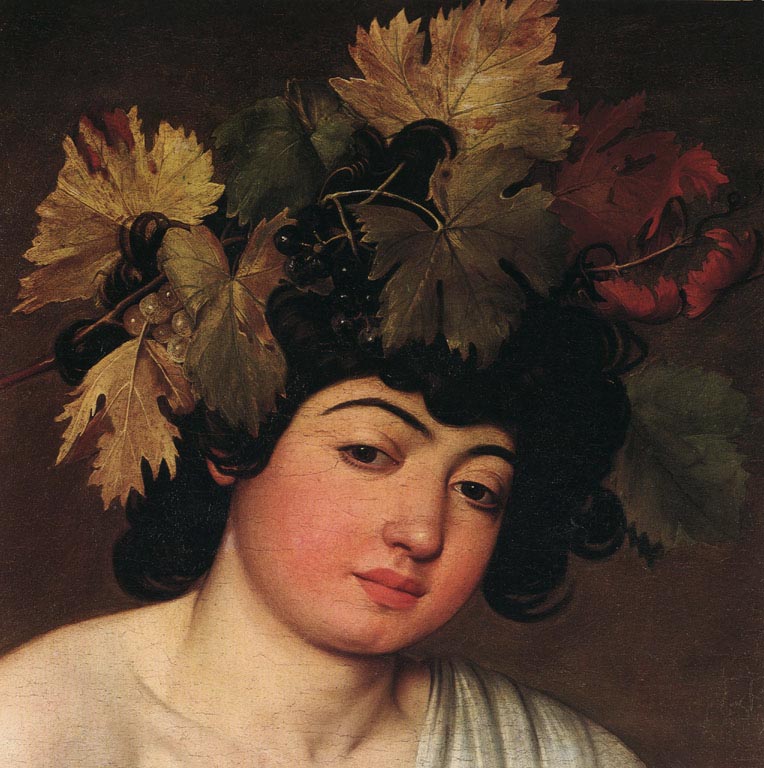
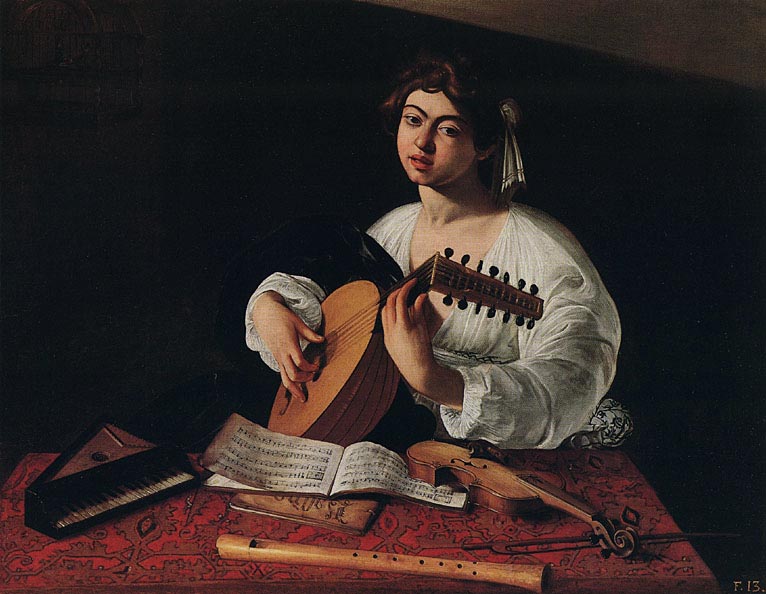
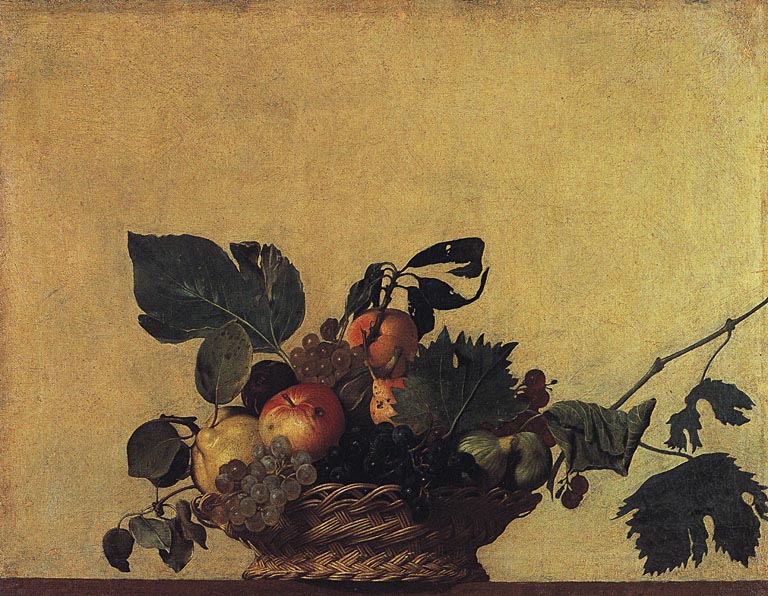
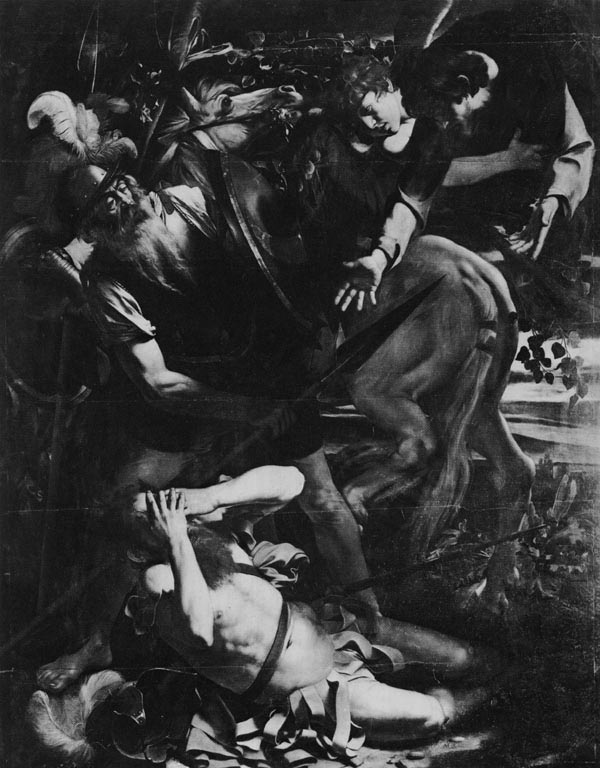
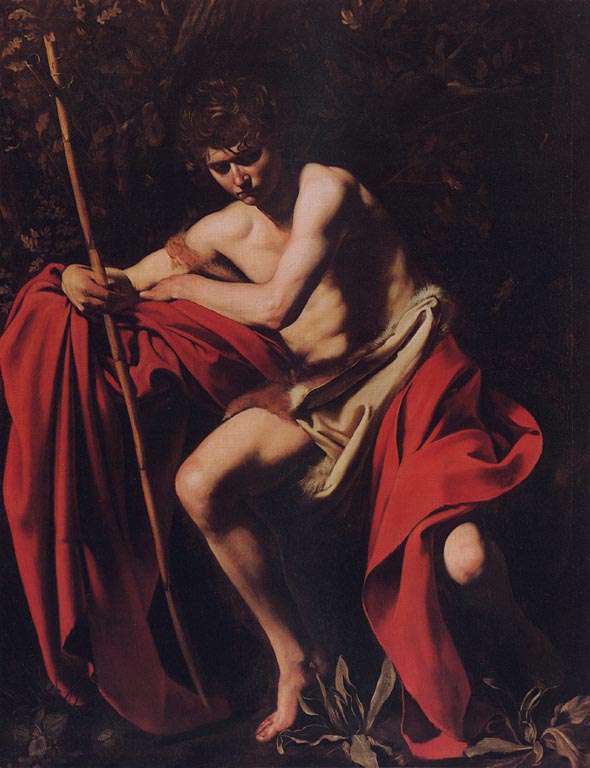
Not all the works that Caravaggio saw rejected have Lena as their protagonist. The Conversion of Saul, for example, was perhaps judged too physical, or too material in the apparition of Christ, who indeed disappears in the second version to make way for a blinding by pure light. Saint Matthew and the Angel, in the version lost during the last war, showed a decidedly tempting ephebe rather than an instructing one; in the altarpiece of 1600 for the church of San Luigi dei Francesi the angel comes down from heaven, at a prudent distance from the saint. The Rome of those times was in any case less homophobic than misogynistic (see Lena), and even in Caravaggio’s sacred works there are frequent portraits of his friend Minniti, for example in the Calling and the Martyrdom of St. Matthew for the Contarelli chapel as well as in the Fortune Teller, or of other young men with feminine features such as the castrato singer Montoya, the probable model for the famous Bacchus in the Uffizi, a work to be read not so much in a Christological key (the eternal youth of Christ, the vine/life, the chalice as a symbol of redemption) as a preparatory study for the splendid, and unique, independent still life of the Basket of Fruit, preceded by the great stylistic exercise contained in the Boy with a Basket of Fruit. In other canvases, such as the Young Sick Bacchus and the Boy Bitten by a Lizard, we see self-portraits in an androgynous key, very different from the tragic severed heads of the Baptist of the last years. The various versions of St. John the Baptist are all studies of young male nudes, and the subjects of the Concert of Young Men and of the canvases depicting the Lute Player are perhaps the same people, Caravaggio and Montoya included, who enlivened the evenings at the house of Cardinal Francesco Del Monte (who lodged and protected both the painter and the singer at the same time), often en travesti.
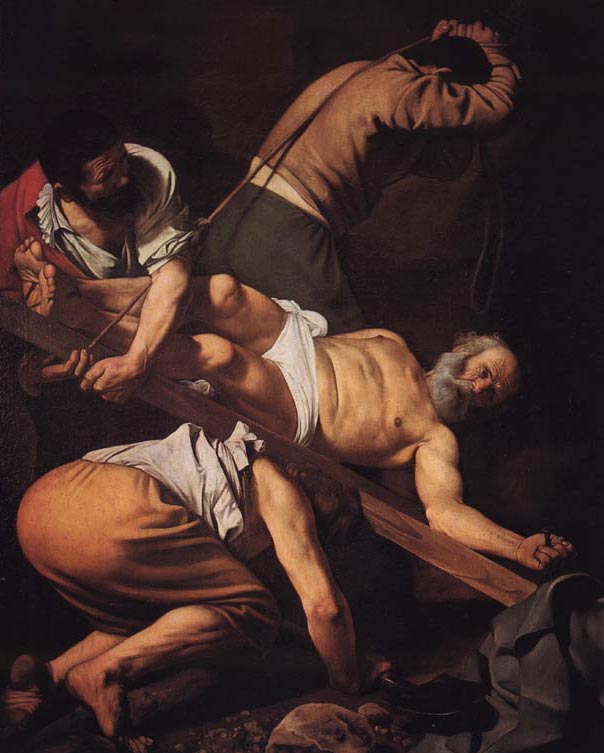
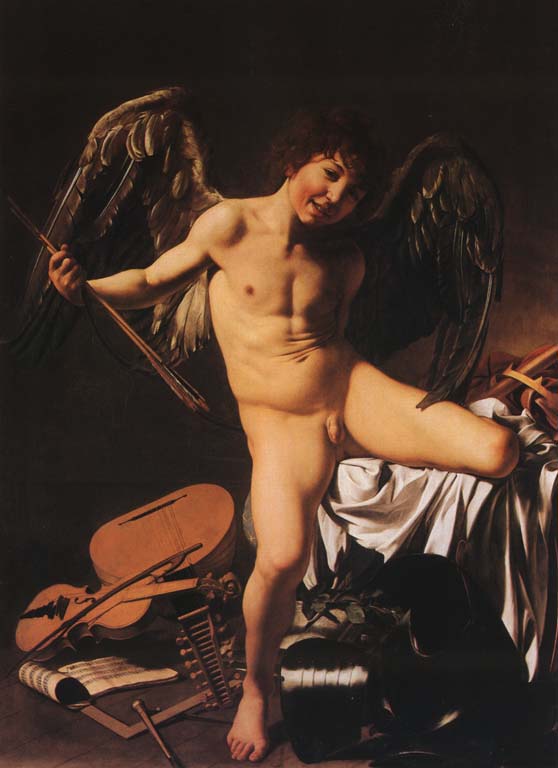
The trial that sealed Caravaggio’s fate was the one for the killing of Tomassoni, which took place on 31 May 1606 during a brawl with a tragic ending, arising from a dispute during a game of pallacorda; it might have looked like a case of self-defence, given that the painter had been seriously wounded in the head and one of his companions had been killed, but the Tomassoni family was powerful enough to obtain the “bando capitale”, a capital sentence, against Caravaggio; perhaps his protectors were no longer able to influence the court, or else they had seized the moment to rid themselves of a friend whose criminal record had grown too long and too dirty. The great religious canvases he had painted on the life of St. Matthew for the Contarelli chapel in San Luigi dei Francesi, the innovative Crucifixion of St. Peter in the Cerasi chapel in Santa Maria del Popolo, the various versions of St. Jerome and the Entombment were no longer passports capable of guaranteeing him asylum in Rome. His “private” works with effeminate youths such as the Lute Player or lascivious little boys such as Victorious Love, or with portraits of women of dubious morals such as the Conversion of the Magdalene, now became evidence against his morality. The last remaining friends could only help him flee to Palestrina or Paliano, near Rome; once he had left Lazio, apart from the Syracusan interlude when he was reunited with the faithful Minniti, he had to win admirers and supporters anew, as in Naples and Malta, but always continuing his flight. Who or what was pursuing him, considering that the conviction for murder was a mishap that could easily have been remedied had some powerful figure only wished it, has yet to be proved: a combination of contributing causes, papal and Maltese, dangerous friendships, private remorse and a desire for atonement; it only remains to add that he died, alone and without care, at the age of thirty-nine.
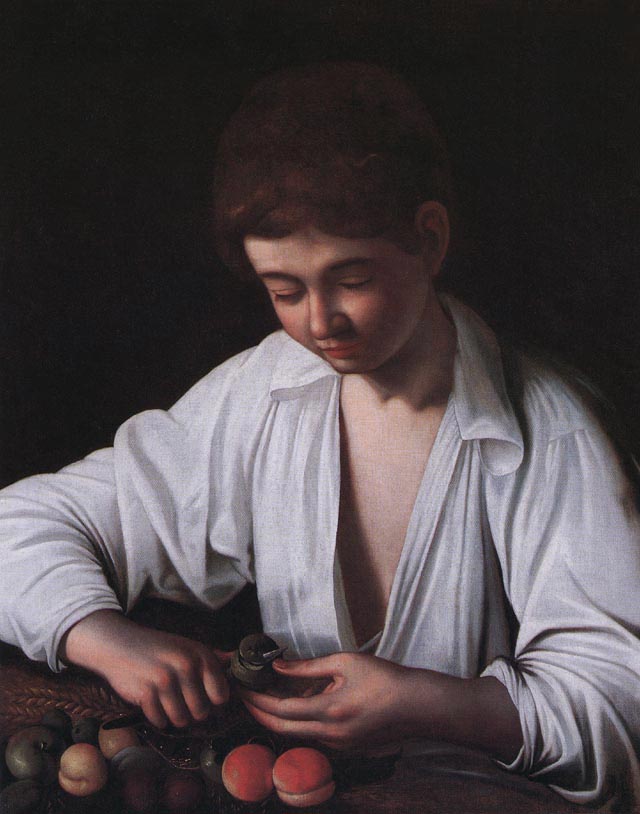
Boy Peeling Fruit (copy)
The Fortune Teller
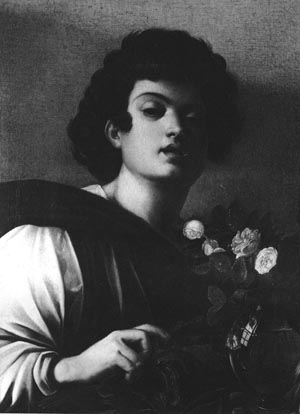
Boy with a Vase of Roses (copy)
Boy with a Basket of Fruit
Young Sick Bacchus
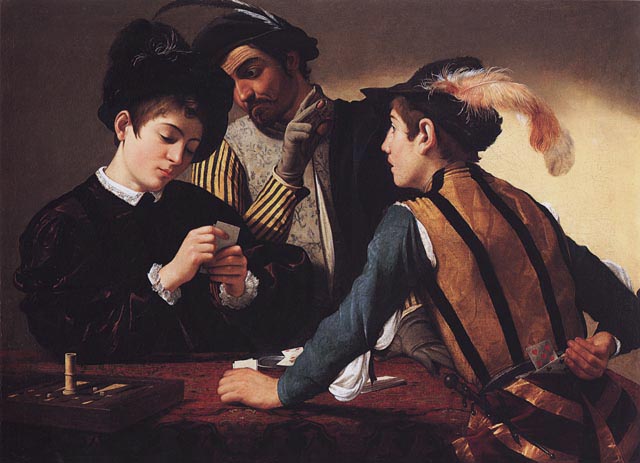
The Cardsharps
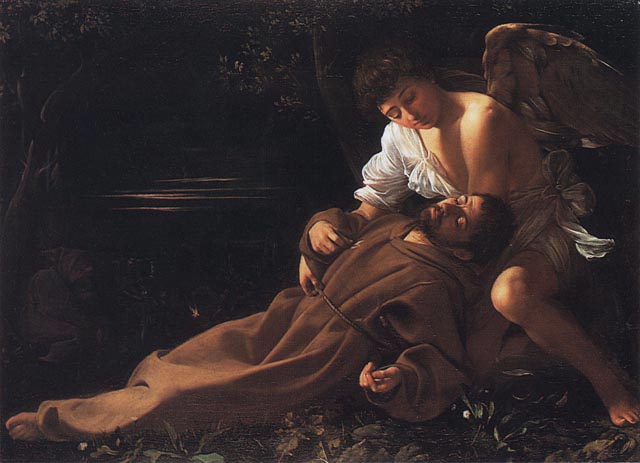
The Stigmata of St. Francis
Boy Bitten by a Lizard
The Musicians
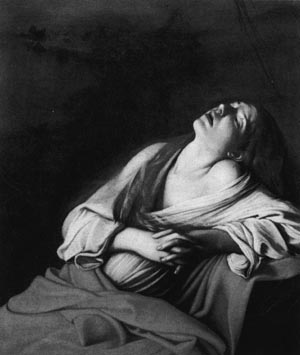
Magdalene
Boy Bitten by a Lizard
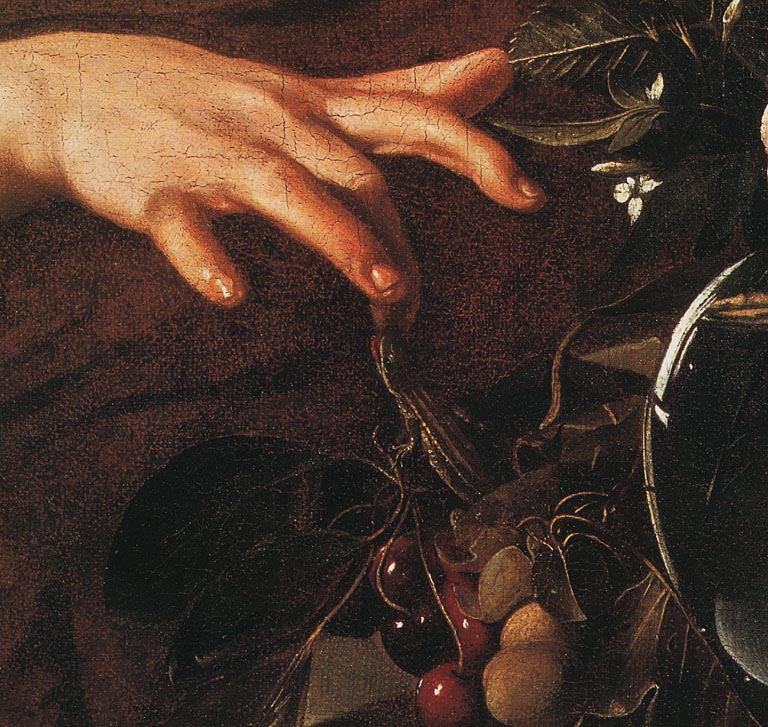
Rest on the Flight into Egypt
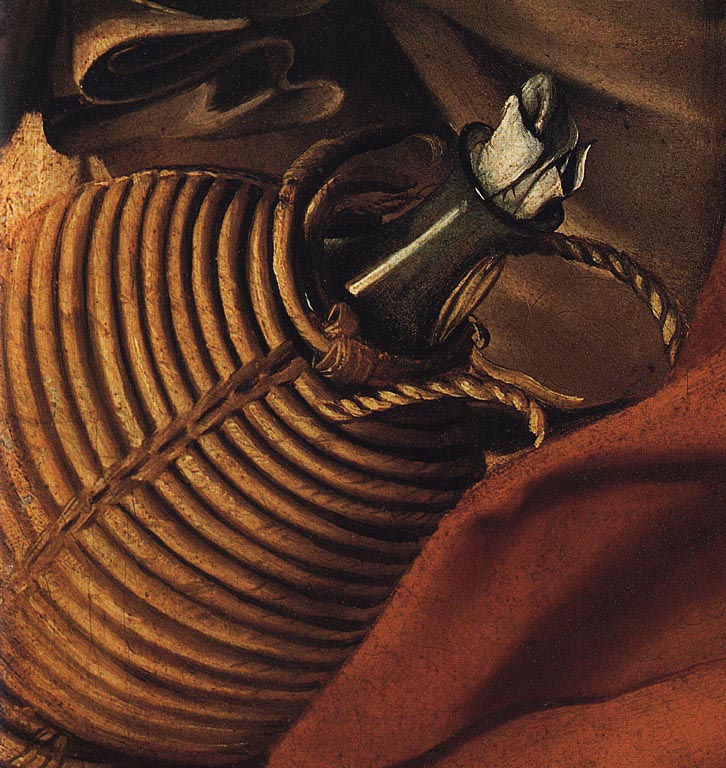
The Lute Player
The Fortune Teller
Bacchus
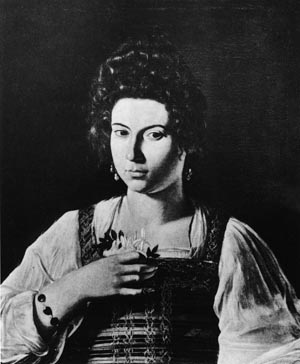
Fillide (lost)
The Lute Player
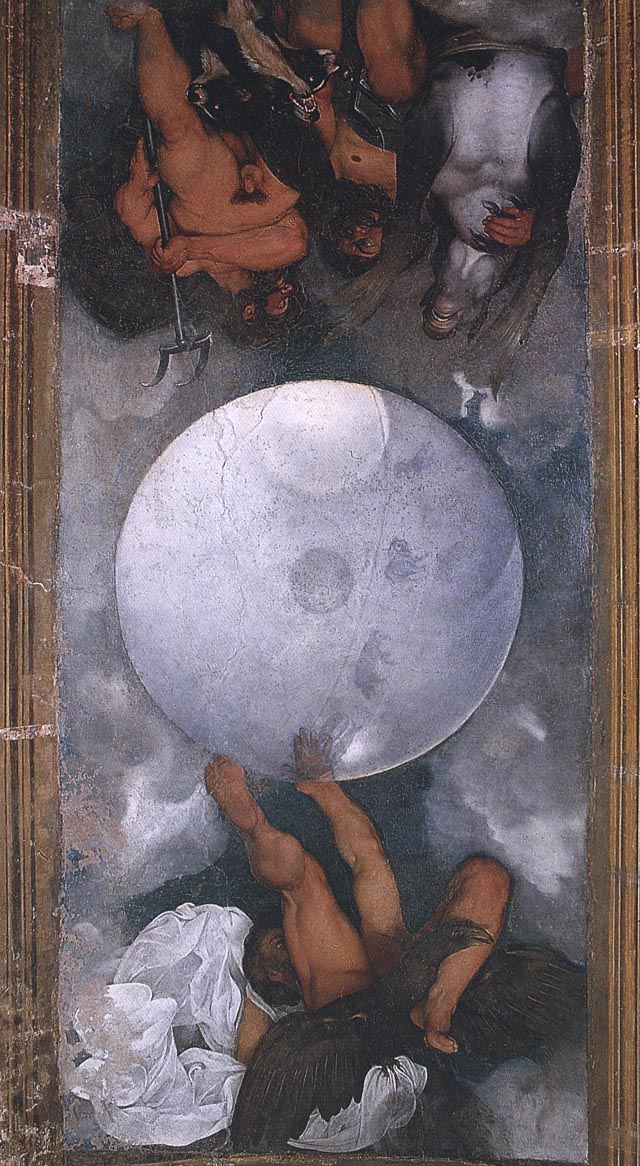
Jupiter, Neptune and Pluto
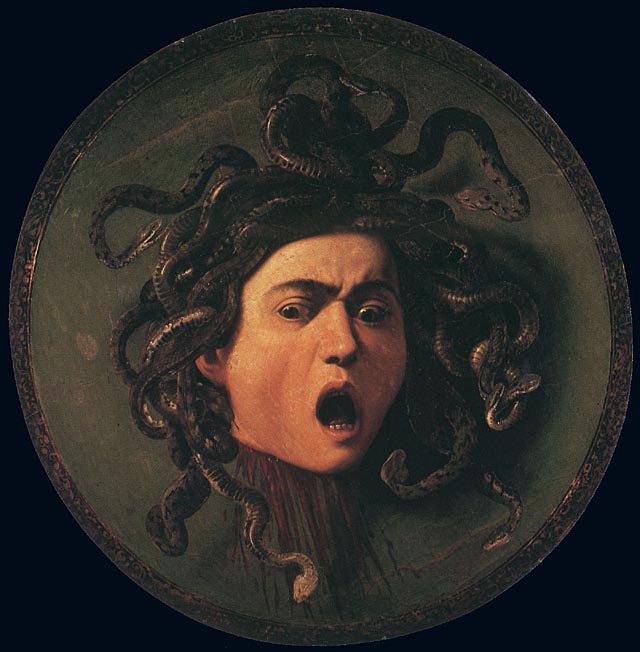
Head of Medusa
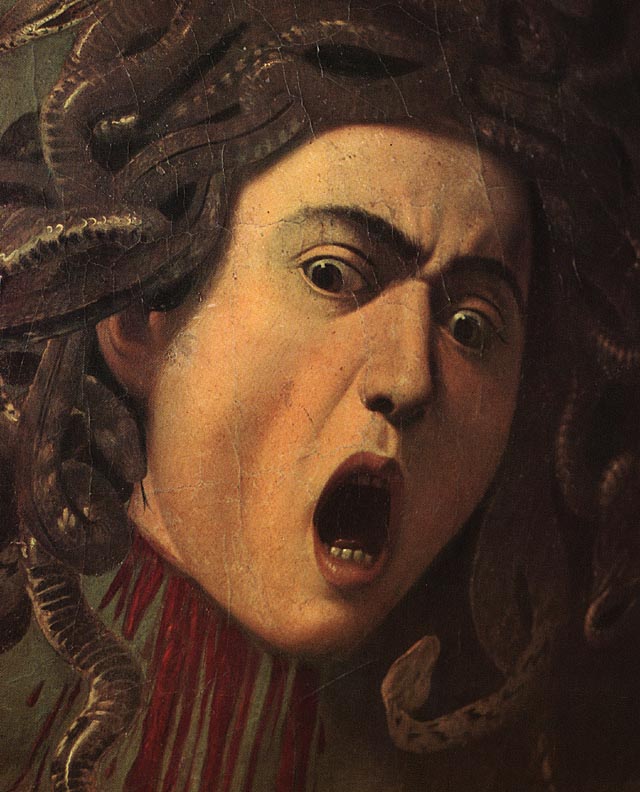
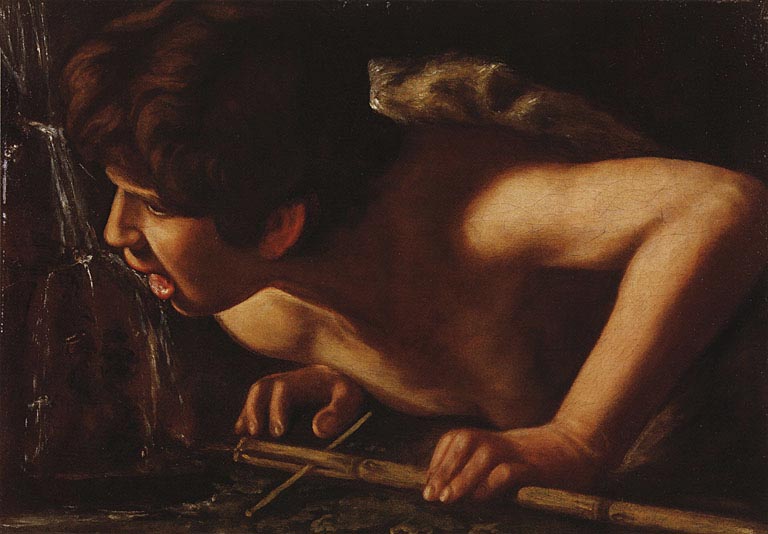
St. John the Baptist
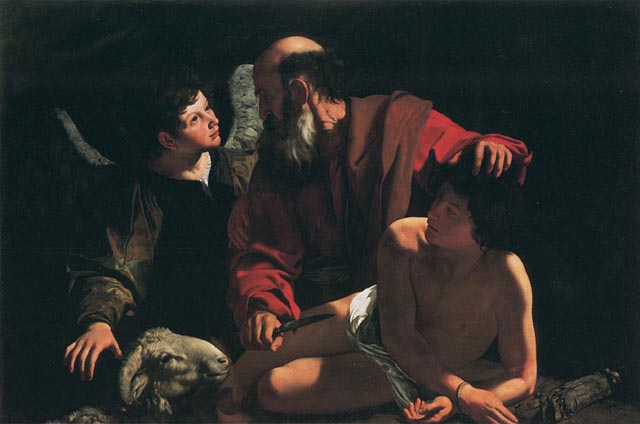
The Sacrifice of Isaac
The Calling of Sts. Peter and Andrew
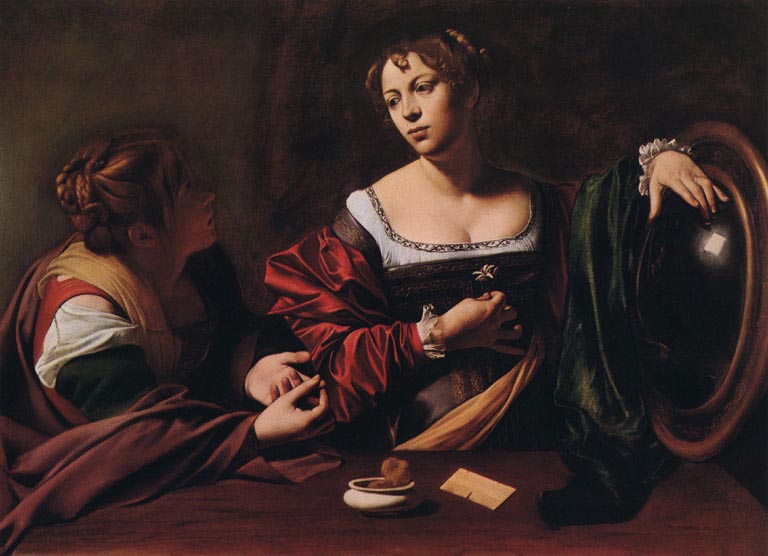
The Conversion of the Magdalene
Basket of Fruit
David and Goliath
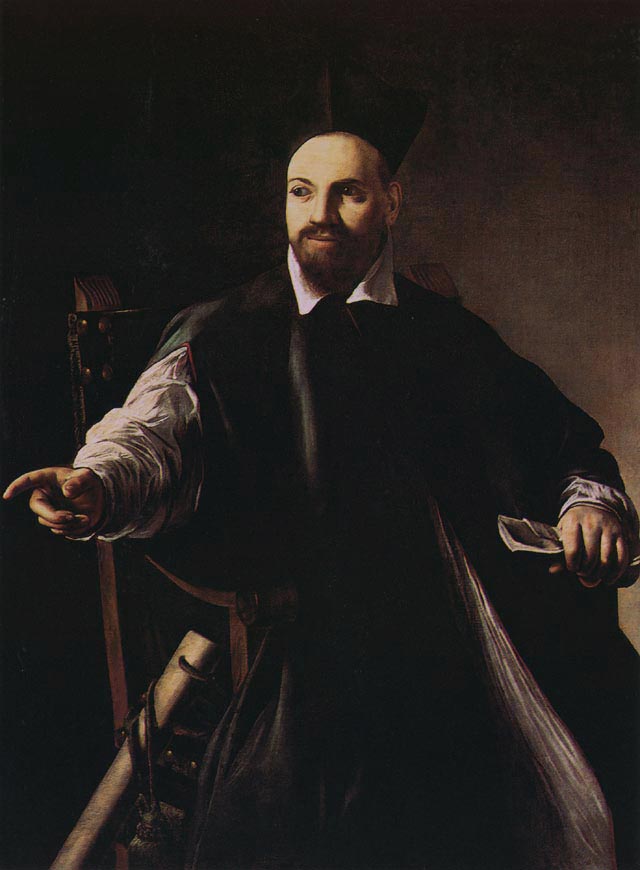
Portrait of Monsignor Maffeo Barberini
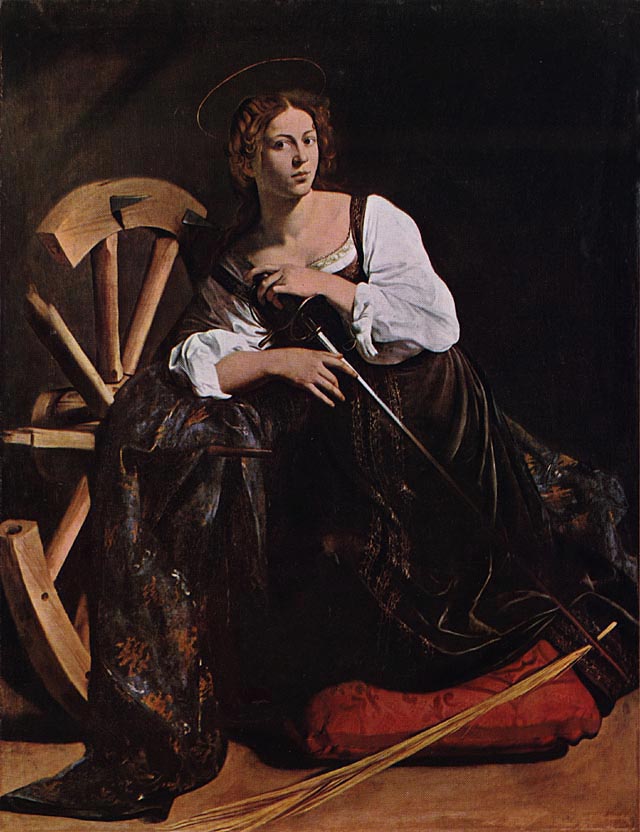
Saint Catherine of Alexandria
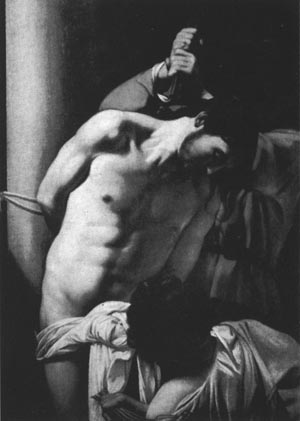
Christ at the Column (copy)
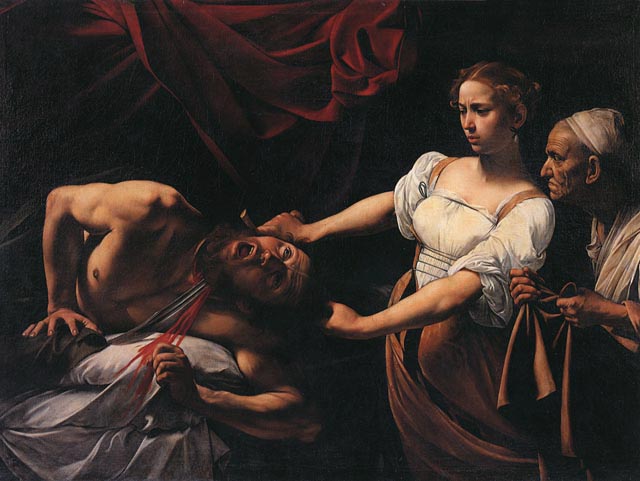
Judith and Holofernes
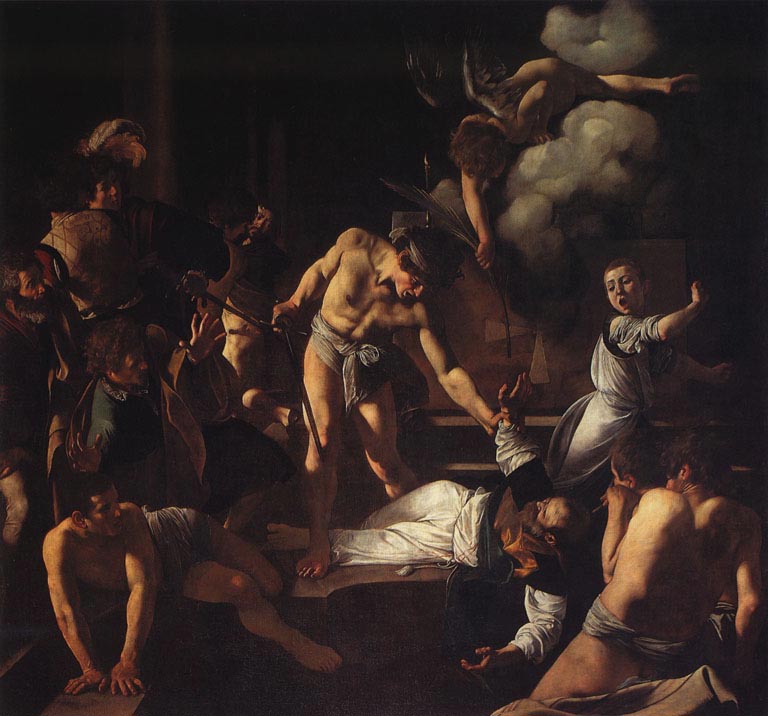
The Martyrdom of St. Matthew
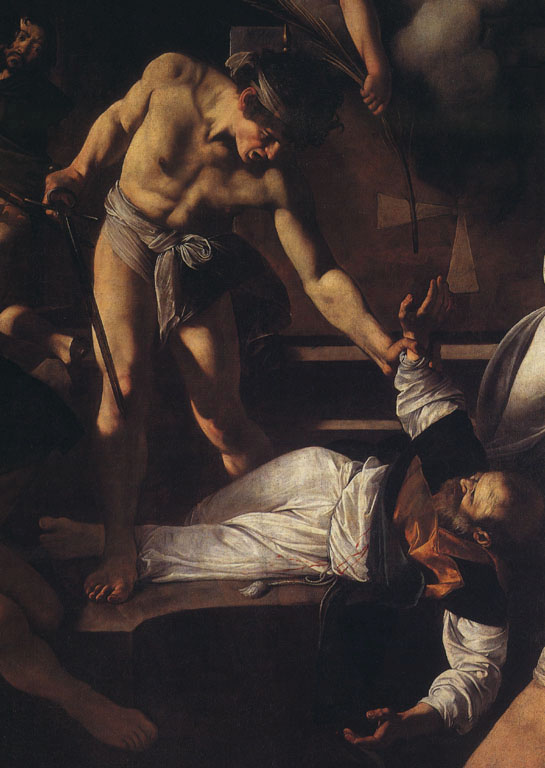
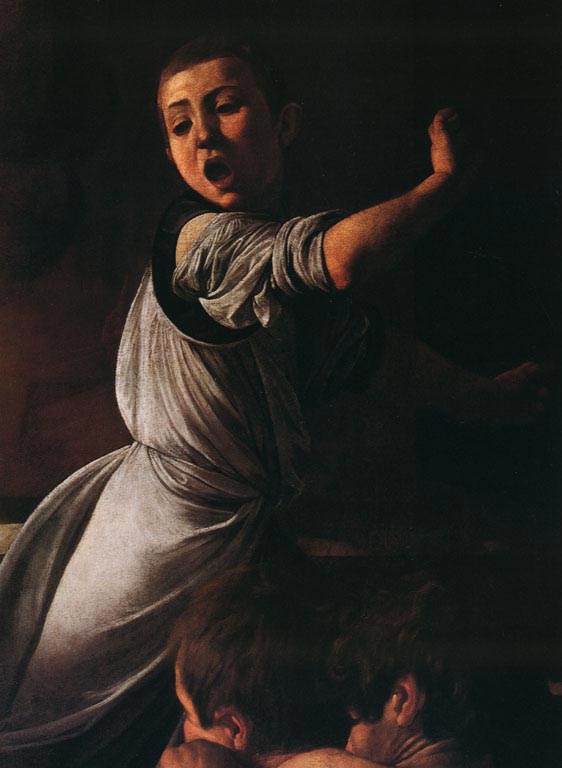
The Calling of St. Matthew
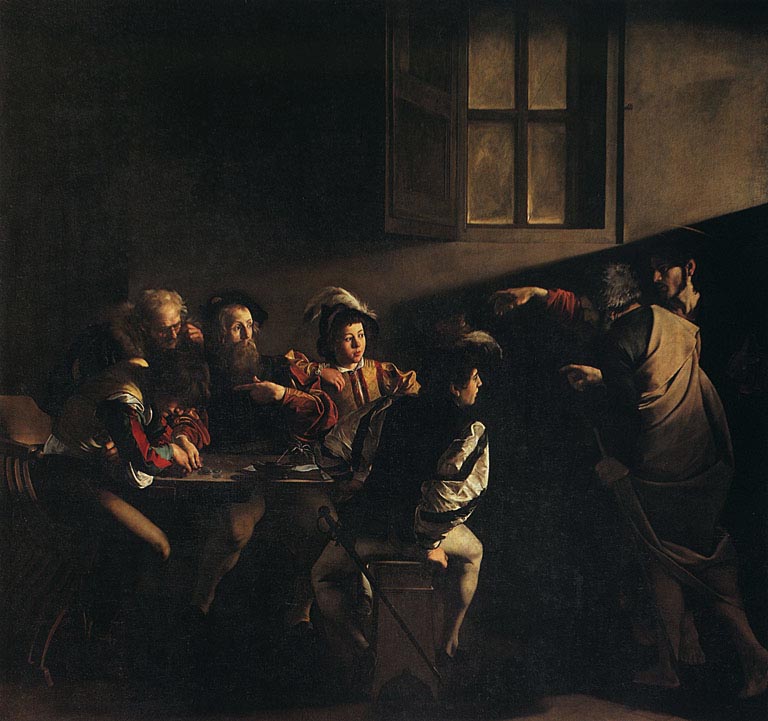
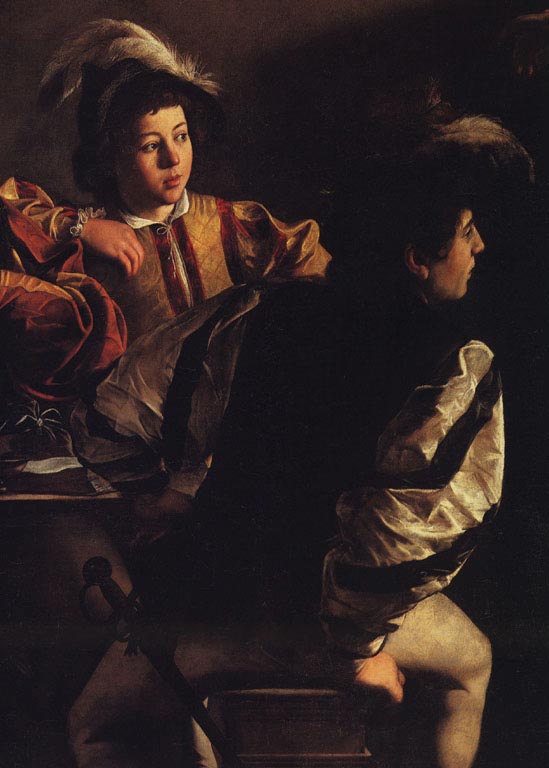
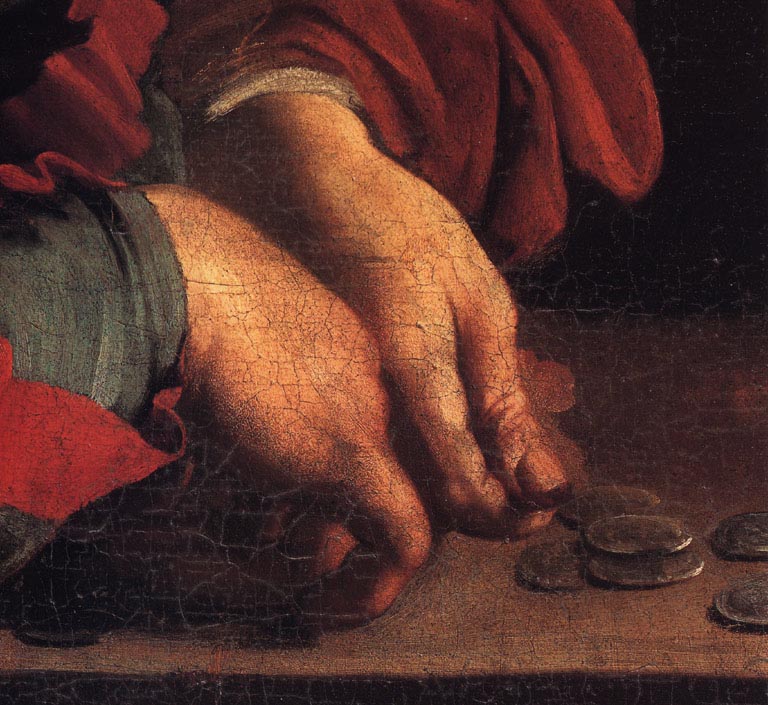
The Conversion of St. Paul (Saul)
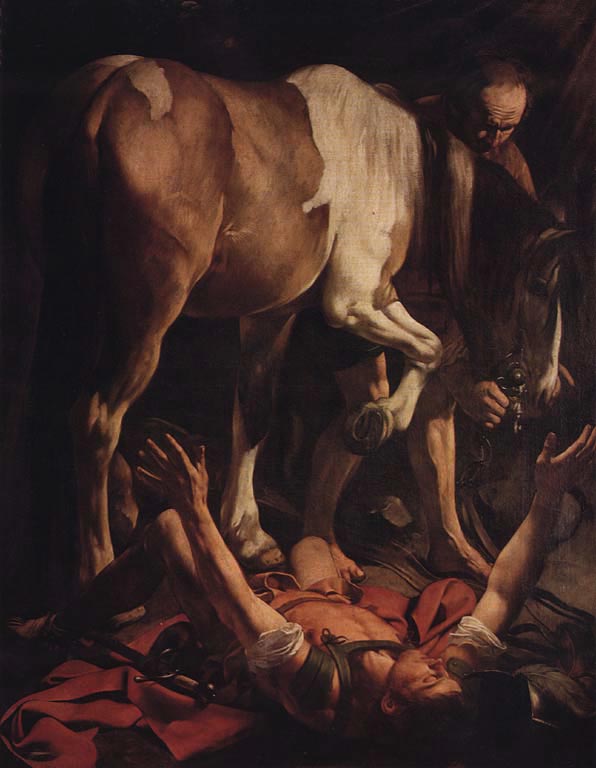
The Martyrdom of St. Peter
The Conversion of St. Paul (Saul)
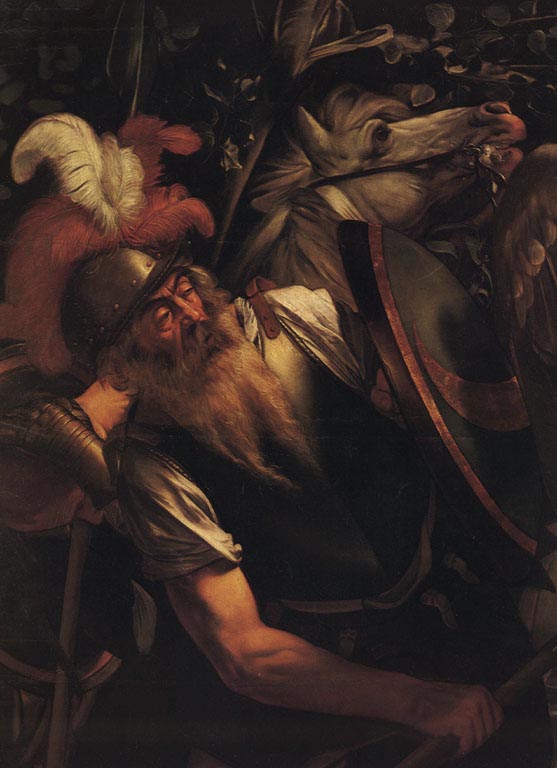
The Incredulity of St. Thomas
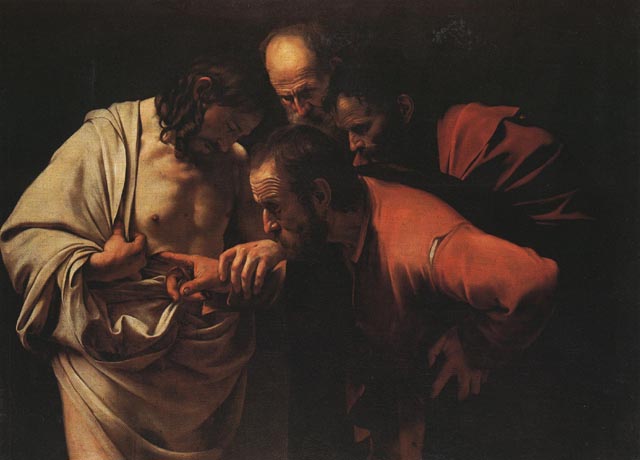
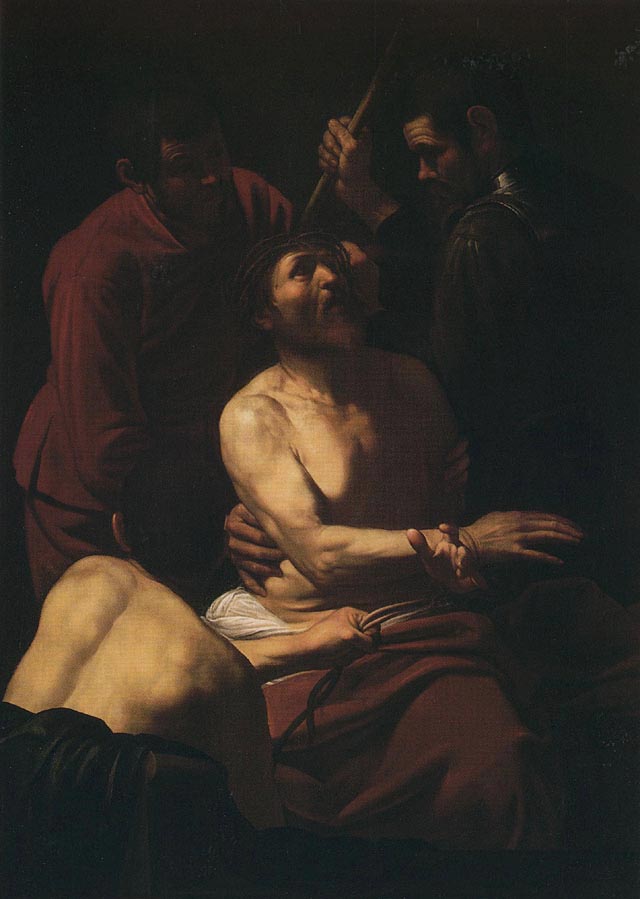
The Crowning with Thorns
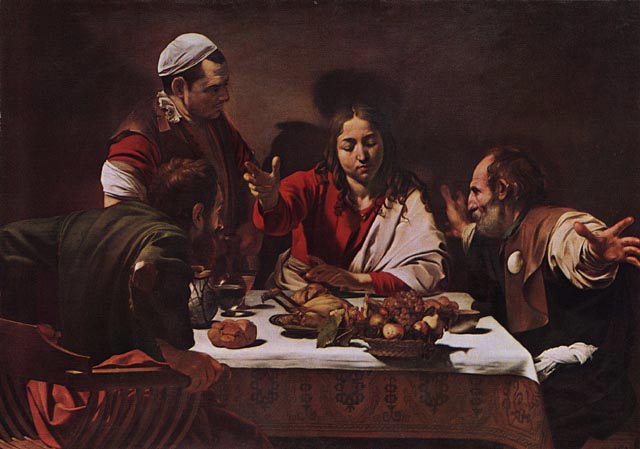
Supper at Emmaus
Victorious Love
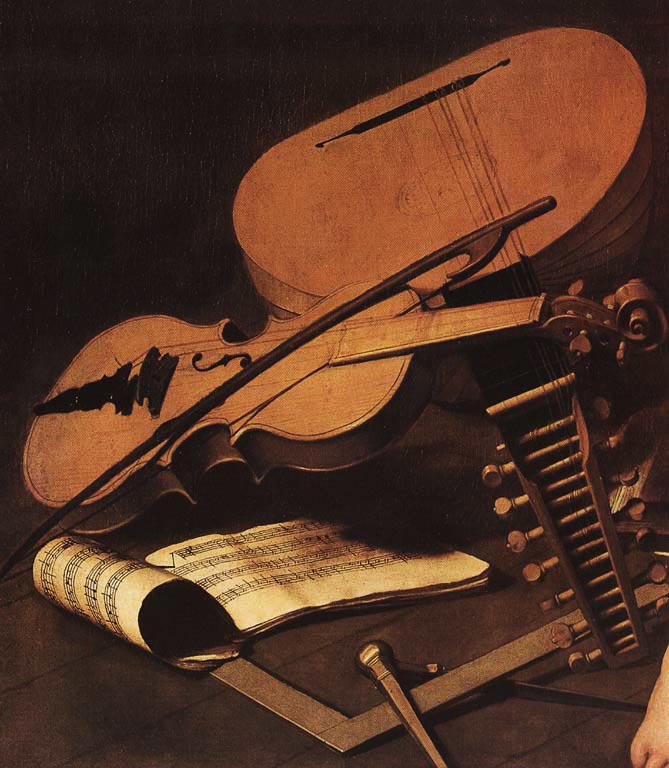
Saint Matthew and the Angel
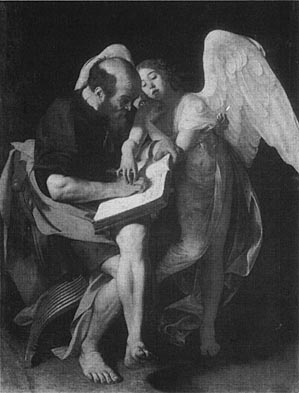
The Taking of Christ
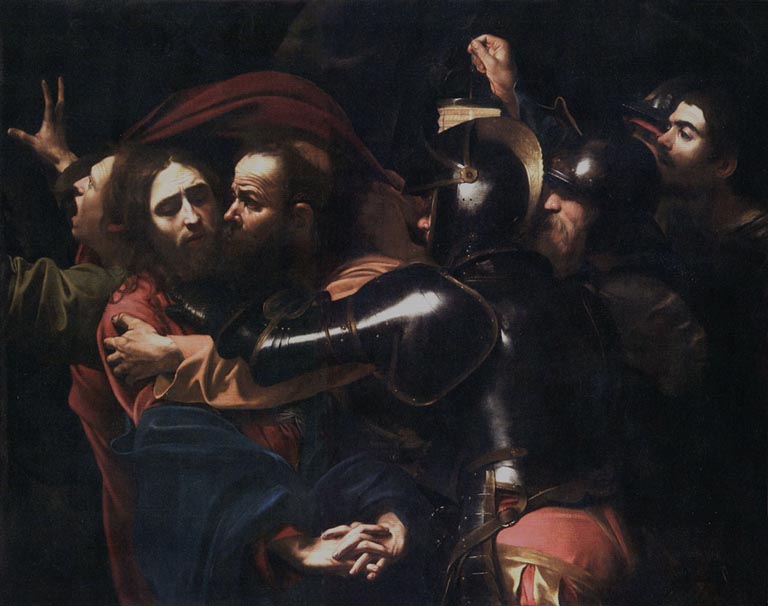
Saint Matthew and the Angel
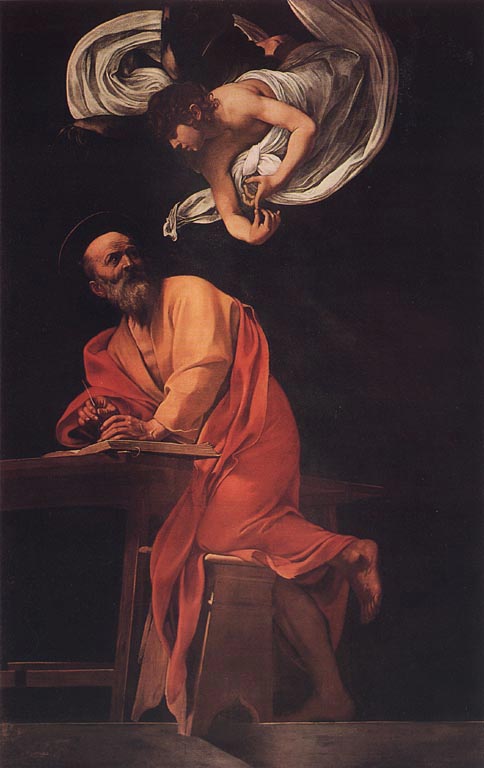
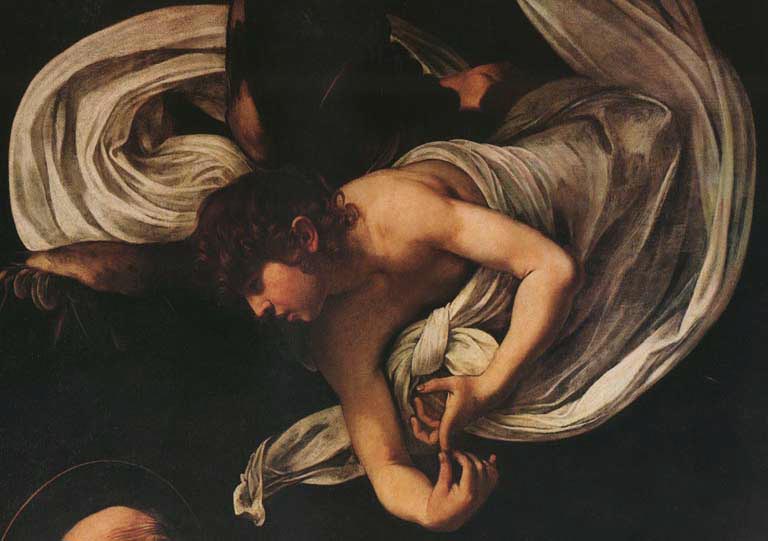
St. John the Baptist
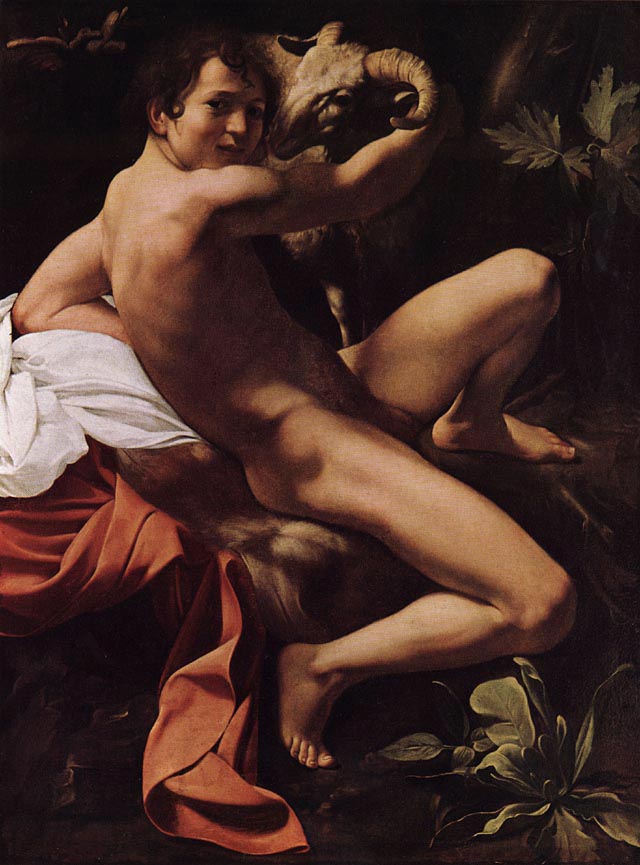
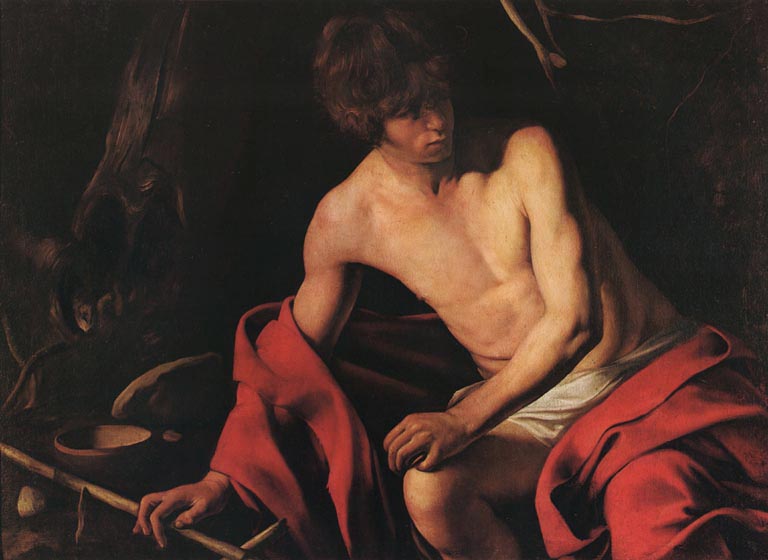
St. John the Baptist
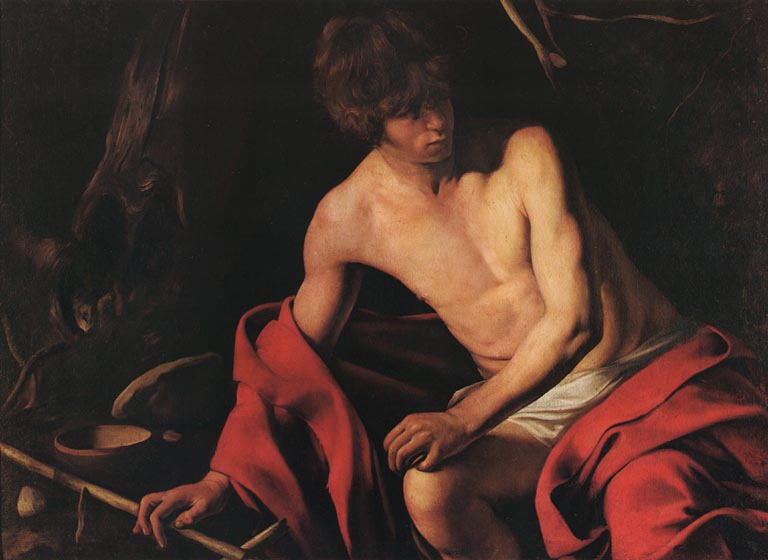
The Entombment
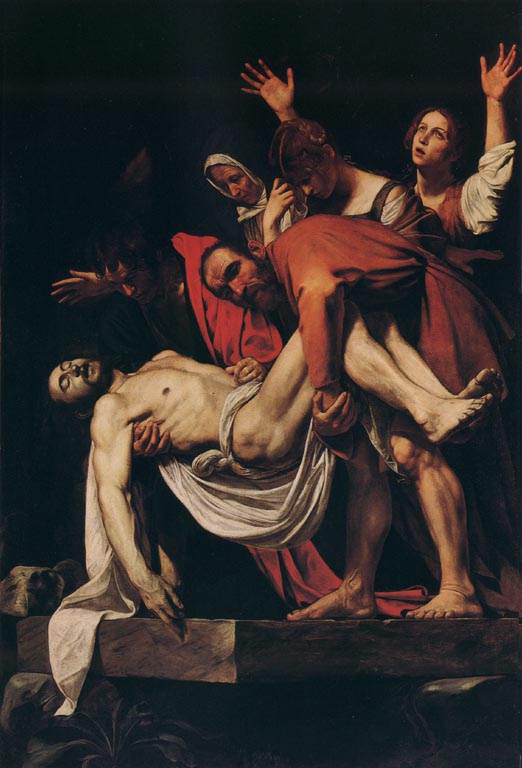
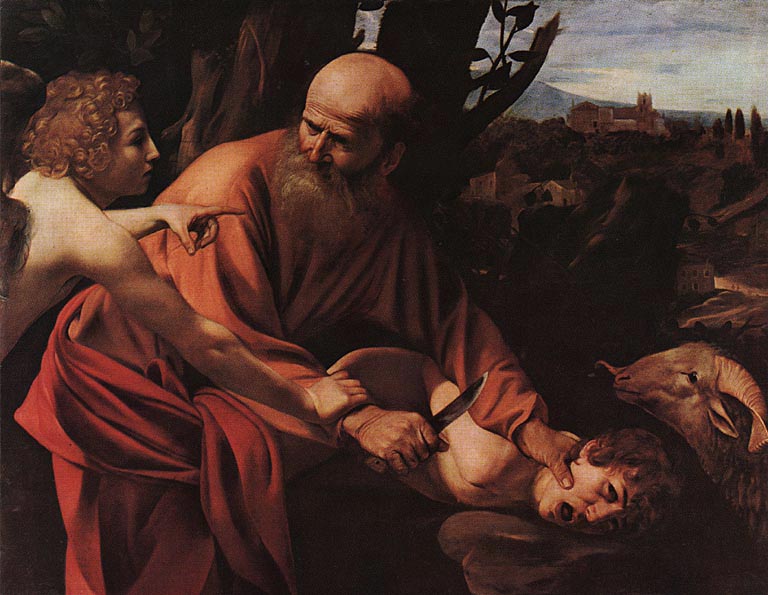
The Sacrifice of Isaac
The Crowning with Thorns
St. John the Baptist
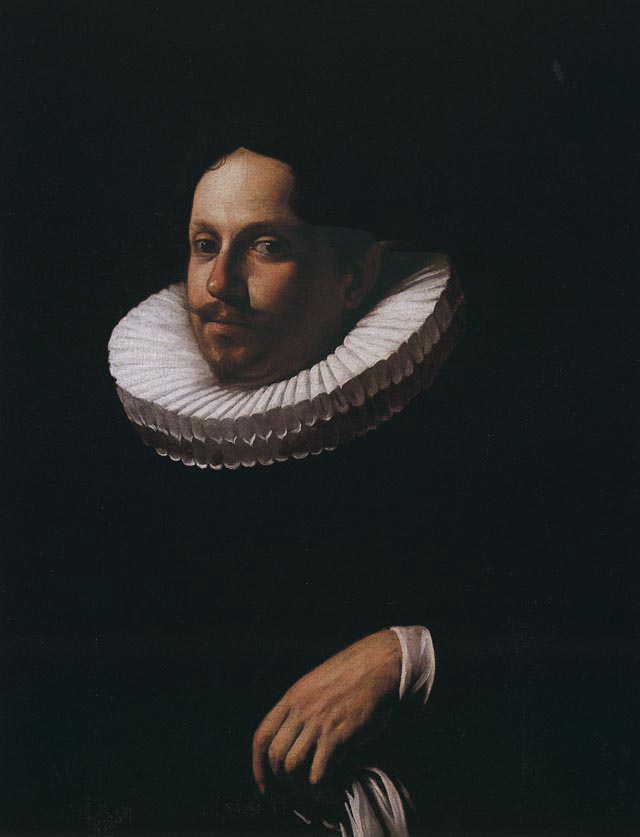
Portrait of a Gentleman
Madonna of Loreto or Madonna of the Pilgrims
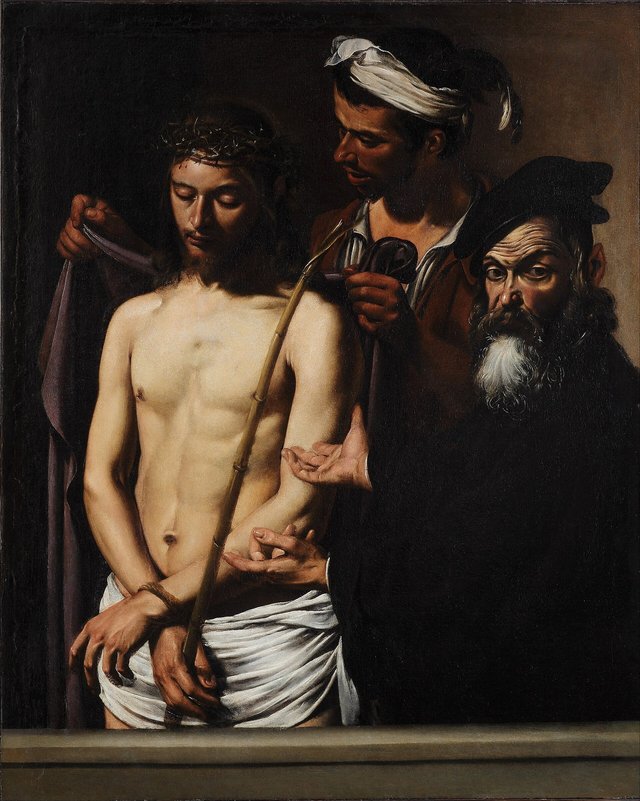
Ecce Homo
Photograph: Google Art Project, via Wikimedia Commons (public domain).
Christ in the Garden of Olives (lost)
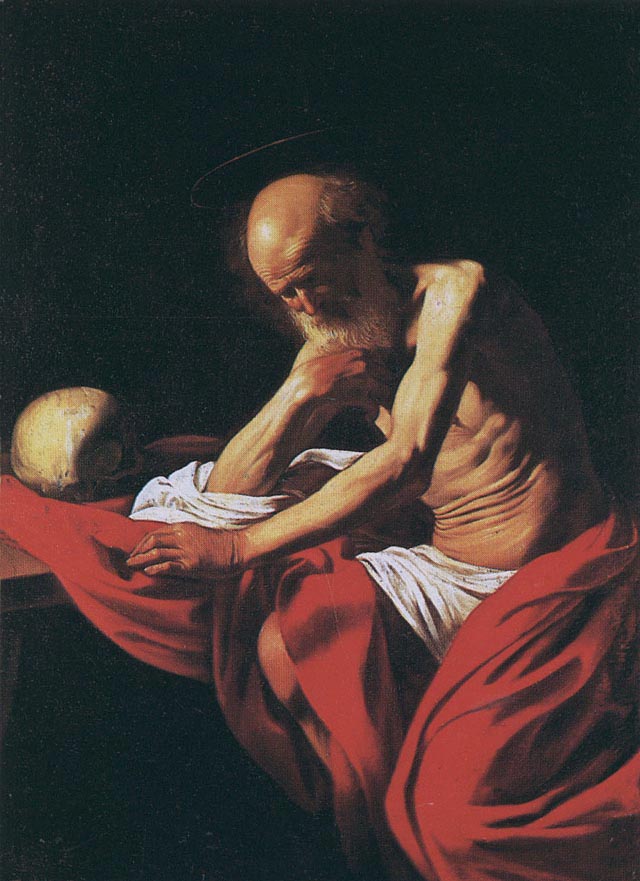
Saint Jerome in Meditation
San Francesco
The Death of the Virgin
Madonna of the Serpent or Madonna dei Palafrenieri
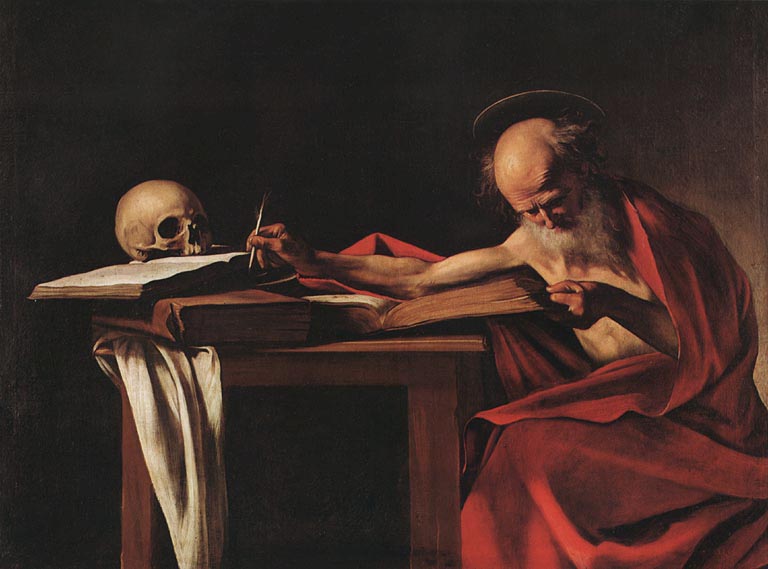
Saint Jerome Writing
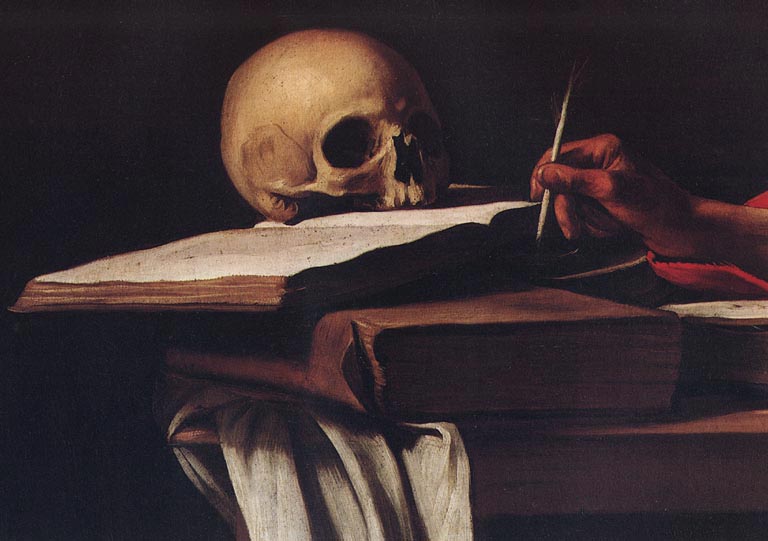
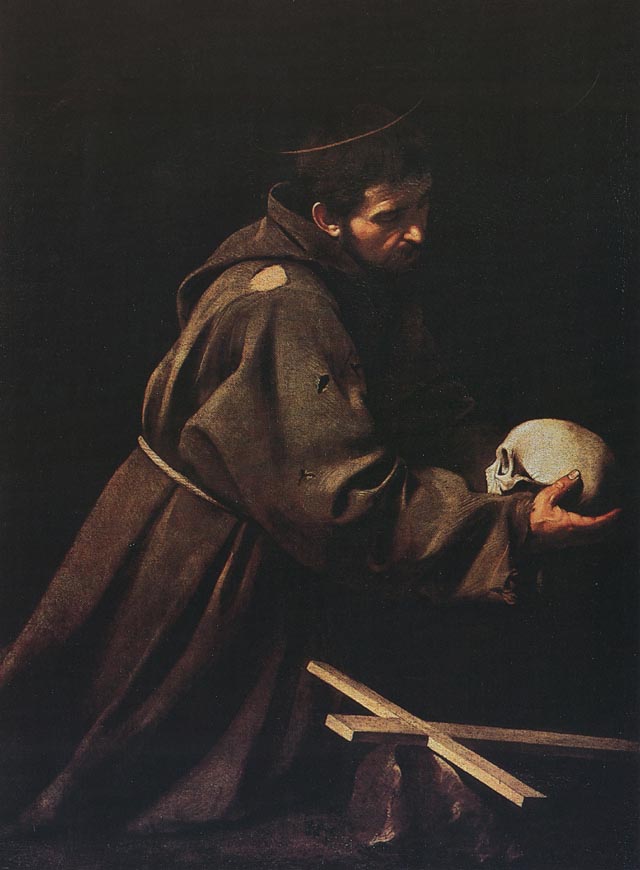
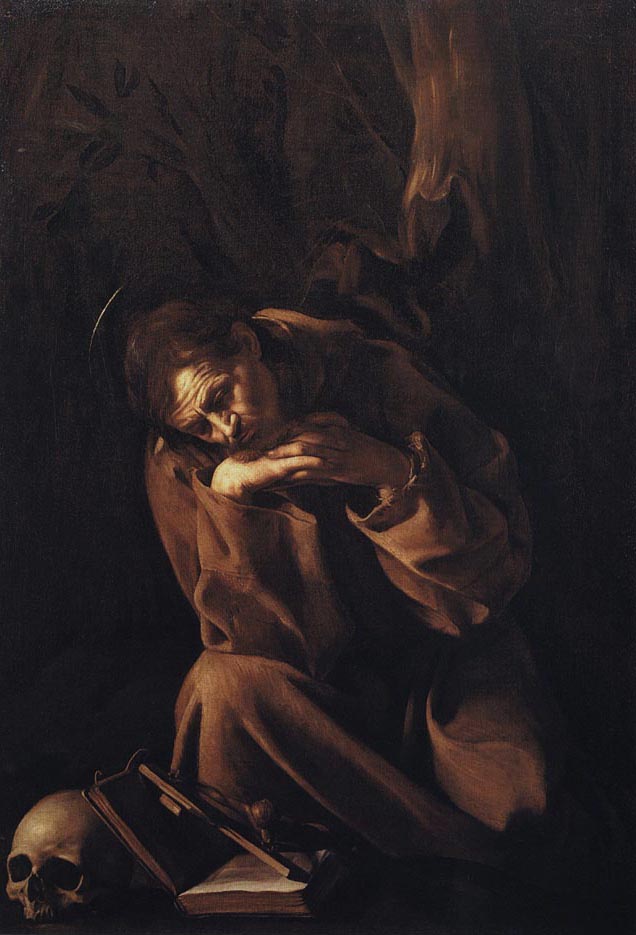
Saint Francis in Meditation
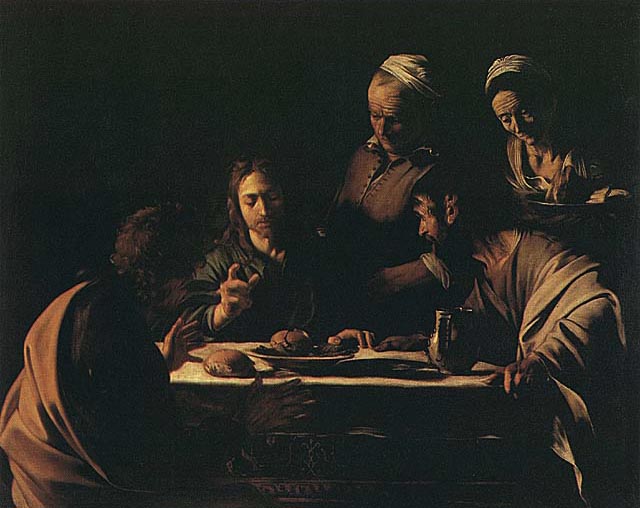
Supper at Emmaus
Saint Mary Magdalene
Madonna of the Rosary
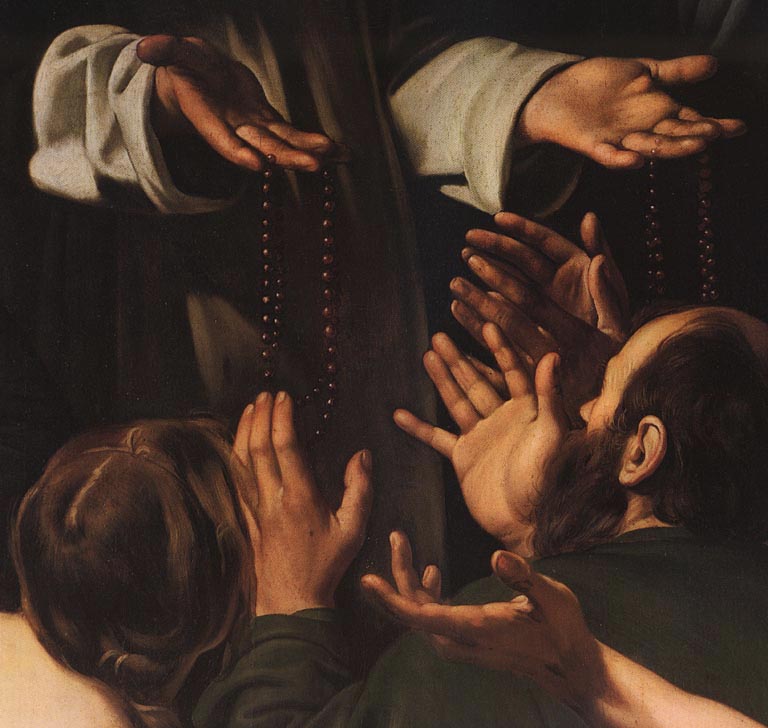
The Seven Works of Mercy
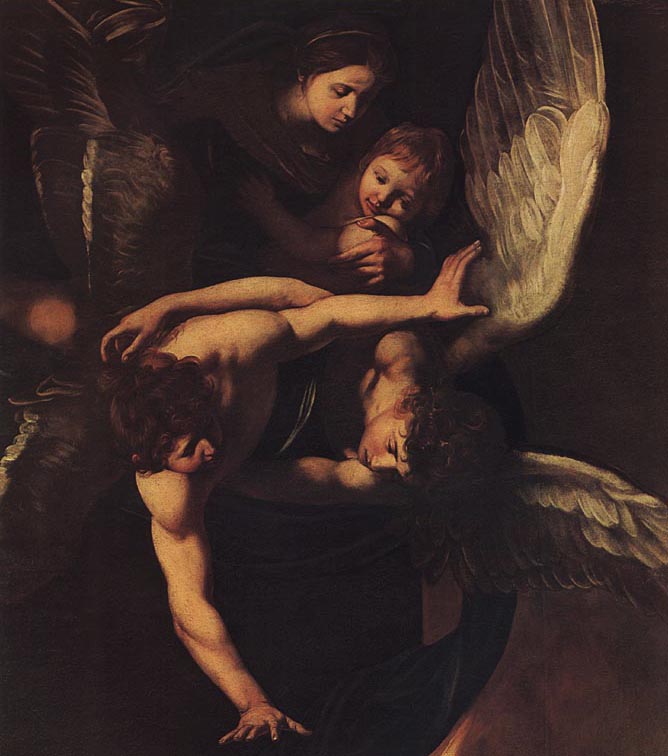
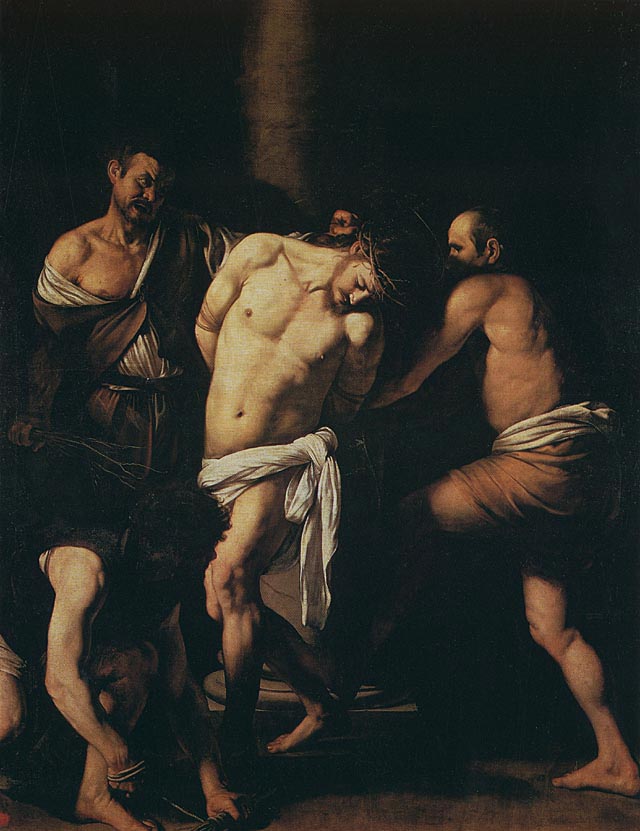
Flagellation of Christ
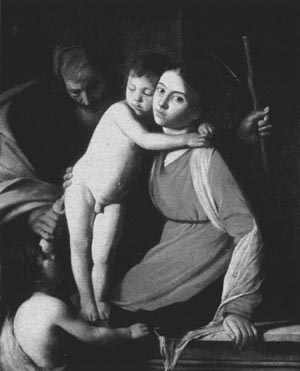
The Holy Family with the Infant St. John
Salome with the Head of the Baptist
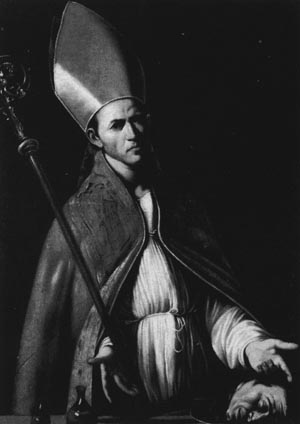
Saint Januarius Showing His Relics
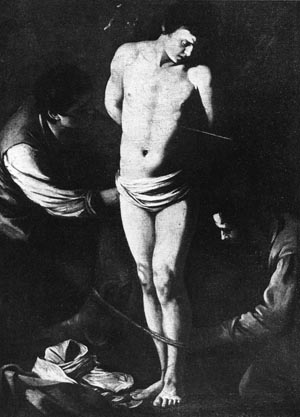
Saint Sebastian (copy)
David with the Head of Goliath
Flagellation of Christ
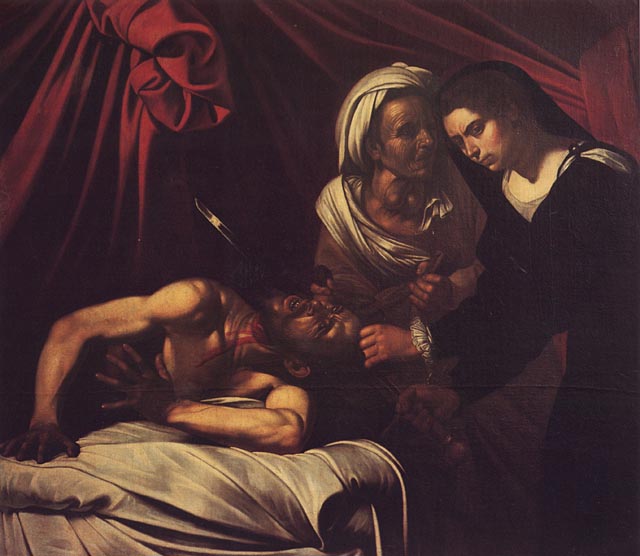
Judith Beheading Holofernes (copy)
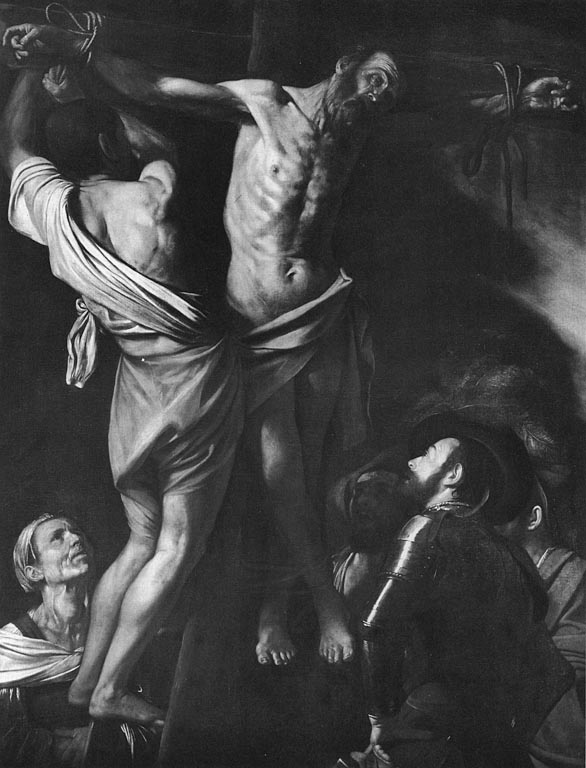
The Crucifixion of St. Andrew
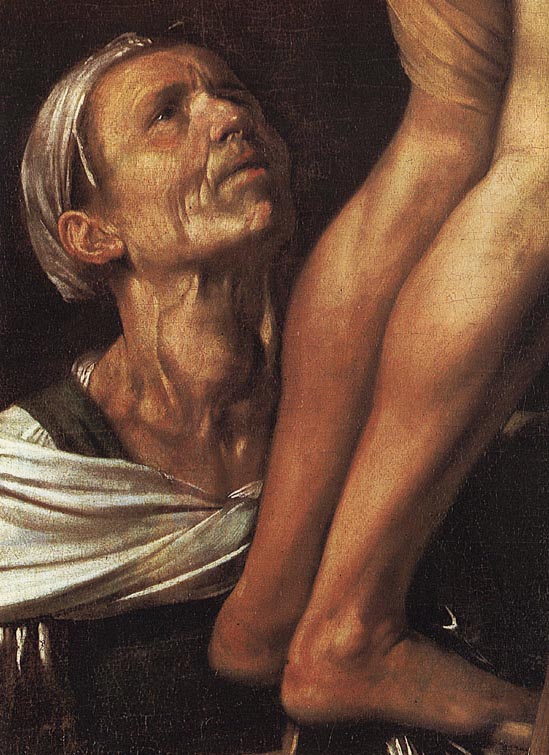
Saint Jerome
The Beheading of the Baptist
Portrait of Alof Wignacourt in Armour
The Raising of Lazarus
Sleeping Cupid
Portrait of a Knight of Malta
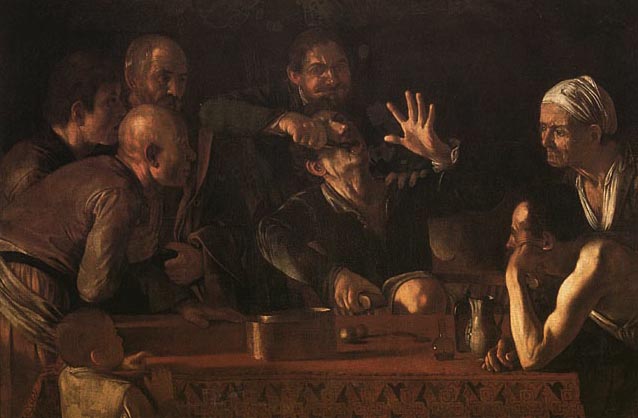
The Tooth Puller
The Young St. John at the Spring
The Burial of St. Lucy
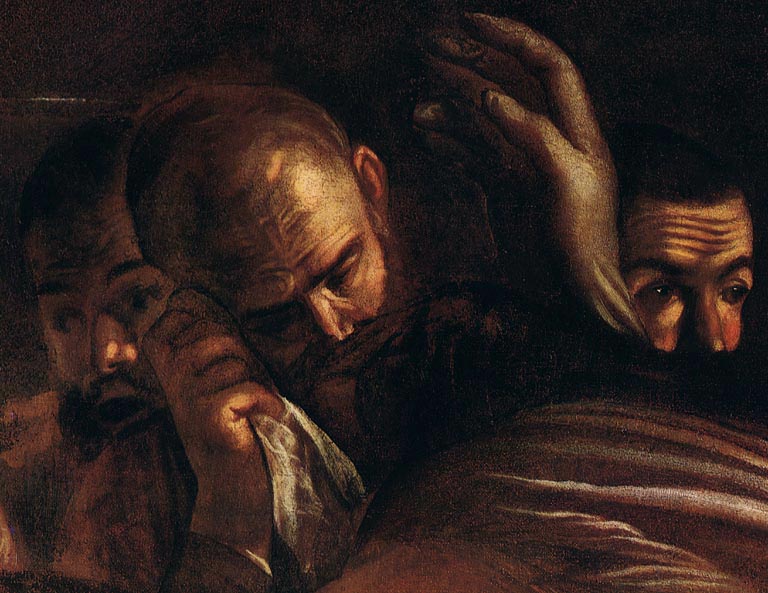
Nativity (Adoration of the Child with Sts. Lawrence and Francis)
Madonna del Parto or The Adoration of the Shepherds
Salome with the Head of the Baptist
Annunciation
Ecce Homo (copy)
The Denial of St. Peter
St. John the Baptist
The Martyrdom of St. Ursula
David with the Head of Goliath