Bruno BalestriniPhotographer
Bruno Balestrini/ Applied Arts/ Textiles/ French textiles of the 17th century
Back to Textiles
French textiles of the 17th century
France

French textiles of the 17th century

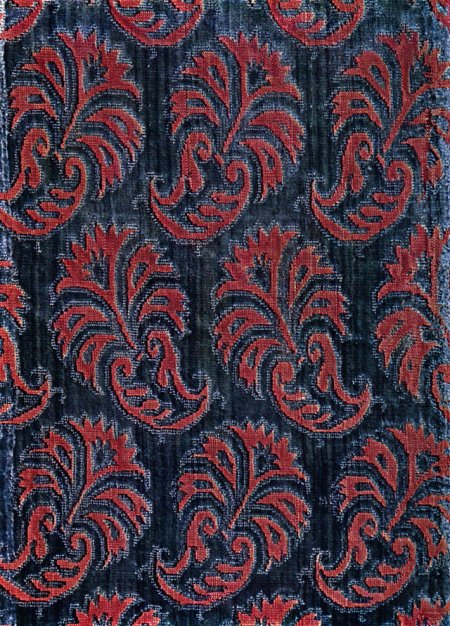
The seventeenth century marks the definitive formation of a French silk industry in decisive competition with the Italian one, taken as a whole, it marks a period of decline in Italian textile art, because creative supremacy passes to the Lyon factories.

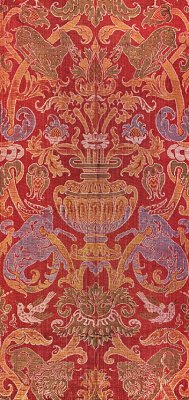
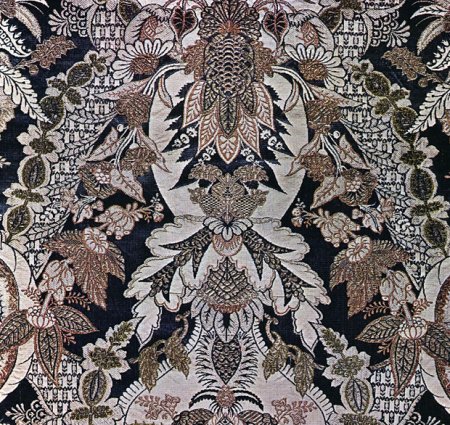
UPHOLSTERY FABRICS
Period
From the middle to the end of the 17th century
Description
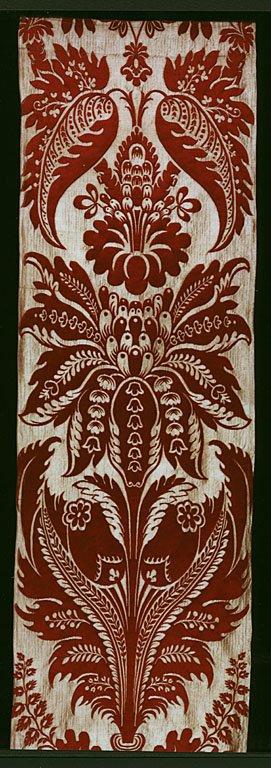
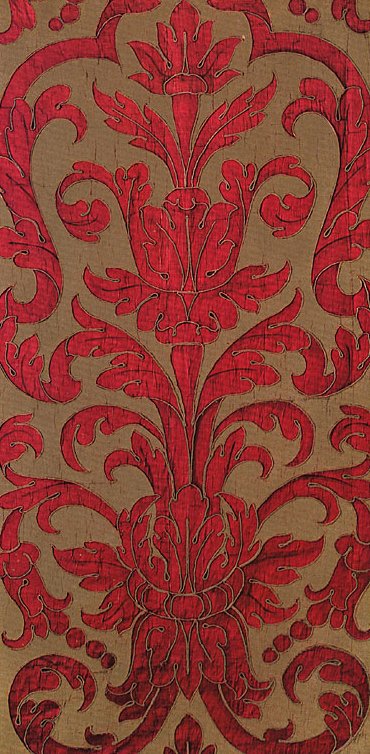
Vertical successions, with a repeat spanning the full height of the fabric, of floral motifs and acanthus scrolls which diverge to form ovals enclosing compositions of irises, tulips, ears of wheat, grapes and peonies. Often a crown binds the framing at the points of tangency.
Technique
Embroidered velvets, ciselé velvets, satins and damasks.
Origin
Baroque splendour, ornamentation pushed to excess and in harmony with the pompous style of the furniture.

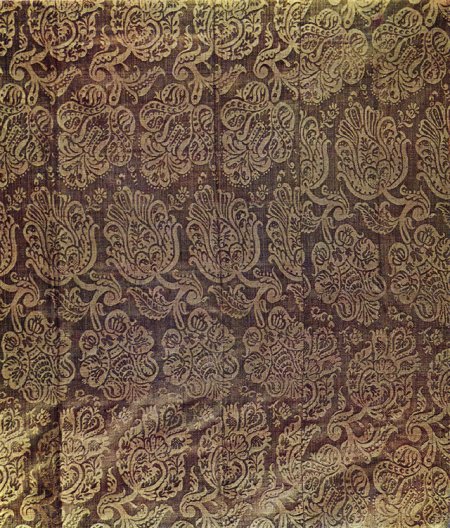
LYON

Period
Last quarter of the 17th century
Description
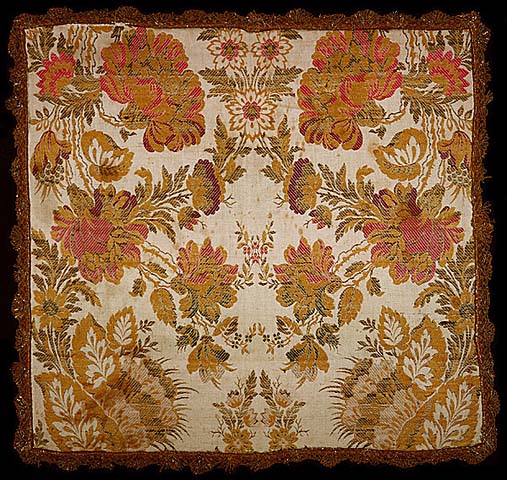
Sequence of flowers arranged in a horizontal line, oriented alternately in opposite directions; oval frames enclosing floral compositions, series of vertically undulating racemes enclosing polychrome flower buds in circular volutes.
Technique
Lampas, satins, twills, taffetas, brocades, gros and other types of light weave.
Origin
Lampas, satins, twills, taffetas, brocades, gros and other types of light weave.

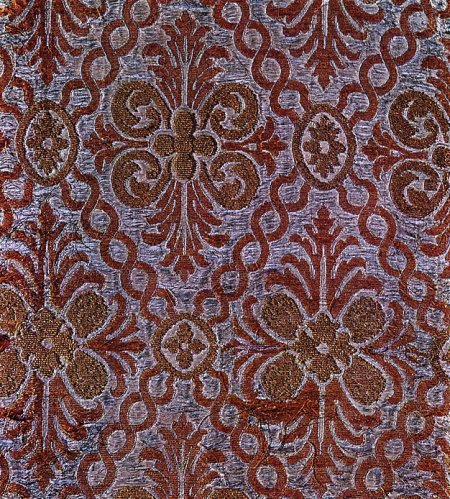
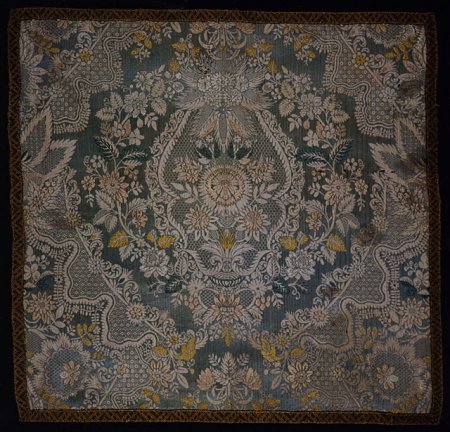
LACE DESIGN

Period
From 1680 to the middle of the 18th century.
Description
Large ovals or lateral, mirrored “lace-like” frames enclose elaborate compositions of flowers and fruit, some of them exotic and fantastic in appearance.
Technique
lampas, damasks, satins, gros, taffetas.
Origin
Imitation of the lace that was so fashionable towards the end of the reign of Louis XIV.

In the eighteenth century France holds the primacy in the field of textile creativity, more on the stylistic than on the technical side. Madame de Pompadour reigns supreme; the fashion of the time depends on her capricious will. She even gives her name to a characteristic style of textile decoration with scattered bunches of flowers; then, as a major shareholder of the Compagnie des Indes, she makes fashionable the small Chinese fantasies borrowed from imported porcelain. In ornamental styles, as in fashions and modes of dress, the eighteenth century is French in Italy just as the sixteenth century had been Italian in France.

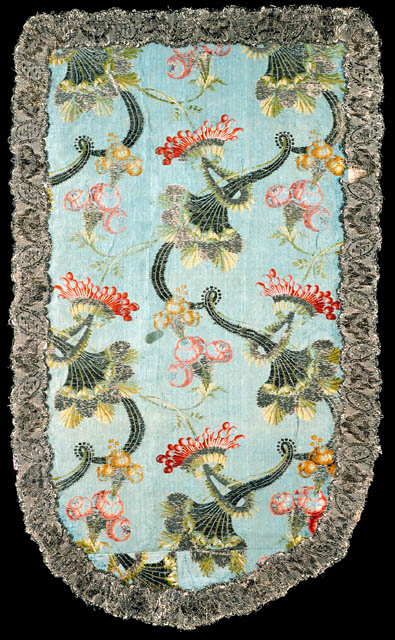
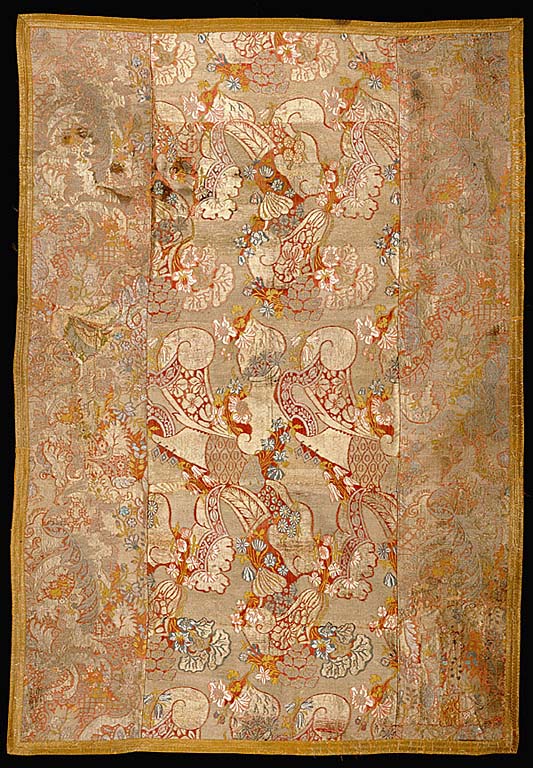
BIZARRE
Period
Early 18th century 1700 - c. 1720
Description
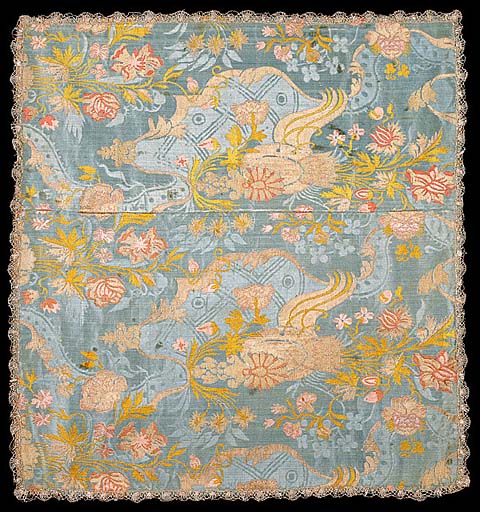
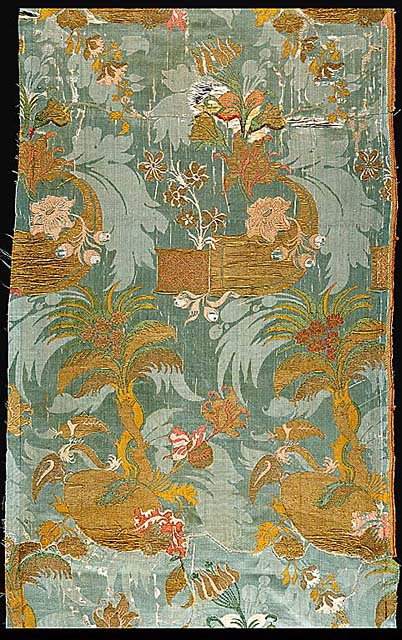
Large-repeat design, asymmetrical, made up of fantastic elements set beside others of an exotic nature.
Technique
Damask brocaded in gold, silver and polychrome silks.
Origin
Because of its constituent elements, with their clear Oriental reference, this type of fabric stands as evidence of one of the many moments of interest in the art of those countries; in particular, at this time, this phenomenon is linked to the activity of the East India Companies.

CHINOISERIE

Period
Early 18th century 1710 - 1740
Description
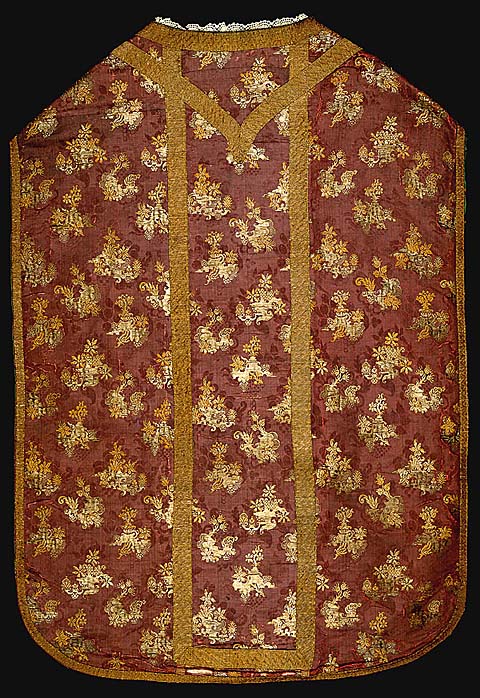
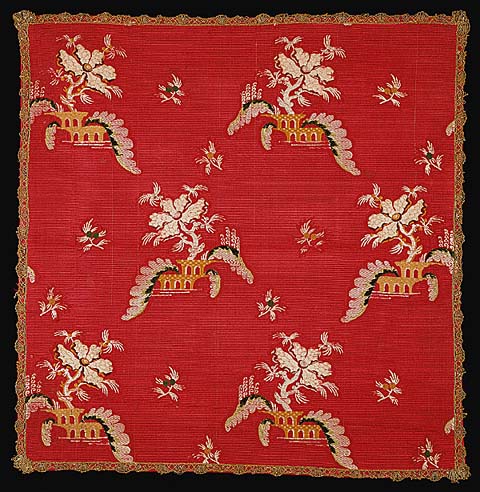
Palanquins, reed beds, bridges, pagodas, ponds, branches, flowers and little scenes, borrowed from porcelain, are arranged, owing to the textile need for framing, within fields bounded by very light lines of branches or undulating bands.
Technique
Lampas, failles, velvets, damasks with decoration brocaded in gold, silver and polychrome silks.
Origin
Frequent missions of the powerful Society of Jesus to China, keeping interest in that country alive through letters and descriptive accounts, give rise in Europe to the fashion for the Chinese style. The taste for chinoiseries then becomes universal, partly as a result of the import of Chinese porcelain by the East India Companies and the spread of the secret of its manufacturing technique, discovered in 1710 by Boettger and applied in Meissen porcelain.

REVEL STYLE

Period
1730 - 1740
Description
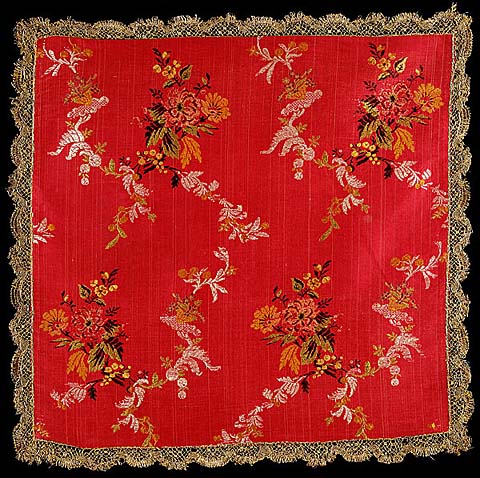
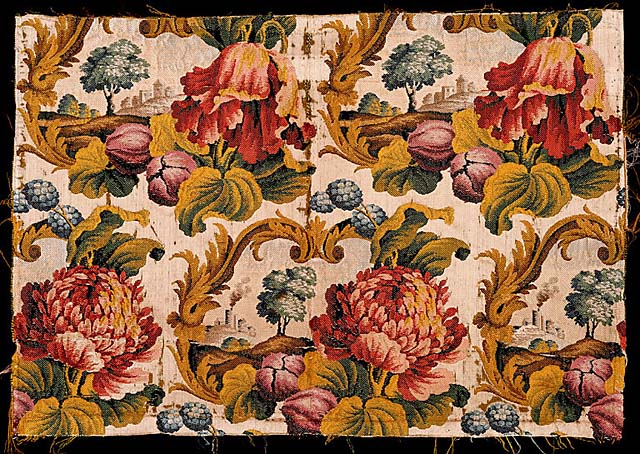
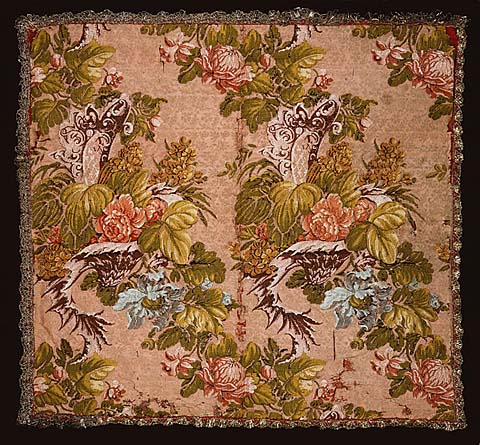
Flowers, fruit and leaves rest on shells, baskets or pedestals arranged freely, breaking any symmetrical compositional scheme. Remarkable is the naturalistic style of the representation, always with a strong effect of relief against the ground. Naturalism and three-dimensionality are accentuated by the technique perfected by Jean Revel and known as “point-rentré”. It consists in weaving some wefts of one colour into those of the adjoining colour, so as to obtain a soft, shaded transition of tones.
Technique
Damasks, lampas, satins, brocaded taffetas, whose characteristic is a ground over which a rich counter-ground, often of the same colour, is superimposed, composed of small motifs produced with textile techniques using floats and different weaves.
Origin
Louis XV gives grace and elegance to the sumptuous production of his predecessor, creating a style increasingly oriented towards caprice and fantasy, which nevertheless does not ignore the requirements connected with its use. It is an alternation of proposals not foreign to fashion.
Source
Bruno Balestrini Photographic Archive
This English text was translated with the help of artificial intelligence (Claude) from the Italian original, except where an English version already existed in the original archive. Read the Italian version.